
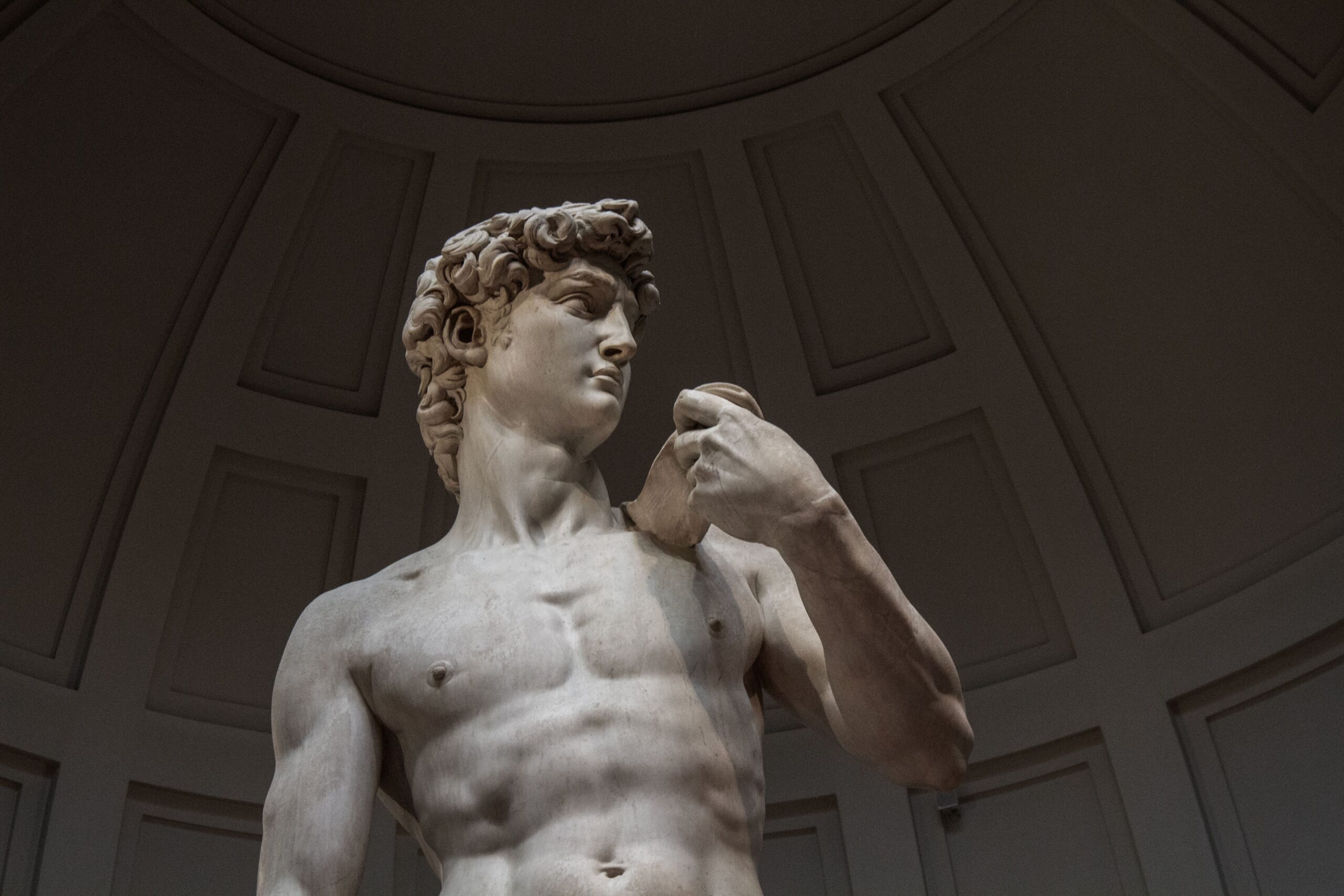
Michelangelo’s David Beyond the Crowds
The experience of Michelangelo’s David changes completely when the crowds fade and silence returns to the Accademia Gallery in Florence. In that stillness, the sculpture is no longer just a famous artwork. It becomes something more immediate, more human, and far more complex.
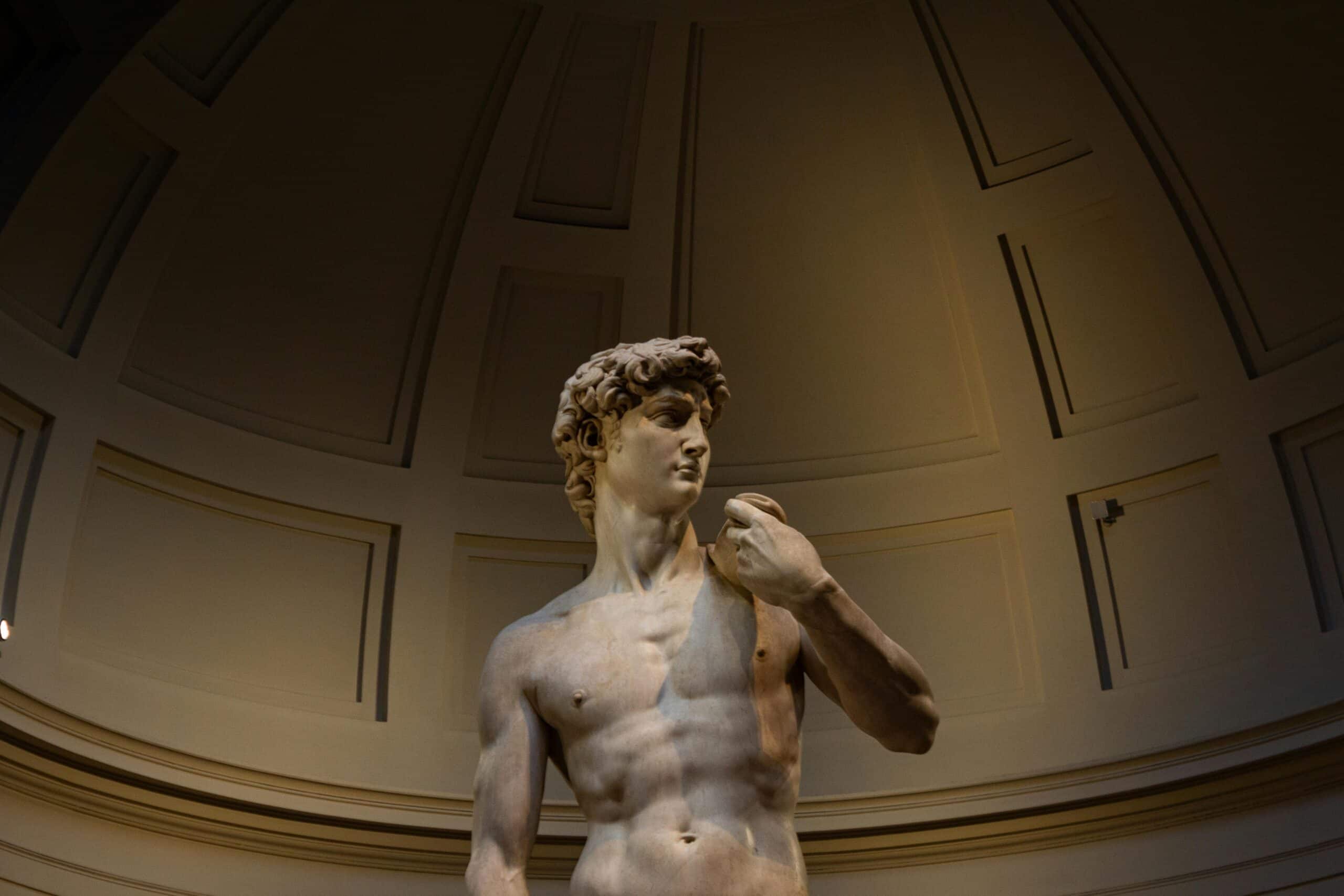
An after-hours visit allows rare space to observe the scale, tension, and precision of Michelangelo’s David without distraction. Many visitors overlook how much of its power comes from context, light, and silence rather than distance and movement. This setting reveals that difference clearly.
Michelangelo’s David and Renaissance Ideals
Michelangelo completed David in the early 1500s, during a period when Florence was redefining itself politically and culturally. The sculpture represents more than biblical narrative. It reflects the Renaissance interest in human potential, proportion, and intellectual strength.
Local experts often point out that David was originally intended for the Florence Cathedral, yet its final placement transformed its meaning entirely. Positioned as a civic symbol, it came to represent the independence and resilience of the Florentine Republic.
What most travelers never realize is how deliberate Michelangelo’s choices were. The proportions, the stance, and even the expression were designed to be read from below, in open civic space, not within a museum. Understanding this shifts how the sculpture is seen today.
Why Michelangelo’s David Still Matters Today
Michelangelo’s David continues to draw global attention because it captures a moment where technical mastery and emotional intensity meet.
In today’s Florence, surrounded by fast-moving tourism, the sculpture still holds a quiet authority. When viewed in a calm environment, its psychological depth becomes clearer. The tension in the hands, the focused gaze, and the controlled posture suggest a moment before action rather than after victory.
The experience takes on new meaning when viewed through historical awareness. Rather than a static object, David becomes a study of decision, restraint, and inner concentration.
The Medici Influence and Florence’s Artistic Identity
Florence’s artistic legacy cannot be separated from the Medici family. Their patronage shaped the environment in which artists like Michelangelo worked, allowing experimentation and ambition to flourish.
What many visitors overlook is how interconnected art, politics, and commerce were in Renaissance Florence. Artistic commissions were not purely decorative. They were statements of power, education, and civic identity.
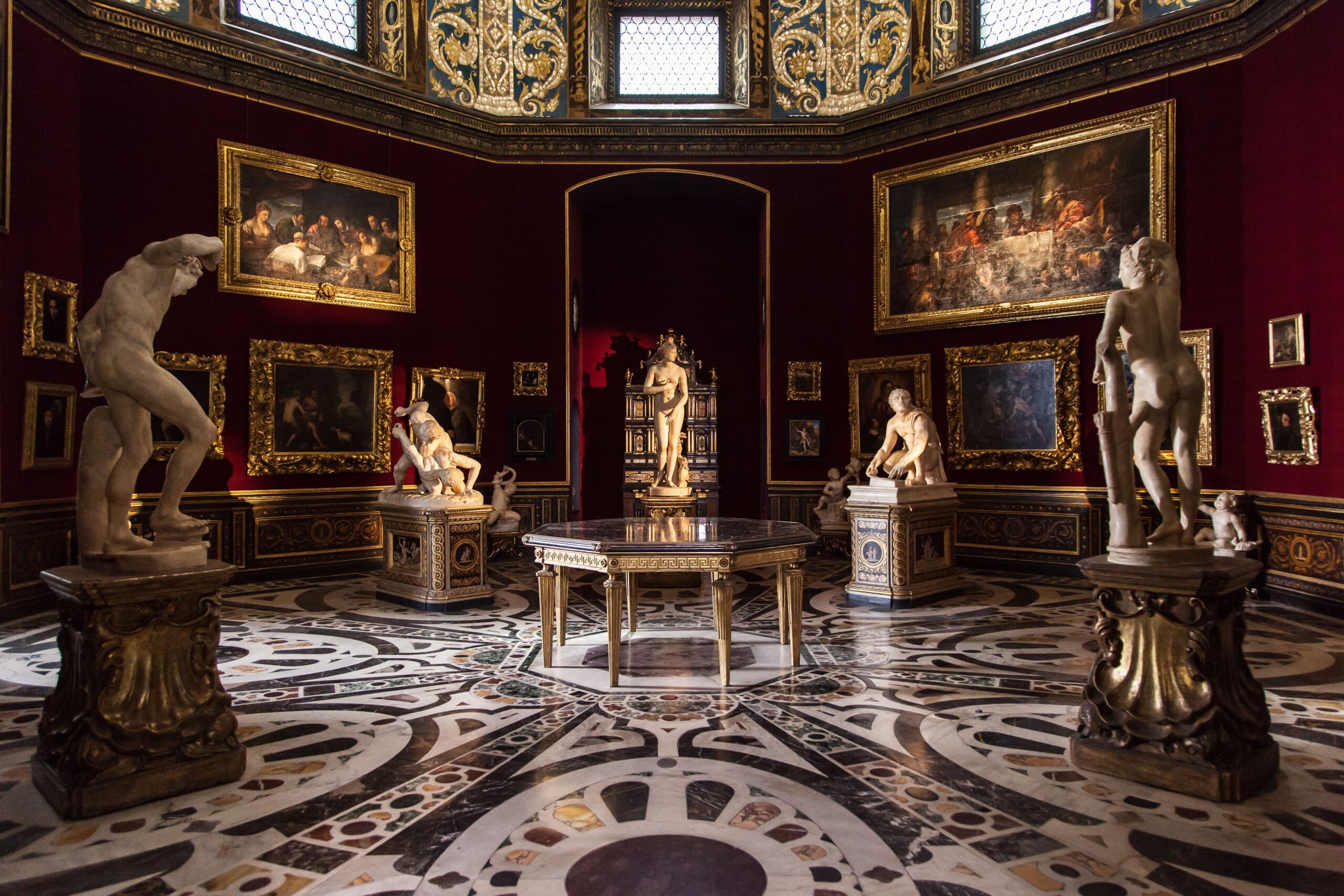
Within the Accademia Gallery, this influence is still visible in surrounding works that reflect evolving artistic techniques and shifting cultural priorities of the time.
Michelangelo’s Process and the Unfinished Works
Beyond David, Michelangelo’s unfinished sculptures reveal another layer of understanding. Often referred to as the Prisoners or Slaves, these figures appear as if they are emerging from raw stone.
Rather than polished perfection, they show process, resistance, and incomplete formation. Local experts often point out that Michelangelo viewed sculpture as the act of releasing form rather than imposing it.
Seeing these works alongside David offers insight into his evolving philosophy of creation, where effort and struggle remain visible within the stone itself.
What Makes an After-Hours Viewing Distinct
In regular visiting hours, the Accademia Gallery is shaped by movement and noise. After-hours access changes the rhythm entirely. The environment becomes slower, allowing time to focus on detail rather than navigation.
The deeper story lies in how perception shifts when external distractions are removed. Without crowd pressure, visitors naturally spend more time observing subtle features such as carving marks, surface texture, and proportional balance.
This kind of setting supports a more reflective form of viewing, where interpretation replaces observation as the primary experience.
Practical Travel Advice for Florence Visitors
Florence remains one of Italy’s most visited cities, and planning ahead is essential for cultural sites with limited access. Time of year can influence availability, especially during peak travel months in spring and early autumn.
Even experienced travelers often underestimate how quickly major museums reach capacity. Booking in advance is strongly recommended for visits that require controlled entry or private scheduling.
Comfortable pacing is important. Florence’s historic center is compact but dense with cultural landmarks, so allowing space between experiences enhances overall appreciation.
When Florence Feels Most Revealing
Spring and autumn offer the most balanced conditions for cultural visits in Florence. Light levels during these seasons also enhance the visual experience inside museum spaces, particularly where natural illumination interacts with sculpture.
Summer brings higher visitor volume, which can affect the pace of museum visits. Winter provides quieter conditions, often resulting in a more reflective atmosphere inside major institutions.
What Travelers Often Wonder About Michelangelo’s David
Why is Michelangelo’s David so important?
It represents a turning point in Renaissance sculpture, combining technical precision with symbolic civic meaning.
Where is Michelangelo’s David located?
It is housed in the Accademia Gallery in Florence, Italy.
Can you see Michelangelo’s David without crowds?
Yes, limited after-hours access allows for a quieter viewing environment with expert guidance.
How long should you spend with Michelangelo’s David?
There is no fixed time, but extended viewing often reveals details missed during brief visits.
Where Michelangelo’s David Still Speaks Today
Michelangelo’s David remains one of the most studied and admired sculptures in the world, yet its meaning continues to evolve depending on how it is experienced. In quiet conditions, its presence feels less like a monument and more like a moment suspended in time.
For those who want to understand Florence beyond surface impressions, context is essential. Art, history, and setting work together to reveal deeper meaning that is often missed in standard visits. Artviva’s expert-led experiences are designed to bring that context into focus, connecting you with Florence’s most important works through insight, storytelling, and access that transforms how you see the city.
Explore Florence with Artviva
Artviva has been based in Florence since 1996, working closely with historians, art experts, and local specialists who understand how to bring Renaissance culture into focus. Our approach is built on long-standing relationships, academic depth, and careful attention to how each experience is interpreted rather than simply observed.
This level of expertise allows visitors to engage with works like Michelangelo’s David in a more meaningful way, where historical context and artistic intention become clearly connected.
For travelers seeking a deeper understanding of Florence’s artistic heritage, Artviva provides access, structure, and interpretation that goes beyond standard museum visits.
Discover the Exclusive After-Hours Tour of Michelangelo’s David with the insight of Artviva’s expert art historians and experience one of Florence’s greatest masterpieces through the context, symbolism, and stories that bring it fully to life.