
Tuscany’s Hilltop Towns: Where History Meets the Landscape
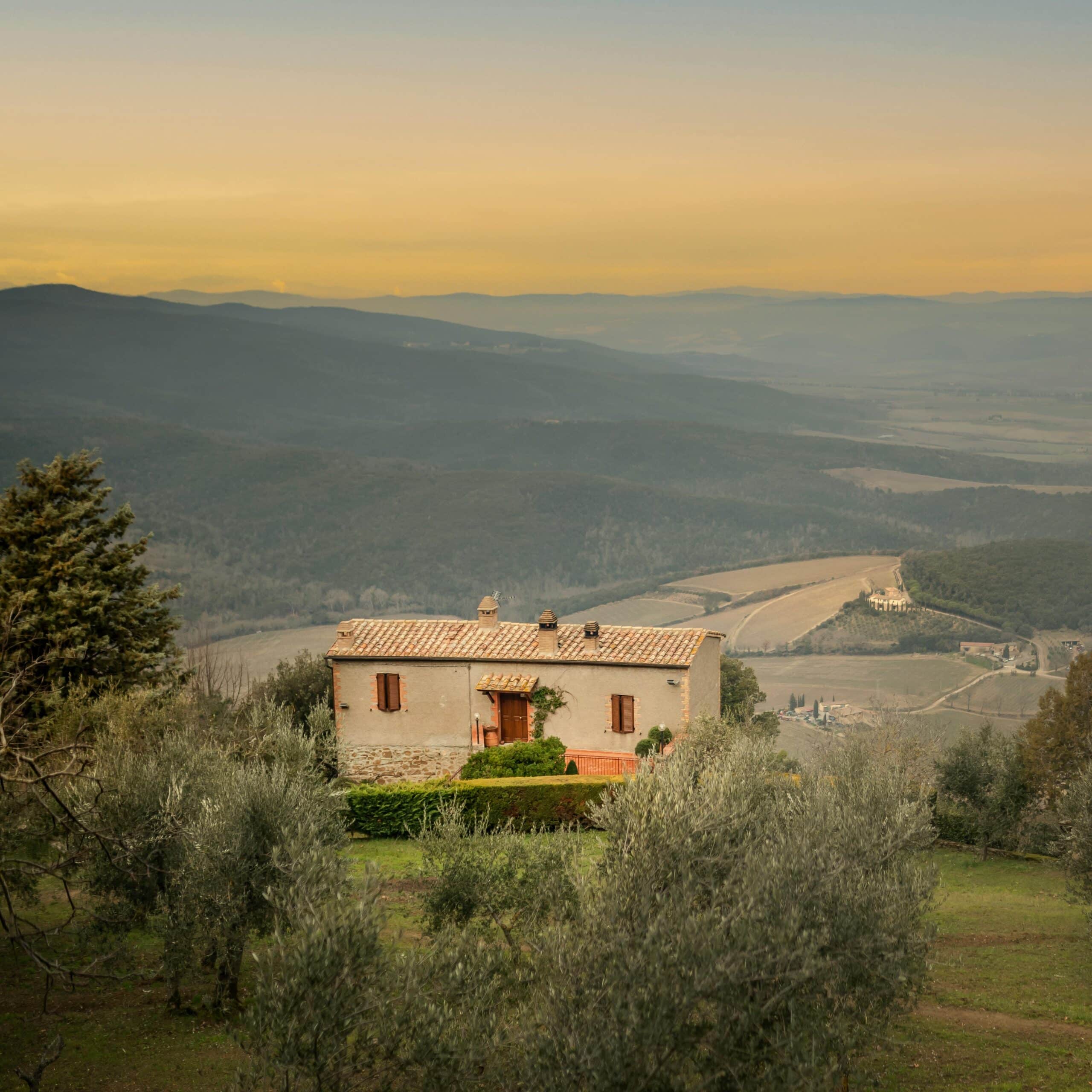
The landscape between Florence and Siena rises and falls like a slow wave of stone, vineyard, and cypress. In this part of Tuscany, history does not sit behind glass. It sits on hilltops.
Towns like Volterra, Monteriggioni, and San Gimignano are not just scenic stops. They are living archives of Etruscan roots, medieval ambition, and civic pride carved into stone. Each one tells a different version of Tuscany’s story, shaped by geography, trade routes, and centuries of rivalry.
What most travelers never realize is how close these places are to each other, yet how distinct their identities remain.
The Origins of Tuscany’s Hilltop Towns: Etruscans, Fortresses, and Medieval Power
Tuscany’s hill towns were shaped by necessity long before they became symbols of beauty. Elevated positions offered defense, visibility, and control over trade routes connecting coastal Etruria with inland cities.
Volterra predates Rome’s dominance. Its origins lie in the Etruscan civilization, whose stone gates and burial traditions still echo beneath later Roman and medieval layers. Local experts often point out that Volterra is one of the few places in Tuscany where Etruscan identity is still physically visible in the urban fabric.
Monteriggioni tells a different story. Built by Siena in the 13th century, its circular walls were designed not for expansion, but for control. The town functioned as a frontier stronghold, a carefully constructed boundary in a landscape defined by political tension.
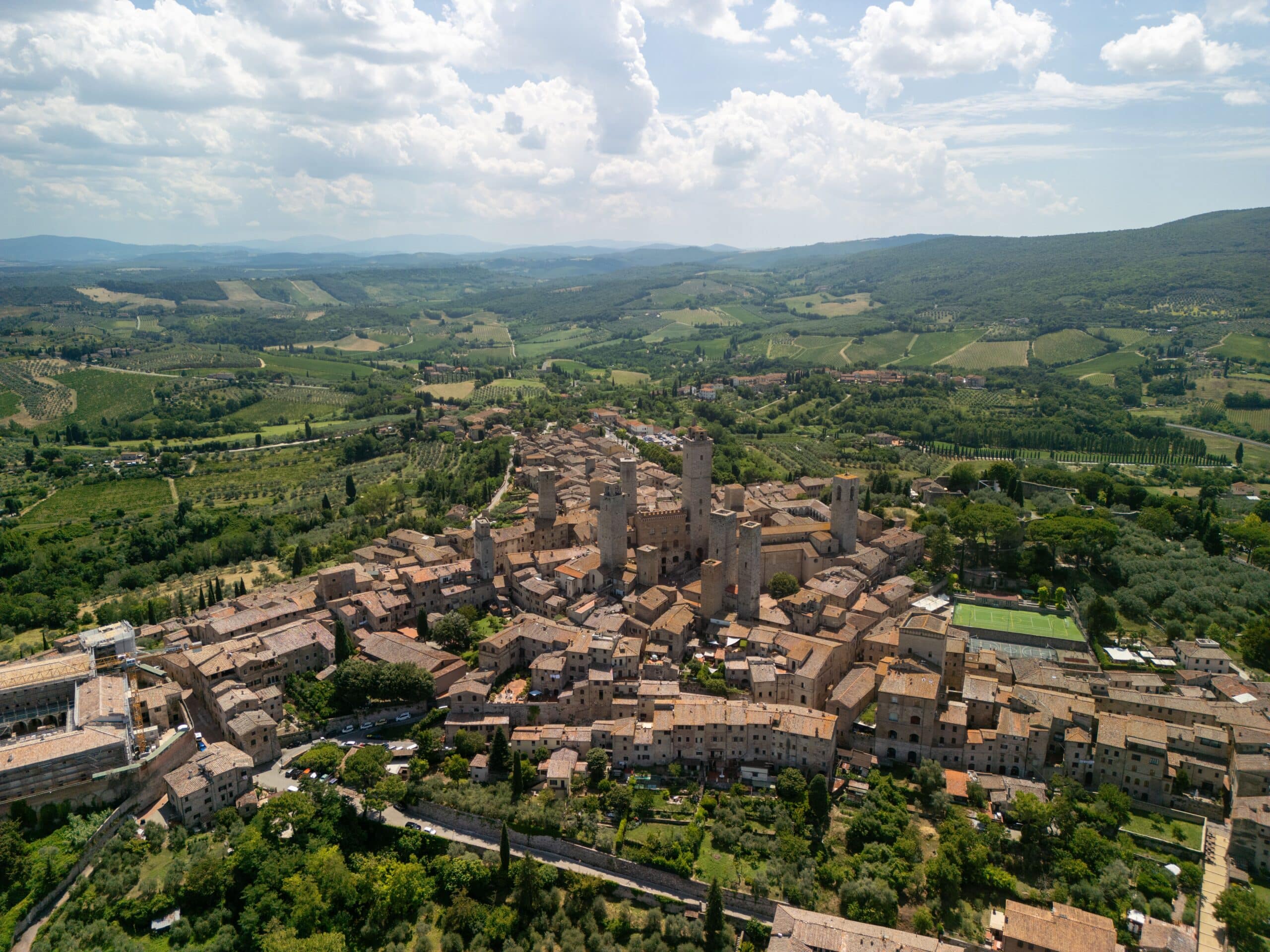
San Gimignano reflects a period when wealth replaced warfare as the main expression of power. Its towers were not defensive structures alone. They were statements of family prestige, visible from miles across the Val d’Elsa.
The deeper story lies in how these towns reflect three phases of Tuscan identity: Etruscan foundation, medieval conflict, and mercantile ambition.
Why Tuscany’s Hilltop Towns Still Define the Region Today
Today, these towns are often photographed for their symmetry, silhouettes, and preserved medieval character. But their significance goes beyond aesthetics.
Many visitors overlook how these places still shape regional identity. Volterra continues alabaster traditions that date back centuries. Monteriggioni remains one of the clearest examples of intact medieval military architecture in Italy. San Gimignano still produces Vernaccia, a white wine tied to local soil rather than global trends.
The experience takes on new meaning when viewed through continuity rather than nostalgia.
These towns are not preserved in time. They have adapted, carefully, without losing their structural memory.
What Local Experts Notice About Tuscany’s Landscape
Local historians often emphasize that Tuscany’s hill towns should not be understood individually. They were part of a wider system of communication, defense, and commerce.
Sightlines between elevated towns mattered. Towers, walls, and even church placements were influenced by visibility across valleys. What appears today as scenic placement was once strategic design.
Understanding this network changes how the landscape feels. It becomes less about isolated destinations and more about interconnected decisions made across centuries.
Three Towns, Three Eras of Tuscan Identity
Volterra: Layers of Civilization
Volterra carries one of the deepest historical timelines in Tuscany. Etruscan, Roman, and medieval layers coexist within the same compact center. Its alabaster tradition continues to define local craftsmanship, linking geological resources to artistic identity.
Monteriggioni: The Circle of Defense
Monteriggioni is defined by its walls. Not symbolic walls, but functional ones that once formed part of Siena’s defensive perimeter. Its scale creates an unusual sense of completeness, where architecture and intention align closely.
San Gimignano: Towers of Ambition
San Gimignano’s skyline is its language. The surviving towers reflect a period when families competed vertically rather than horizontally. The result is one of Europe’s most distinctive medieval silhouettes, still visible across the countryside.
Practical Travel Advice for Visiting Tuscany’s Hill Towns
Travelers exploring this region often benefit from understanding distance in terms of terrain rather than kilometers. Roads move through valleys and ridges, meaning travel feels slower than maps suggest.
Morning light enhances stone textures in Volterra, while late afternoon brings depth to San Gimignano’s towers. Monteriggioni, due to its compact size, rewards unhurried walking rather than structured sightseeing.
Comfortable pacing matters more than quantity of stops. The value of these towns lies in detail rather than coverage.
The Best Seasons to Experience Tuscany’s Hilltop Towns
Spring and early autumn offer the clearest atmospheric balance, with softer light and active countryside life. Summer brings stronger contrast between stone and sky, while winter introduces quieter streets and sharper visibility across the landscape.
Vineyard cycles also influence the feel of the region. Harvest season adds a working rhythm to the surrounding countryside, while early summer emphasizes green density across hills.
What Travelers Commonly Ask About Tuscany’s Hill Towns
What is the best hilltop town in Tuscany to visit?
Each town offers a different perspective: Volterra for ancient history, Monteriggioni for medieval architecture, and San Gimignano for skyline views and wine culture.
Are Tuscany’s hill towns close to Florence?
Yes. Many are within a comfortable driving distance, though travel time varies due to winding rural roads.
Why are Tuscan hill towns built on hills?
Elevation provided defense, visibility, and control over trade routes during medieval and earlier periods.
Can you visit Volterra, Monteriggioni, and San Gimignano in one day?
They are often grouped geographically, but the depth of each place is best appreciated without rushing.
What is San Gimignano famous for?
It is known for its medieval towers, historic center, and Vernaccia wine tradition.
Reading Tuscany Through Its Hilltops
Tuscany’s hill towns are often approached as picturesque destinations, yet they function more like layered documents of regional history. Volterra, Monteriggioni, and San Gimignano each preserve a different chapter, from ancient Etruscan foundations to medieval power structures and merchant-era identity.
The real value of these places emerges when they are read together, not separately. The landscape begins to speak in patterns of defense, trade, and community memory.
For travelers who want to understand Tuscany beyond surface impressions, these towns offer a deeper entry point into how the region was shaped and why it still feels so cohesive today.
Exploring them with knowledgeable local context reveals details that are easy to miss when moving independently, especially the subtle connections between architecture, geography, and history.
For those planning time in Tuscany, Artviva provides carefully guided cultural experiences that bring this context into focus, helping travelers understand not only what they are seeing, but why it exists in the first place.
Why Artviva Is a Trusted Authority in Tuscany
Artviva has been based in Florence since 1996, working directly with long-standing networks of historians, licensed guides, and regional specialists across Tuscany. This sustained local presence has built deep working relationships that go beyond standard tourism access.
What sets the approach apart is not just knowledge of the region, but consistent collaboration with professionals who interpret Tuscany through history, architecture, and cultural context rather than surface-level commentary.
For travelers, this means experiences shaped by people who understand the layers behind what you see — not just the landmarks themselves, but the historical decisions and cultural forces that formed them.
Discover Tuscany’s Most Beautiful Hilltop Towns Private Tour with Artviva and gain a deeper appreciation for the stories, architecture, and landscapes that define the region.