

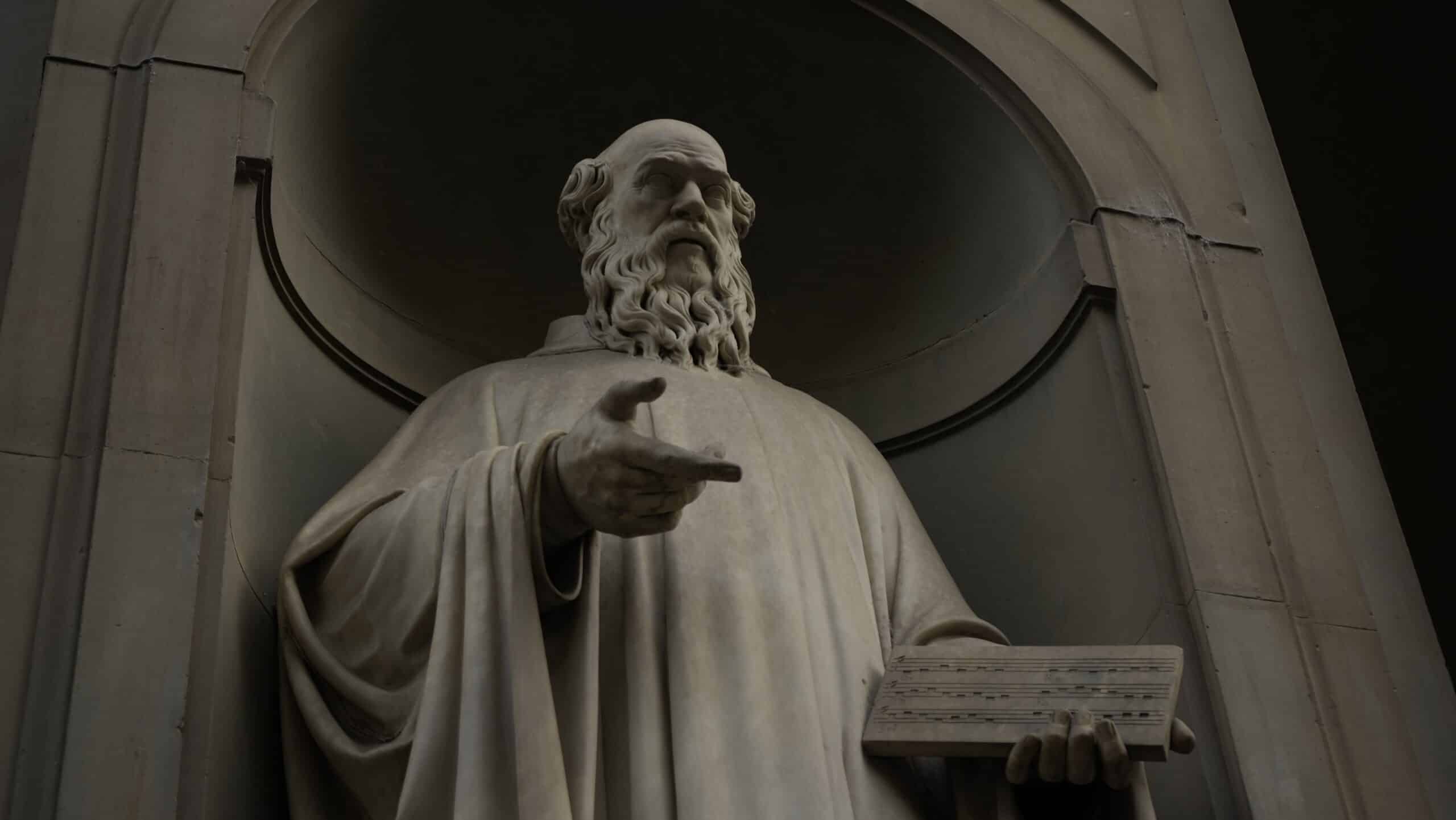
Galileo Galilei Science Museum Tour: Discover the Scientific Side of Florence
Florence is celebrated around the world for its art, architecture, and Renaissance masterpieces.
Yet some of the city’s most remarkable treasures were created not by painters or sculptors, but by scientists, astronomers, engineers, and inventors whose discoveries transformed humanity’s understanding of the world.
Inside the Museo Galileo, visitors encounter the instruments that helped chart the heavens, measure time, navigate oceans, and establish the foundations of modern science.
Our Galileo Galilei Science Museum Tour reveals a side of Florence that many travelers never expect. Through original telescopes, precision instruments, maps, clocks, and experimental devices, you’ll discover how curiosity and observation changed history forever.
Quick Answer: What Is the Museo Galileo?
The Museo Galileo is one of Europe’s most important museums dedicated to the history of science.
Located along the Arno River in Florence, the museum houses:
• Galileo’s original telescopes
• Scientific instruments from the Medici collections
• Early thermometers and clocks
• Astronomical and navigational devices
• Medical and surgical instruments
• Collections documenting the development of modern science
The museum traces scientific progress from the Renaissance through the Enlightenment and beyond.
Why Florence Was a Center of Scientific Innovation
Most visitors associate Florence with Michelangelo and Leonardo da Vinci.
What many don’t realize is that Florence also played a major role in the Scientific Revolution.
The city’s powerful families, especially the Medici, supported not only artists but also mathematicians, astronomers, engineers, and natural philosophers.
Their patronage helped create an environment where experimentation and discovery could flourish.
The result was a city that contributed to both artistic and scientific history in equal measure.
Meet Galileo Galilei
No figure is more closely connected to the museum than Galileo.
Born in Tuscany, Galileo challenged long-held assumptions about the universe through observation, mathematics, and experimentation.
His work helped establish principles that continue to influence science today.
Among his most important achievements were observations that supported the idea that Earth revolves around the Sun, a revolutionary concept during his lifetime.
His commitment to evidence and observation laid the groundwork for the modern scientific method.
Seeing Galileo’s Original Telescopes
For many visitors, the highlight of the museum is standing before Galileo’s original telescopes.
These instruments may appear simple compared to modern technology, but they changed humanity’s understanding of the cosmos.
Using telescopes like these, Galileo observed:
• Jupiter’s moons
• The phases of Venus
• Mountains on the Moon
• Previously unseen celestial phenomena
These discoveries challenged accepted beliefs and opened a new era of scientific exploration.
The Medici Collections
The museum’s collections extend far beyond Galileo.
Visitors explore extraordinary instruments gathered by the Medici and Lorraine families over centuries.
Many are beautifully crafted objects that combine scientific precision with artistic elegance.
Highlights include:
• Astrolabes and navigation tools
• Mathematical instruments
• Precision clocks
• Surveying equipment
• Scientific models and demonstrations
Together, they reveal how science and craftsmanship were closely connected during the Renaissance.
Astronomy, Time, and Measurement
Several galleries focus on humanity’s efforts to understand and measure the world.
You’ll discover how astronomers tracked the movement of planets, how sailors navigated vast oceans, and how inventors developed increasingly accurate ways to measure time.
These innovations transformed travel, trade, communication, and scientific research.
Many technologies we now take for granted began with the ideas explored in these galleries.
From Renaissance Wonder to Modern Science
One of the museum’s most fascinating themes is the transition from spectacle to experiment.
Early scientific demonstrations often seemed almost magical.
Over time, careful observation and repeatable testing replaced superstition with evidence-based understanding.
The museum illustrates this transformation through galleries devoted to:
• Optics
• Electricity
• Pneumatics
• Physics
• Experimental science
Visitors gain insight into how modern scientific thinking evolved over centuries.
History & Cultural Context
The Renaissance encouraged people to question, observe, and investigate the world around them.
Artists studied anatomy. Engineers designed machines. Astronomers charted the heavens.
Scientific inquiry became part of a broader cultural movement that reshaped Europe.
The Museo Galileo preserves this legacy, showing how Florence contributed not only to art history but also to humanity’s pursuit of knowledge.
Local Expert Tip
Many travelers visit only Florence’s most famous art museums.
Locals often recommend adding the Museo Galileo for a more complete understanding of Renaissance Florence.
The museum provides valuable context for understanding how creativity, innovation, and scientific inquiry developed side by side during one of history’s most influential periods.
It’s also one of Florence’s best museums for families and teenagers.
Why Families Enjoy the Museo Galileo
Children naturally respond to invention and discovery.
The museum’s unusual instruments, astronomical devices, and scientific experiments often inspire questions and conversations that continue long after the visit ends.
Families appreciate the museum’s ability to make complex ideas accessible and engaging.
It offers a refreshing alternative to traditional art-focused itineraries while remaining deeply connected to Florence’s history.
People Also Ask
Is the Museo Galileo worth visiting?
Yes. It houses one of the world’s most important collections of scientific instruments and offers a fascinating look at Renaissance innovation.
Can you see Galileo’s original telescopes?
Yes. Several original telescopes used by Galileo are displayed in the museum.
Is the museum suitable for children?
Absolutely. Curious children and teenagers often find the exhibits highly engaging.
How long does a Museo Galileo tour take?
Most private tours last approximately two hours, depending on interests and pace.
What is Galileo famous for?
Galileo is known for his contributions to astronomy, physics, and the scientific method, including discoveries that transformed humanity’s understanding of the universe.
Discover Florence Through Innovation
Florence’s genius extends far beyond painting and sculpture.
Inside the Museo Galileo, you’ll encounter the tools, discoveries, and ideas that helped shape the modern world.
From original telescopes and navigational instruments to groundbreaking scientific experiments, every gallery reveals another chapter in humanity’s quest for knowledge.
Join ArtViva for a private guided visit and explore the scientific side of Florence through the life, work, and legacy of Galileo Galilei.
Why Travel with ArtViva
Founded in Florence in 1996, ArtViva specializes in thoughtfully curated cultural experiences throughout Italy. Our licensed guides combine deep expertise with engaging storytelling, helping guests discover the connections between art, science, history, and innovation that define Florence and the Renaissance.