
Capitoline Museums in Rome: Where the Story of the Eternal City Comes Together
Rome is home to extraordinary museums, but few tell the story of the city as completely as the Capitoline Museums. Perched atop Capitoline Hill, these galleries bring together ancient sculpture, Renaissance painting, and centuries of civic history in a setting that has shaped Rome for generations.
Many visitors focus on the Colosseum or the Vatican, yet the Capitoline Museums offer something equally valuable: context. Here, emperors, artists, popes, and mythological figures appear within a collection that connects ancient Rome with the Renaissance and beyond. It is one of the best places to understand how the Eternal City evolved while remaining remarkably human in scale.
Quick Answer
The Capitoline Museums are the world’s oldest public museum collection and one of Rome’s finest cultural attractions. Visitors discover masterpieces of ancient Roman sculpture, Renaissance paintings, and spectacular views over the Roman Forum while exploring the history, politics, and artistic heritage that shaped the city.
Why the Capitoline Museums Are So Important
The origins of the Capitoline Museums date to 1471, when Pope Sixtus IV donated a collection of ancient bronze sculptures to the people of Rome. That decision marked one of the earliest examples of a public museum, creating a place where art belonged not only to rulers and collectors but to the city itself.
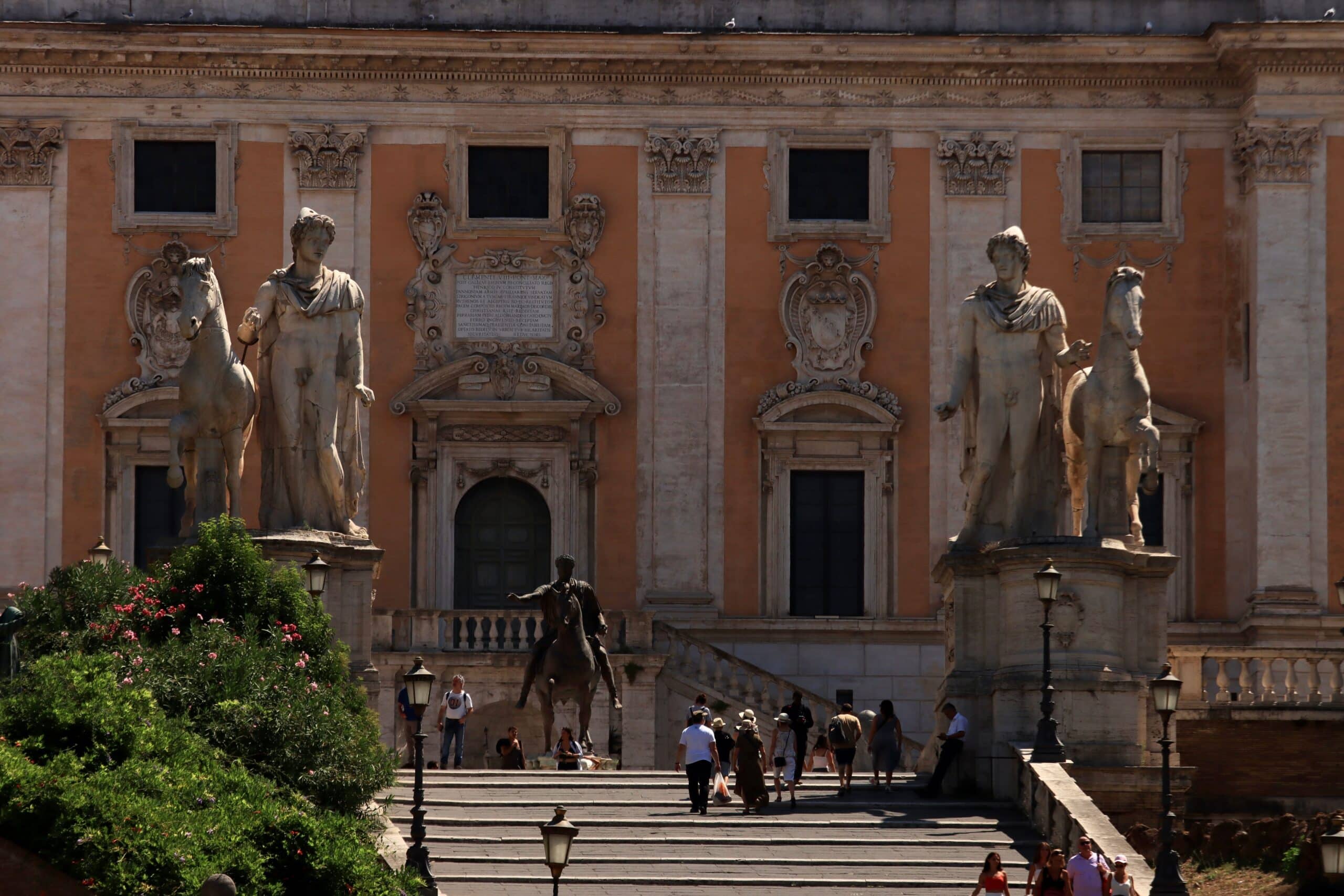
The setting is equally significant. During the Renaissance, Michelangelo redesigned Piazza del Campidoglio, transforming Capitoline Hill into one of Rome’s most elegant public spaces. Today, visitors still cross the same piazza before entering galleries that preserve more than two thousand years of artistic achievement.
What most travelers never realize is that the museums themselves form part of Rome’s history, not simply a place where history is displayed.
Ancient Rome Through Sculpture
The Capitoline Museums house some of the finest surviving examples of Roman sculpture anywhere in the world.
Among the most celebrated works is the equestrian statue of Marcus Aurelius, one of the few ancient bronze monuments to survive largely intact. Nearby, the Dying Gaul demonstrates extraordinary realism and emotional expression, while the enormous fragments of Constantine’s colossal statue offer a remarkable sense of the scale and ambition of imperial Rome.
The famous Capitoline Wolf continues to symbolize the legendary story of Romulus and Remus, reminding visitors how mythology and history have long shaped Rome’s identity.
These masterpieces reveal not only artistic excellence but also the political messages and ideals that defined the ancient world.
Renaissance Art Beyond the Vatican
Many visitors are surprised to discover that the Capitoline Museums contain remarkable paintings alongside their celebrated sculptures.
Works by Caravaggio, Titian, Rubens, Tintoretto, and Veronese introduce a different chapter of Rome’s artistic story. Caravaggio’s dramatic use of light and shadow transformed European painting, while Titian and Rubens brought color, movement, and emotion to religious and historical subjects.
Together, these galleries demonstrate that Rome remained one of Europe’s most influential artistic centers long after the fall of the Roman Empire.
The deeper story lies in seeing how classical ideals continued to inspire Renaissance artists across the centuries.
A Museum That Brings Rome Together
Unlike larger museums that can feel overwhelming, the Capitoline Museums guide visitors naturally through different periods of history.
Ancient emperors stand alongside Renaissance masterpieces. Mythological figures appear beside portraits of political leaders. Architecture, sculpture, and painting all contribute to a single narrative that explains how Rome developed into the city visitors experience today.
Many travelers leave feeling they understand Rome more clearly because the museum connects historical periods that often seem separate when exploring the city independently.
Experience It Firsthand
Reading about the Capitoline Museums offers valuable background, but exploring the galleries alongside knowledgeable local experts provides a much richer understanding of the collection and the city it represents.
Artviva’s Private Capitoline Museums Experience introduces visitors to the remarkable stories behind the sculptures, paintings, and architecture while connecting them to the broader history of Rome itself.
Learn more about the experience here:
The Best of the Capitoline Museums Tour
Rather than simply viewing individual masterpieces, travelers gain meaningful context that transforms the museum into one of Rome’s most rewarding cultural experiences.
A Local Expert Tip
After exploring the galleries, take a few moments to enjoy the terrace overlooking the Roman Forum.
Many visitors leave the museum without discovering this remarkable viewpoint, yet it offers one of the most beautiful panoramas in Rome. Seeing the ancient city spread below creates a natural connection between the works inside the museum and the places where much of Rome’s history unfolded.
It’s the perfect place to pause before continuing your exploration of the Eternal City.
Practical Travel Advice
The Capitoline Museums are enjoyable throughout the year, although early morning visits often provide the quietest atmosphere. Spring and autumn are especially pleasant for combining the museum with a walk through nearby historic neighborhoods.
Comfortable shoes are recommended, as visitors often continue exploring Capitoline Hill, the Roman Forum area, or Piazza Venezia afterward.
Because entry numbers are lower than at some of Rome’s largest attractions, the experience often feels calmer and more relaxed than other major museums.
Frequently Asked Questions
Why are the Capitoline Museums famous?
They are the world’s oldest public museum collection and contain exceptional ancient Roman sculptures alongside important Renaissance paintings.
How much time should I allow?
Most visitors spend approximately two to three hours exploring the galleries at a comfortable pace.
Are the Capitoline Museums worth visiting?
Absolutely. They provide one of the best introductions to Rome’s artistic, political, and cultural history while remaining less crowded than many of the city’s other major attractions.
What are the museum’s most famous works?
Highlights include the equestrian statue of Marcus Aurelius, the Capitoline Wolf, the Dying Gaul, the colossal fragments of Constantine, and paintings by Caravaggio and Titian.
When is the best time to visit?
Early morning generally offers the quietest atmosphere, while spring and autumn provide comfortable conditions for exploring the surrounding historic center.
Discover Rome Through Its Greatest Collection
The Capitoline Museums reveal Rome as more than a collection of famous landmarks. They connect mythology, imperial power, Renaissance creativity, and civic identity into one remarkable experience that helps visitors understand how the Eternal City evolved across the centuries.
Rather than simply displaying extraordinary works of art, the museums tell the story of Rome itself, inviting visitors to see familiar monuments with fresh perspective and deeper appreciation.
For travelers seeking one of Rome’s most enriching cultural experiences, Artviva’s Private Capitoline Museums Experience offers an engaging opportunity to explore this remarkable collection with knowledgeable local experts.
Learn more or reserve your experience here: