
Borghese Gallery and Villa Borghese: Rome’s Masterpieces Beyond the Crowds
Rome is filled with world-famous museums and monuments, yet few places offer the same balance of artistic brilliance and peaceful surroundings as the Borghese Gallery and Villa Borghese. Hidden within one of the city’s largest parks, the former villa of the influential Borghese family invites visitors to slow down and experience art in a setting designed for contemplation rather than crowds.
Inside the gallery, masterpieces by Bernini, Caravaggio, and Canova reveal the extraordinary creativity of the Renaissance and Baroque periods. Outside, tree-lined paths, fountains, and panoramic terraces provide a welcome contrast to the energy of Rome’s historic center. Together, they create one of the city’s most rewarding cultural experiences.
Quick Answer
The Borghese Gallery is one of Rome’s finest art museums, home to masterpieces by Bernini, Caravaggio, Raphael, and Canova. Combined with the surrounding Villa Borghese gardens, it offers visitors a unique opportunity to experience world-class art alongside one of Rome’s most beautiful green spaces.
Why the Borghese Estate Is Unlike Anywhere Else in Rome
Many museums display exceptional collections. The Borghese Gallery tells a much more personal story.
The estate was created in the early seventeenth century by Cardinal Scipione Borghese, an ambitious collector whose passion for art helped shape one of Italy’s greatest private collections. Rather than simply acquiring paintings and sculptures, he envisioned an elegant villa where architecture, gardens, and masterpieces would exist together.
That vision remains remarkably intact today.
Unlike many larger museums, the Borghese Gallery limits visitor numbers through timed entry, creating a quieter atmosphere where works of art can be appreciated without feeling rushed.
What most travelers never realize is that the surrounding park is as much a part of the experience as the gallery itself.
Bernini’s Greatest Sculptures
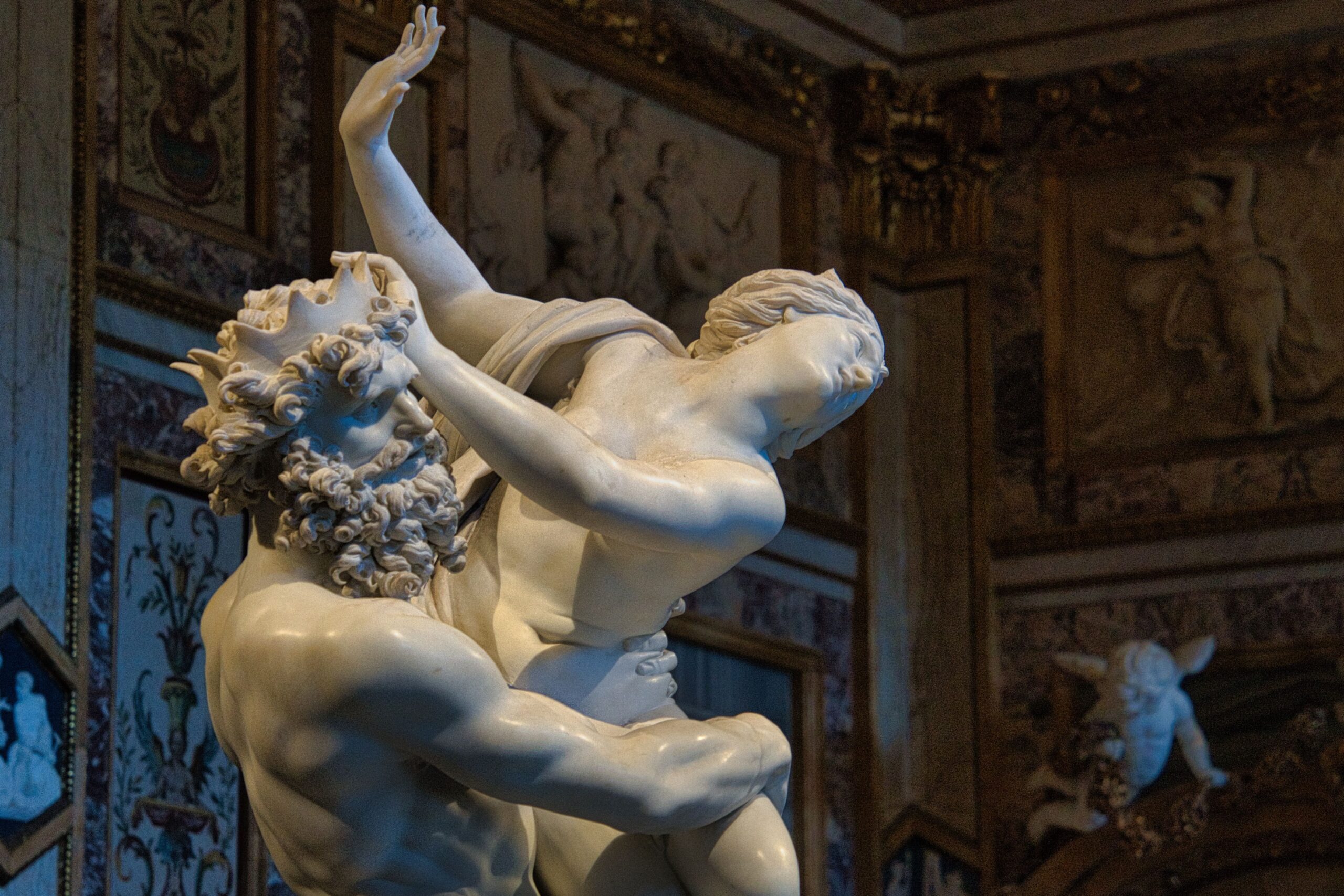
The Borghese Gallery houses some of Gian Lorenzo Bernini’s most celebrated works, sculptures that transformed marble into something that appears almost alive.
His Apollo and Daphne captures the exact moment of transformation from myth, while The Rape of Proserpina demonstrates astonishing technical skill through lifelike movement and emotional expression. Every fold of fabric, strand of hair, and carefully carved detail reveals why Bernini became one of the defining artists of the Baroque era.
Standing before these sculptures offers an experience that photographs simply cannot recreate.
Caravaggio and the Power of Light
Alongside Bernini’s dramatic sculptures are several remarkable paintings by Caravaggio, whose revolutionary use of light and shadow changed European art forever.
His works combine realism with powerful emotion, drawing viewers into scenes that feel both intimate and theatrical. Rather than idealized figures, Caravaggio painted ordinary people with extraordinary honesty, creating images that continue to captivate audiences centuries later.
Many visitors arrive expecting Bernini to dominate the gallery but leave equally impressed by Caravaggio’s remarkable storytelling through paint.
Villa Borghese: Rome’s Green Retreat
Leaving the gallery, the atmosphere changes almost immediately.
Villa Borghese stretches across one of Rome’s largest public parks, where wide paths wind beneath towering trees, elegant fountains decorate quiet corners, and open spaces encourage visitors to slow their pace.
The gardens provide a different perspective on Rome. Instead of ancient ruins and busy piazzas, visitors discover peaceful landscapes that have offered respite from city life for generations.
Local experts often recommend allowing time simply to wander, appreciating how carefully designed gardens complement the artistic treasures inside the villa.
Why Art and Nature Belong Together
The Borghese estate reflects a Renaissance ideal in which beauty was never limited to paintings or sculptures alone.
Architecture, landscape, and art were designed to work together, creating spaces where visitors could reflect, learn, and enjoy the natural world alongside remarkable artistic achievements.
The deeper story lies in this relationship between culture and nature, making the Borghese estate feel very different from a traditional museum visit.
Many travelers overlook the gardens in their excitement to see the gallery, yet together they form one of Rome’s most complete cultural experiences.
Experience It Firsthand
Reading about the Borghese Gallery provides valuable background, but exploring its masterpieces alongside knowledgeable local guides offers a much richer understanding of the artists, collectors, and historical figures who shaped this extraordinary collection.
Artviva’s Borghese Gallery & Gardens Experience introduces visitors to the remarkable stories behind the gallery’s masterpieces while exploring the peaceful landscapes that surround one of Rome’s finest museums.
Learn more about the experience here:
Urban Opulence: The Best of the Borghese Gallery & Garden Tour
Rather than simply viewing famous works of art, travelers gain a deeper appreciation for the history, creativity, and vision that continue to define the Borghese estate today.
A Local Expert Tip
Many visitors leave the gallery immediately after their timed entry ends, missing one of Rome’s most beautiful parks.
Take time to explore Villa Borghese afterward. A quiet walk beneath the trees or a pause at one of the scenic overlooks creates a natural transition from the intensity of the gallery to the peaceful atmosphere that has attracted Romans for centuries.
The experience feels most complete when both the art and the gardens are enjoyed together.
Practical Travel Advice
Advance reservations are essential because entry to the Borghese Gallery is strictly timed and visitor numbers are limited throughout the day.
Spring and autumn offer especially pleasant weather for exploring the gardens, while winter provides a quieter museum experience with fewer visitors. Comfortable shoes are recommended, particularly if you plan to spend time walking through the park after visiting the gallery.
Allow at least half a day to enjoy both the museum and the surrounding gardens without feeling rushed.
Frequently Asked Questions
Why is the Borghese Gallery famous?
The gallery houses one of Italy’s finest private art collections, including masterpieces by Bernini, Caravaggio, Raphael, and Canova.
Do I need to reserve tickets in advance?
Yes. Entry is limited and timed, making advance reservations essential throughout most of the year.
How much time should I allow?
Most visitors spend around two hours in the gallery, followed by one to two hours exploring Villa Borghese.
Is Villa Borghese worth visiting?
Absolutely. The gardens provide one of Rome’s most peaceful green spaces and complement the artistic experience inside the gallery.
When is the best time to visit?
Spring and autumn offer particularly comfortable conditions for enjoying both the museum and the gardens, although every season provides a different atmosphere.
Discover One of Rome’s Most Elegant Cultural Experiences
The Borghese Gallery reminds visitors that some of Rome’s greatest treasures are found not only in grand monuments but also in places where art, architecture, and landscape exist in perfect balance.
Exploring the gallery alongside the surrounding gardens offers a slower, more thoughtful way to experience the city, allowing time to appreciate masterpieces while enjoying one of Rome’s most beautiful parks.
For travelers seeking an intimate introduction to one of Italy’s finest art collections, Artviva’s Borghese Gallery & Gardens Experience offers an engaging opportunity to discover the estate through the knowledge and perspective of expert local guides.
Learn more or reserve your experience here:
Urban Opulence: The Best of the Borghese Gallery & Garden Tour