Brunello Wine in Val d’Orcia, Tuscany: Understanding Italy’s Most Elegant Red
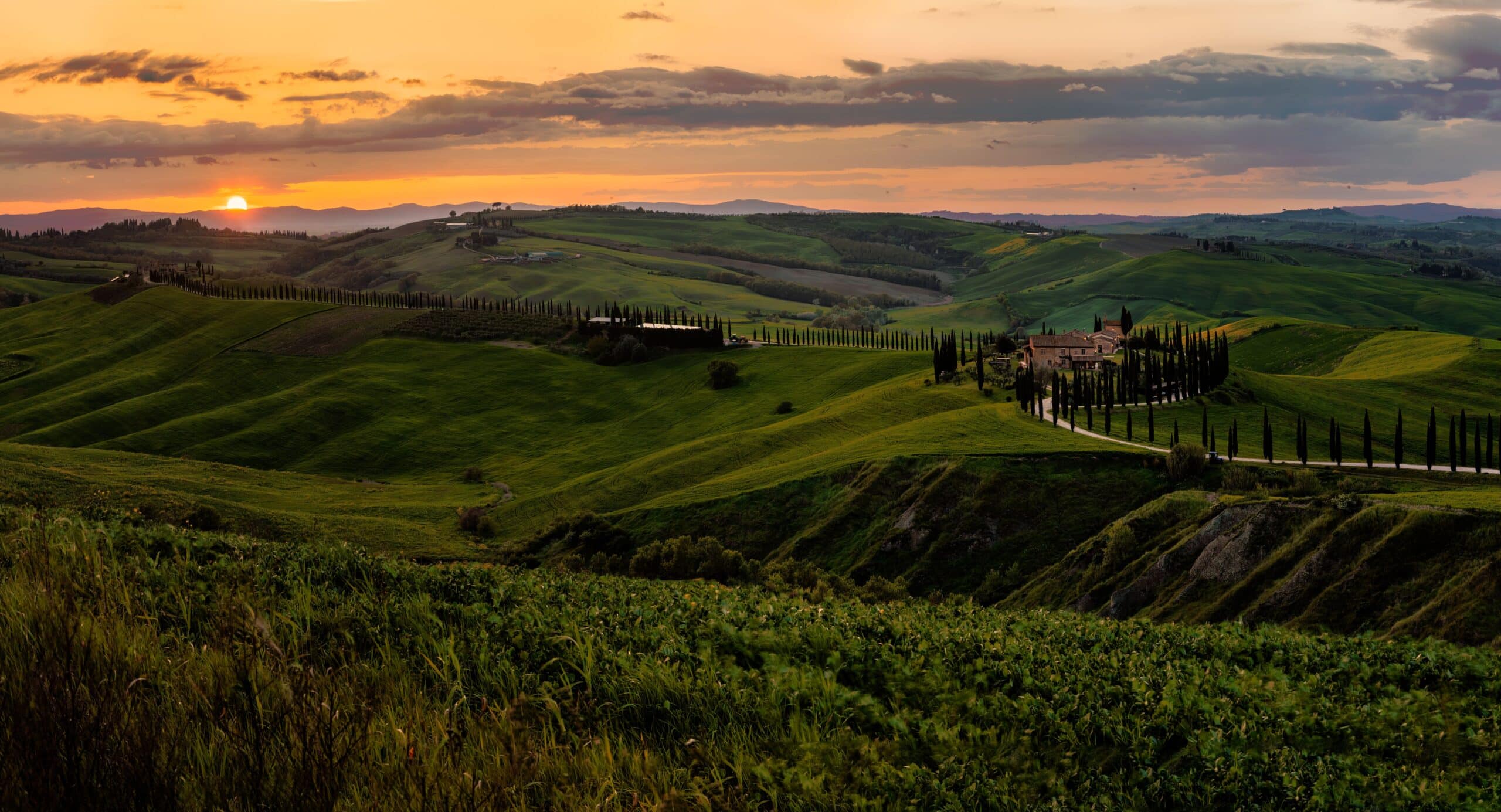
A Brunello wine experience in Val d’Orcia, Tuscany is often seen as one of the most refined ways to understand southern Tuscany through taste, landscape, and time. Yet what most travelers first notice is not just the wine, but the landscape itself. Rolling hills, cypress-lined ridges, and medieval silhouettes set the stage for a wine that reflects both patience and place.
Brunello di Montalcino is not simply a label. It is a product of altitude, time, and tradition, shaped in one of Italy’s most carefully protected wine regions. Understanding it means understanding Val d’Orcia itself.
The Landscape Behind Brunello: Val d’Orcia’s Living Heritage
The Val d’Orcia is not just a backdrop for wine. It is part of the wine’s identity.
This UNESCO World Heritage landscape was shaped by centuries of agricultural balance between human settlement and natural rhythm. Gentle hills, mineral-rich soils, and consistent sunlight create ideal conditions for Sangiovese Grosso, the grape behind Brunello.
Many visitors overlook how deeply geography influences flavor here. The same grape grown just a few kilometers away can express a noticeably different structure and aroma profile.
Local experts often point out that Brunello is less about winemaking invention and more about restraint. The land does much of the work.
The Story of Brunello: Patience as a Tradition
Brunello di Montalcino is relatively young in the long history of Italian wine, yet it carries a strong cultural weight.
In the late 19th century, local producers began isolating a single grape selection of Sangiovese Grosso, focusing on longevity rather than immediate pleasure. Over time, strict aging rules and careful vineyard management shaped Brunello into a wine associated with structure, depth, and aging potential.
What most travelers never realize is that Brunello is defined as much by time as by taste. Extended aging is not a stylistic choice here. It is part of the identity.
Why Brunello Wine Matters Today
Brunello has become a reference point for Italian red wines internationally, but its significance is not only commercial.
It represents a model of controlled production in a world where many wine regions expanded rapidly. Montalcino maintained limits, protected quality, and emphasized terroir over scale.
For modern travelers, this creates a rare opportunity: to experience wine in a context where tradition still sets the pace. The experience takes on new meaning when viewed through the lens of restraint rather than production volume.
Local Expert Insight: What You Don’t Taste Immediately
One of the most interesting aspects of Brunello is how it changes over time in the glass.
Local wine specialists often emphasize that younger Brunello expresses structure first, while older vintages reveal layers of dried fruit, earth, and subtle spice. This evolution is intentional, shaped by long oak aging and bottle maturation rules unique to the region.
Another detail frequently missed is the role of altitude. Vineyards positioned at different elevations around Montalcino can produce noticeably different expressions of the same grape.
Practical Travel Advice for Val d’Orcia Wine Exploration
Travelers planning time in Val d’Orcia should consider pacing carefully. This is a landscape best experienced slowly.
Distances between hill towns and vineyards are short in kilometers but longer in time due to winding roads. Comfortable scheduling allows the countryside to become part of the experience rather than just transit between stops.
It is also worth noting that cellar environments are often cool year-round, even in summer, so layered clothing is recommended.
For those interested in deeper understanding, pairing wine tasting with time in nearby medieval towns helps connect the agricultural and cultural layers of the region.
Seasonal Considerations in Val d’Orcia
Each season changes the character of a Brunello wine experience.
Spring brings bright green vineyards and soft light across the hills. Summer emphasizes warmth and intensity, both in landscape and in wine structure. Autumn is harvest season, when the region feels most active and texturally rich. Winter offers quiet cellars and clearer focus on aging and barrel work.
Many travelers overlook winter, yet it is often when conversations with winemakers are most detailed and reflective.
Frequently Asked Questions About Brunello Wine in Val d’Orcia
What makes Brunello di Montalcino different from other Tuscan wines?
Brunello is made exclusively from Sangiovese Grosso and requires extended aging, resulting in a more structured and long-lived wine than many other Tuscan reds.
Is Brunello difficult for beginners to appreciate?
Not necessarily. While complex, Brunello is often introduced through guided tasting experiences that help visitors understand its structure and evolution.
How long does Brunello need to age?
By regulation, Brunello requires several years of aging before release, which contributes to its depth and refinement.
What food pairs well with Brunello?
Traditional Tuscan dishes such as slow-cooked meats, aged cheeses, and rich sauces complement its structure and acidity.
Why is Val d’Orcia important for wine culture?
The region’s soils, elevation, and preservation of traditional agriculture make it one of Italy’s most distinctive wine-producing landscapes.
Understanding Brunello Beyond the Glass
A Brunello wine tour in Val d’Orcia, Tuscany is ultimately less about consumption and more about interpretation. The wine reflects a landscape shaped by patience, discipline, and respect for natural conditions.
For many travelers, the most lasting impression is not a single tasting note, but the realization that wine here is inseparable from place and history.
Those who wish to go beyond surface-level understanding often find that guided insight reveals layers that are easy to miss on first encounter. The deeper story lies in how land, time, and human craft continue to work together in one of Italy’s most enduring wine regions.
For tailored travel planning and private cultural experiences in Tuscany, Artviva offers curated journeys designed to bring these landscapes and traditions into clearer focus.
Why Artviva?
Experiencing Brunello at its source is enriched significantly by context — the kind that connects vineyard elevation, aging requirements, and generational winemaking decisions into a single narrative.
This is where expertise becomes essential. Without interpretation, much of what defines Brunello remains invisible: the reason certain slopes matter more than others, why time in oak is treated with such restraint, and how climate variation subtly reshapes each vintage.
Artviva is one of Florence’s longest-established cultural travel specialists, creating private journeys across Italy since 1996. With nearly three decades of on-the-ground experience, the company works exclusively with trusted local hosts, winemakers, historians, and cultural experts who bring depth and access that independent travel rarely reaches.
For travelers seeking more than surface-level discovery, learn more about Artviva’s Brunello Wine Tour in Val d’Orcia, Tuscany and reserve your private experience.