
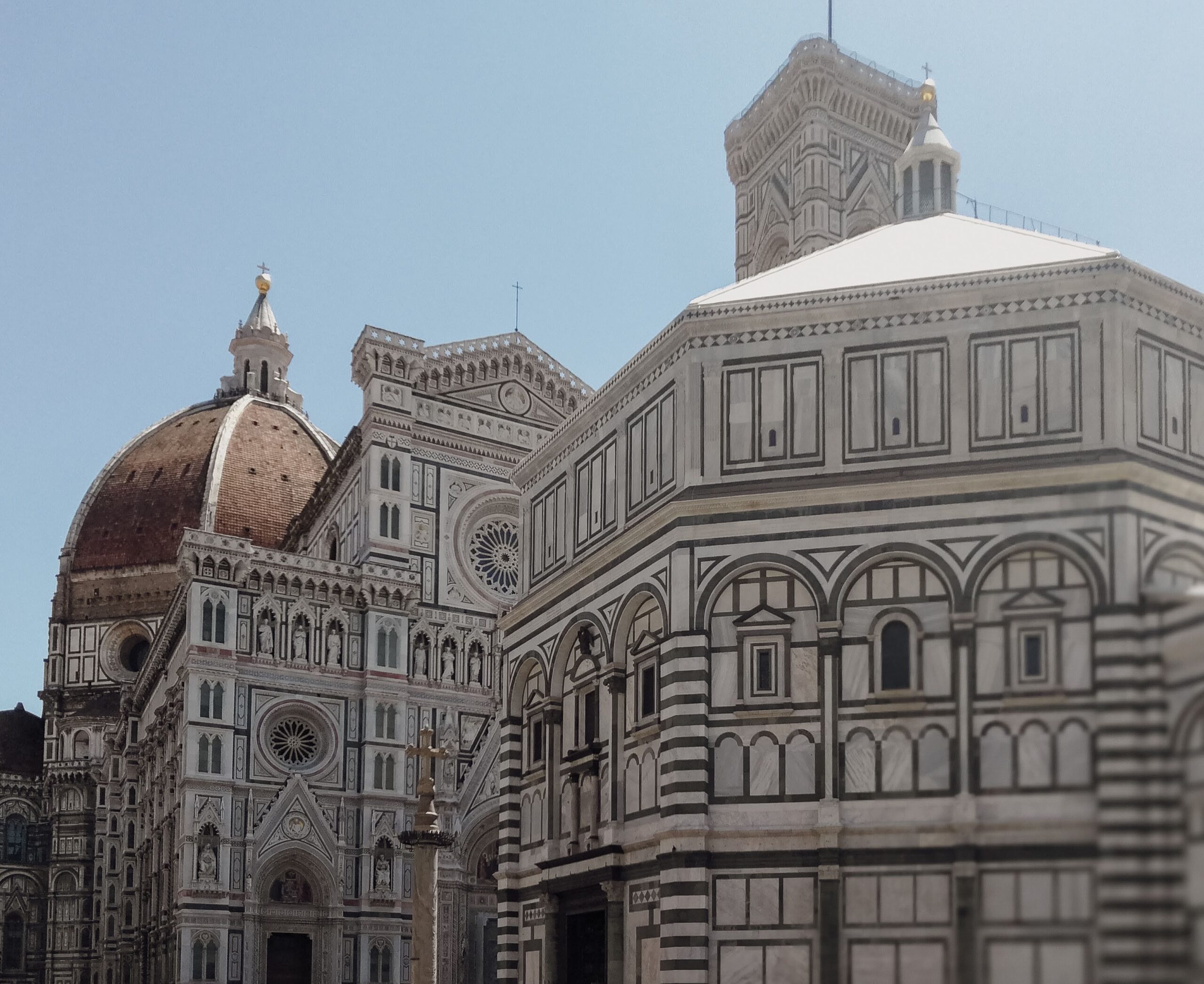
The Florence Duomo: Discover the Cathedral, Baptistery, and Opera del Duomo Museum
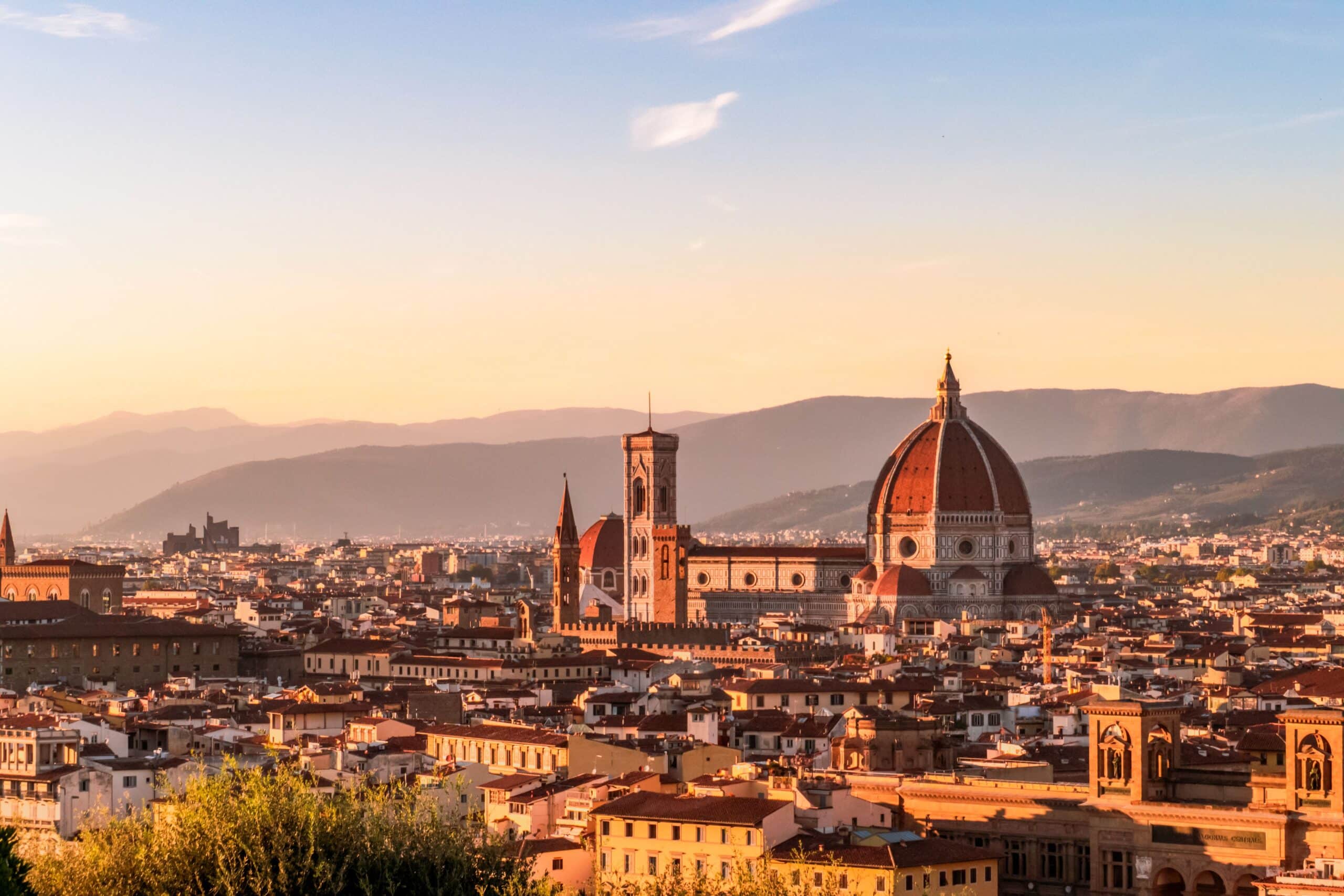
No building defines Florence more completely than the Duomo.
Its massive dome dominates the skyline, its marble façade welcomes millions of visitors each year, and its story reflects centuries of artistic ambition, civic pride, faith, and innovation. Yet many travelers only scratch the surface of what is actually one of the world’s most extraordinary cultural complexes.
The Duomo, Baptistery, and Opera del Duomo Museum together tell a much richer story. They reveal the genius of Brunelleschi, the artistry of Ghiberti, the devotion of generations of Florentines, and the remarkable engineering achievement that transformed Renaissance architecture forever.
A private guided visit allows you to experience these monuments as they were intended: not as separate attractions, but as one interconnected masterpiece.
What Is Included in the Duomo Complex?
The Florence Duomo Complex includes:
- Cathedral of Santa Maria del Fiore
- Baptistery of San Giovanni
- Opera del Duomo Museum
- Giotto’s Bell Tower
- Crypt of Santa Reparata
- Brunelleschi’s Dome
Together, they form one of Italy’s most important religious and artistic sites.
Why Florence’s Duomo Changed History
When construction began in 1296, Florence wanted a cathedral unlike any other in Europe.
The city was wealthy, ambitious, and eager to demonstrate its importance. Generations of architects, artists, craftsmen, and patrons contributed to the project.
The greatest challenge arrived when builders reached the crossing where a dome was needed.
No one knew how to build it.
The solution came from Filippo Brunelleschi, whose revolutionary engineering methods allowed the dome to rise without traditional wooden centering. His achievement remains one of the defining accomplishments of Renaissance architecture.
Today, nearly six centuries later, it still dominates Florence’s skyline.
Inside the Baptistery of San Giovanni
Many Florentines consider the Baptistery older and more sacred than the cathedral itself.
The building’s glittering mosaic ceiling immediately captures attention. Gold backgrounds illuminate biblical scenes that once inspired generations of worshippers, artists, and citizens.
Dante himself would have known these mosaics.
Visitors also encounter the famous bronze doors associated with Lorenzo Ghiberti, whose Gates of Paradise became one of the Renaissance’s greatest sculptural achievements.
Understanding the Baptistery’s symbolism provides valuable context for the entire cathedral complex.
The Cathedral of Santa Maria del Fiore
The cathedral’s immense interior surprises many visitors.
Its scale feels monumental yet remarkably restrained compared to many European churches.
Inside, your guide reveals how architecture, theology, and civic identity combined to create one of Florence’s most important public spaces.
You’ll also learn about Santa Reparata, the earlier church that once stood here. Remains of this older structure can still be explored beneath the cathedral.
These archaeological layers reveal nearly two thousand years of Florentine history beneath your feet.
The Opera del Duomo Museum: Florence’s Greatest Collection Few Travelers Expect
For many art historians, the Opera del Duomo Museum is the true highlight of the complex.
Here visitors encounter original masterpieces removed from the exterior monuments for preservation.
Highlights include:
- Ghiberti’s original Gates of Paradise
- Michelangelo’s Florentine Pietà
- Donatello sculptures
- Brunelleschi’s wooden dome model
- Monumental liturgical treasures
The museum allows visitors to appreciate details often impossible to see outdoors.
Michelangelo’s Florentine Pietà
One of the museum’s most moving works is Michelangelo’s Florentine Pietà.
Created later in the artist’s life, the sculpture was intended for his own tomb.
Frustrated with imperfections in the marble, Michelangelo famously damaged the work himself before it was later restored.
The result remains deeply emotional and remarkably personal.
Unlike the youthful perfection of the Vatican Pietà, this sculpture reveals a more reflective Michelangelo confronting age, faith, and mortality.
History & Cultural Context
The Duomo complex represents more than religious architecture.
For centuries, Florence used these buildings to express civic pride, political strength, artistic leadership, and technological innovation.
Artists including Giotto, Donatello, Ghiberti, Brunelleschi, and Michelangelo all contributed to the complex in different ways.
Their combined efforts helped establish Florence as one of the cultural capitals of the Renaissance.
Few places in Europe bring together so many defining figures of Western art history within a single location.
Local Expert Tip
Many visitors focus entirely on climbing the Dome.
The views are extraordinary, but locals often recommend prioritizing the Opera del Duomo Museum if time is limited.
The museum provides the context needed to fully appreciate everything else in the complex and contains some of Florence’s most important original masterpieces.
If possible, visit both.
The museum enriches the climb, and the climb rewards everything you’ve learned.
People Also Ask
Is the Opera del Duomo Museum worth visiting?
Absolutely. Many experts consider it one of Florence’s finest museums because it houses original works by Michelangelo, Donatello, and Ghiberti.
How long does a Duomo Complex tour take?
A comprehensive private visit typically lasts around three hours.
Can you climb Brunelleschi’s Dome?
Yes. Dome climbs require advance reservations and are subject to availability.
What are the Gates of Paradise?
They are Lorenzo Ghiberti’s celebrated bronze doors originally created for the Baptistery and now preserved inside the Opera del Duomo Museum.
What is the oldest building in the complex?
The Baptistery of San Giovanni predates the current cathedral and remains one of Florence’s oldest religious structures.
Experience Florence’s Greatest Masterpiece
The Duomo Complex is the story of Florence itself.
It is a story told through bronze, marble, mosaics, engineering breakthroughs, artistic rivalry, and centuries of devotion.
With an expert private guide, these monuments become far more than famous landmarks. They become part of a living narrative that explains how Florence shaped the Renaissance and continues to inspire visitors today.
Join ArtViva for an in-depth exploration of Florence’s most iconic site on the Duomo, Baptistery, & Opera del Duomo Museum Tour.
Why Travel with ArtViva
Since 1996, ArtViva has specialized in expertly guided cultural experiences throughout Italy. Our licensed guides, historians, and art specialists combine scholarly expertise with engaging storytelling, providing guests with meaningful access to Italy’s most important historical and artistic treasures.