
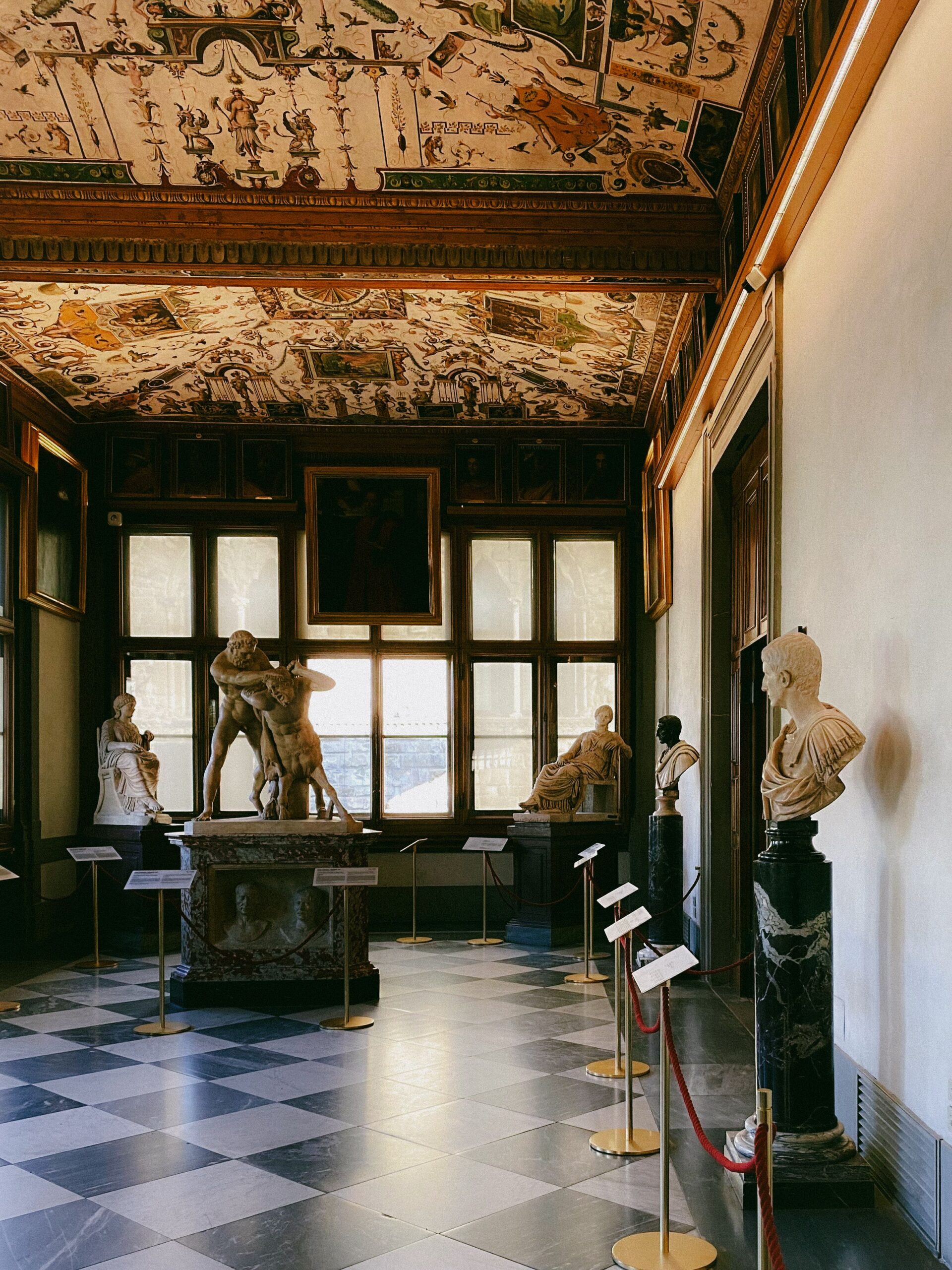
The Uffizi in Silence
When the Gallery Falls Silent
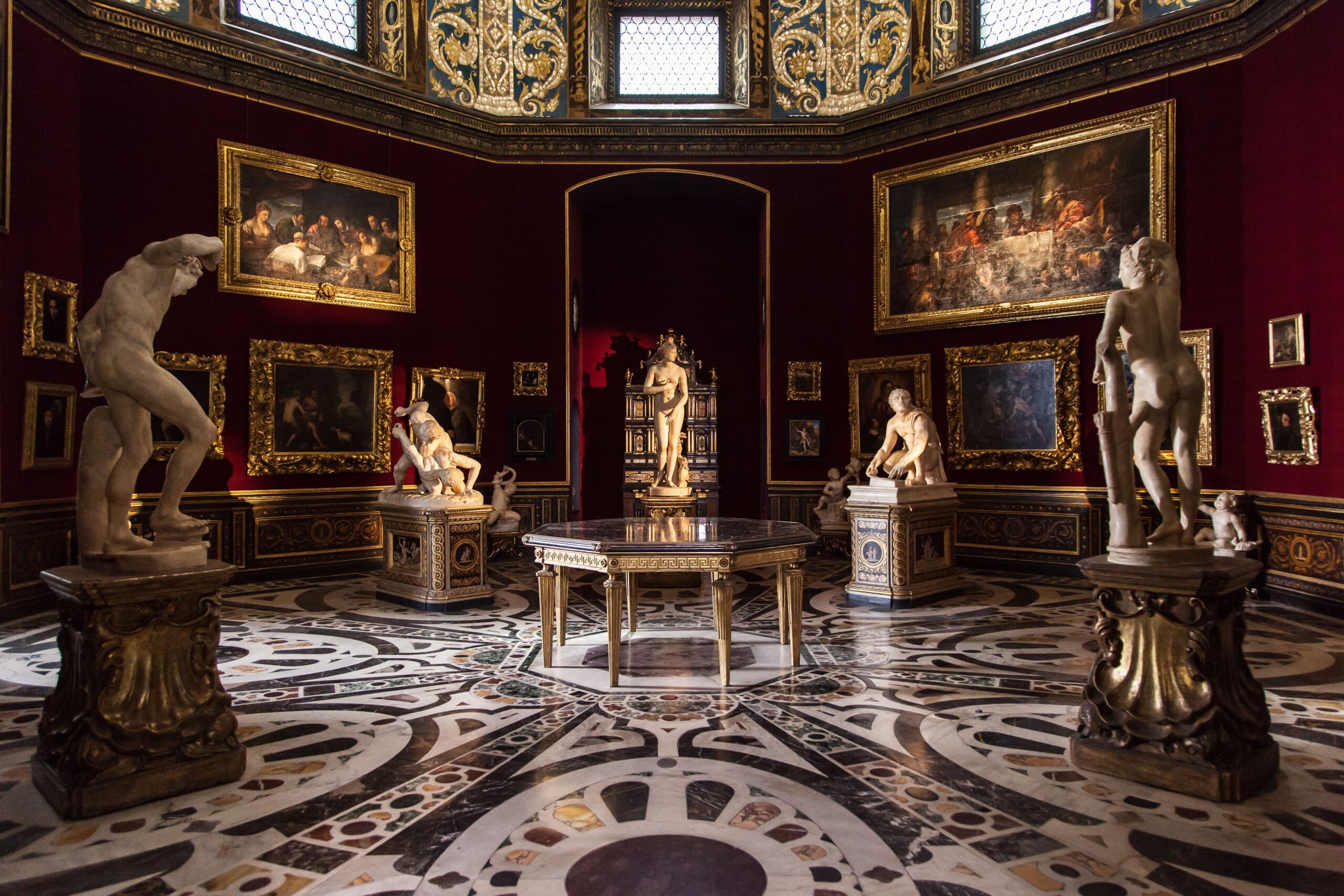
The Uffizi Gallery in Florence is one of the most visited cultural sites in the world, yet it is rarely experienced in silence. After closing time, the atmosphere shifts completely. Without crowds or movement, the paintings feel closer, more immediate, and easier to read as living works of history rather than museum objects.
From Medici Power to Public Museum
The Uffizi was originally commissioned in the 16th century by the Medici family and designed by Giorgio Vasari as administrative offices for Florence’s magistrates. Over time, it became a repository for the Medici art collection, eventually evolving into one of the world’s first modern museums.
Many visitors overlook how political and intellectual ambition shaped the collection. These works were not simply gathered for display but curated as symbols of influence, knowledge, and cultural identity.
What Changes When the Crowds Disappear
During normal opening hours, the Uffizi is defined by movement and volume. After closing, it becomes something entirely different: still, focused, and contemplative.
In this environment, details in works by Botticelli, Leonardo da Vinci, and Caravaggio become easier to notice. Composition, symbolism, and technique are no longer competing with surrounding noise or time pressure.
The deeper story lies in how silence alters perception. Art that once feels familiar often reveals entirely new layers.
A Space Shaped by Rarity
Access to the Uffizi outside normal hours is tightly regulated due to conservation needs, staffing requirements, and cultural protection laws. These conditions make such experiences exceptionally uncommon.
What most travelers never realize is how much coordination is required behind the scenes to preserve both the integrity of the museum and the quality of the visit.
Interpreting Renaissance Florence in Context
With fewer distractions, interpretation becomes central. The works are no longer just visual objects but entry points into Florence’s political, religious, and artistic evolution.
Local experts often highlight connections between patronage, symbolism, and technique that are easily missed in standard visits. This context transforms individual works into part of a larger cultural narrative.
Why This Perspective Still Matters
In a city shaped by constant tourism, time and attention have become limited resources. Experiencing the Uffizi in a quiet setting restores a sense of depth that is often lost in fast-paced visits.
For travelers interested in Renaissance history, this kind of access offers clarity rather than volume — fewer works rushed past, more works truly understood.
Seasonal Atmosphere in Florence
Florence changes noticeably across the year. Summer brings density and energy, while winter offers a quieter rhythm across the city. These shifts influence the atmosphere inside cultural spaces as well, especially in evening hours when the city slows down.
Frequently Asked Questions About the Uffizi
Is the Uffizi open after hours?
Only through highly limited private arrangements approved by cultural authorities.
Why is silence important in the Uffizi?
It allows visitors to focus on composition, detail, and symbolism without distraction.
What makes the experience different from a daytime visit?
Time, space, and quiet allow for deeper observation and interpretation of artworks.
Is expert guidance included?
Yes, interpretation is led by a professional art historian with deep knowledge of Renaissance Florence.
Seeing Florence Differently
The Uffizi is often described in terms of its collection, but its true impact is in how it is experienced. In stillness, the museum reveals a different rhythm — one shaped by thought, not movement.
For those who want to understand Florence beyond surface impressions, context is essential. Art, history, and setting work together to reveal deeper meaning that is often missed in standard visits.
Artviva provides access to these carefully curated cultural experiences through trusted local expertise built over decades in Florence.
Why Artviva Is Trusted in Florence
Artviva has operated in Florence since 1996, working closely with cultural institutions, historians, and local partners to design meaningful ways of experiencing Italian heritage.
Rather than focusing on volume, the approach is built on depth: small groups, academic-level guidance, and long-standing relationships within the city’s cultural network.
Guides are not general escorts but trained specialists in art history and Renaissance studies, ensuring that interpretation is both accurate and contextually rich.
This foundation of expertise and local integration is what allows access to experiences that require trust, coordination, and cultural understanding at a high level.
If you’re looking to experience Florence beyond the crowds, explore Artviva’s Exclusive After-Hours Uffizi Gallery Private Tour.