
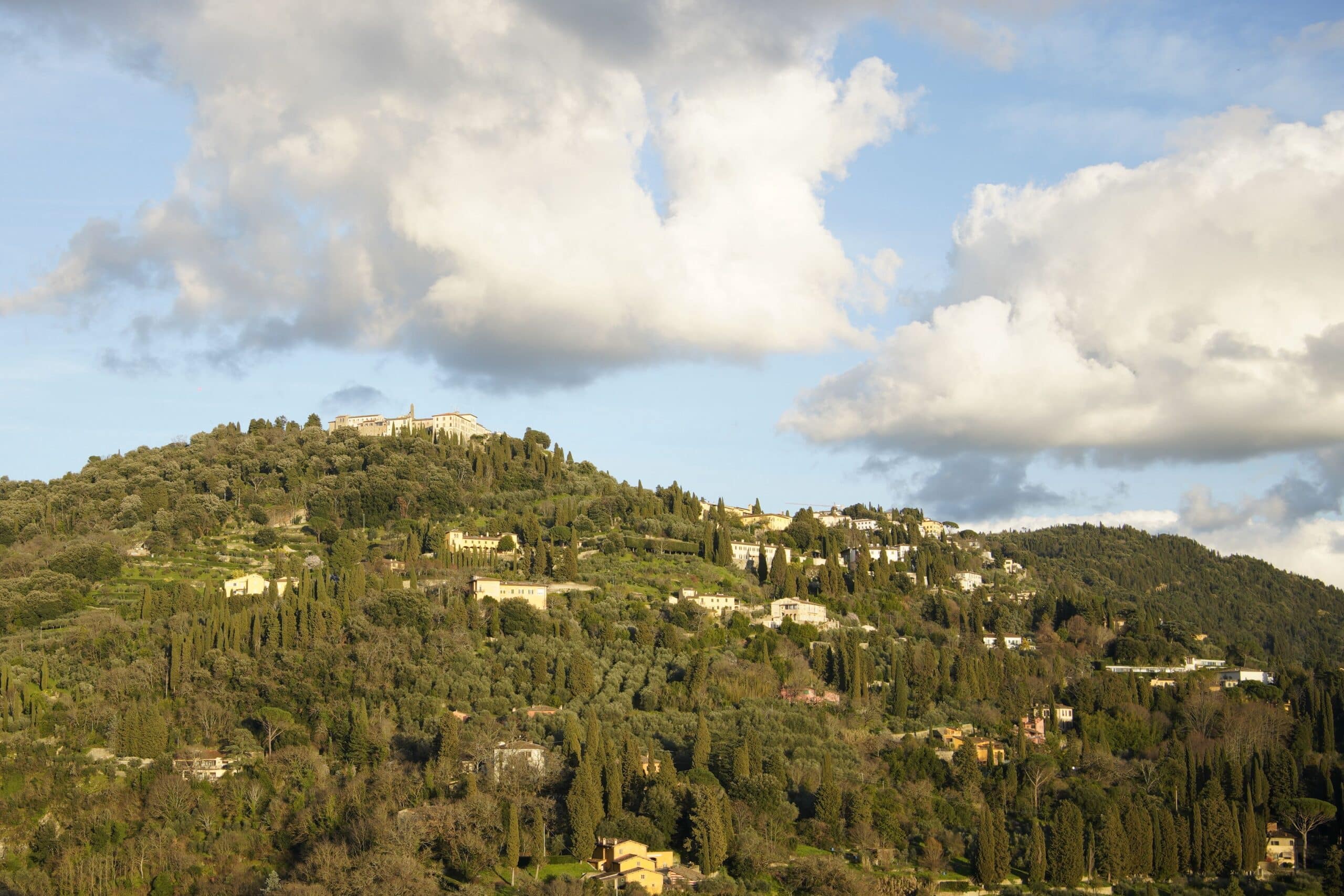
Discover the Charm of Fiesole
Fiesole sits quietly above Florence, only a short distance away yet separated by elevation, light, and pace. The Fiesole Hilltop Town Near Florence Journey explores why this hilltop settlement has drawn attention since the earliest days of Etruscan civilization. Today, it remains one of the most atmospheric places to understand Tuscany’s layered identity, where ancient ruins, monastic silence, and open landscapes meet.
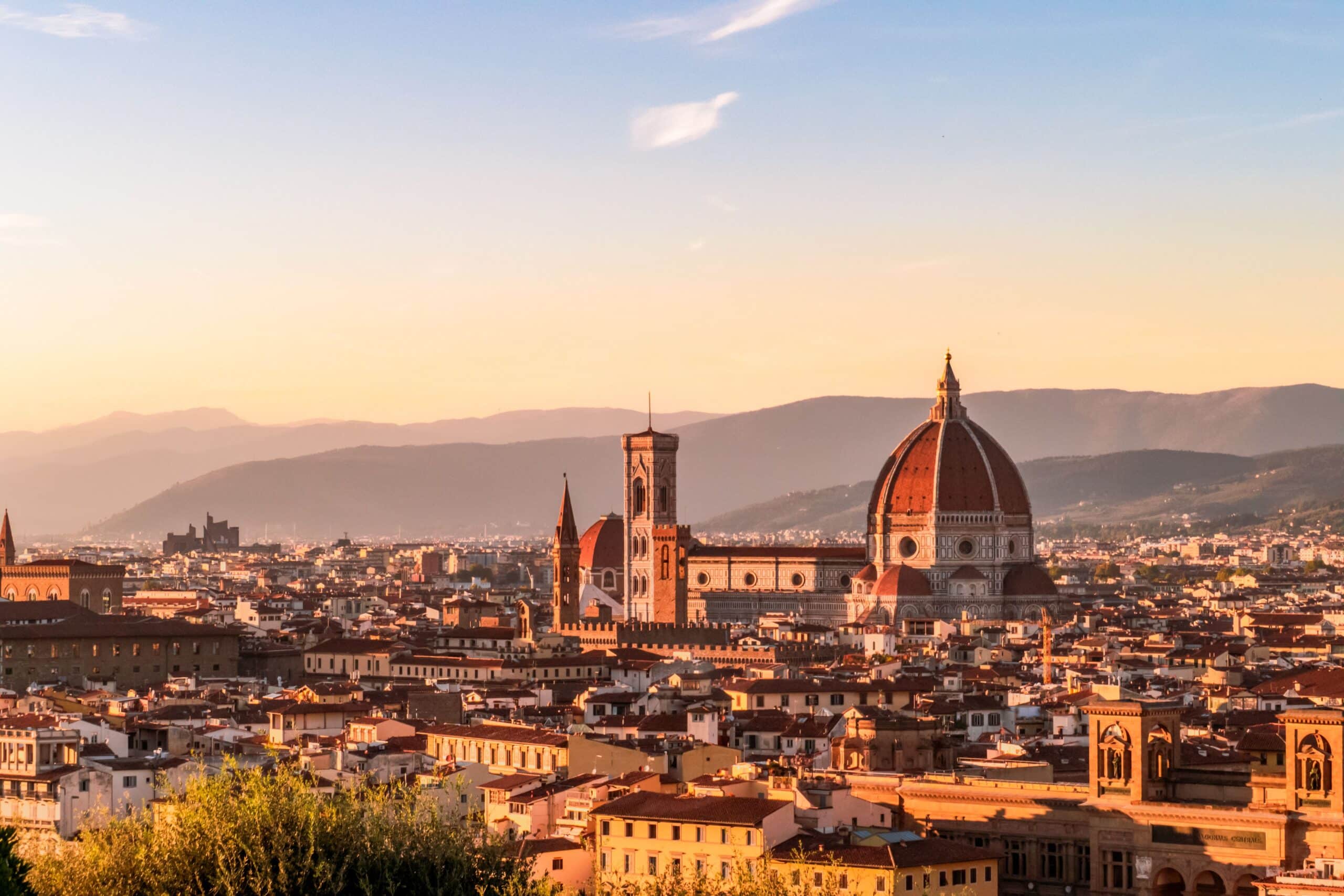
Many travelers arrive in Florence without realizing that some of the region’s most revealing history is found just above it, where Fiesole overlooks the Arno Valley with an uninterrupted view of the city’s evolution.
Fiesole History & Cultural Context
Fiesole predates Florence by centuries. The Etruscans established it as a strategic settlement long before Roman expansion reshaped the region. Its position on the hillside provided both defense and visibility, making it an important cultural and administrative point in early Tuscany.
When Rome expanded northward, Fiesole became a Roman municipium. The remains of its amphitheater and baths reflect a period when public life centered around performance, governance, and shared civic identity.
What most travelers never realize is how continuously inhabited Fiesole has been. Rather than being replaced by Florence, it evolved alongside it, maintaining a distinct identity shaped by elevation, agriculture, and religious retreat.
Monastic communities later defined much of its spiritual landscape. The quiet presence of churches and convents reflects centuries of contemplation, study, and preservation of knowledge above the city below.
Why Fiesole Matters Today
Fiesole offers something Florence alone cannot provide: distance with perspective.
From its terraces, Florence appears not as a museum of Renaissance achievement but as a living, changing city shaped by geography and time. This shift in viewpoint is what makes Fiesole significant for modern travelers.
Many visitors overlook how strongly landscape influences cultural understanding. Fiesole demonstrates this clearly. The hills are not simply scenic; they are interpretive. They frame how history is seen and understood.
The deeper story lies in how civilizations choose elevation as a place for reflection, governance, and retreat. Fiesole continues this pattern today, attracting those who want clarity rather than spectacle.
Fiesole- Local Expert Tip
Local experts often point out that Fiesole reveals its character best in transition hours, when light softens the contours of the hills and Florence begins to glow in the distance.
It is also worth noting that Fiesole is not defined by a single monument. Its meaning emerges from the relationship between ruins, monasteries, and open viewpoints. Understanding this connection changes how the entire hill is experienced.
Practical Travel Advice For Fiesole
Fiesole is easily reached from Florence, making it one of the most accessible cultural escapes in Tuscany. The town is compact, but its terrain includes gentle slopes and uneven stone paths.
Comfortable walking shoes are recommended, especially for exploring archaeological areas and hillside viewpoints. The pace of visit matters as much as the route itself, as Fiesole is best experienced slowly.
Restaurants in the area often emphasize seasonal Tuscan cooking, with menus shaped by local produce and nearby hills. Dining here tends to feel quieter and more reflective than in central Florence.
Seasonal Considerations For Fiesole
Spring and early autumn offer the clearest views across Florence and the valley. Summer brings warmer temperatures, but the elevation provides natural relief compared to the city below.
Winter has a quieter atmosphere, with fewer visitors and sharper visibility across the landscape. Each season changes how the hill is perceived, particularly in relation to light and distance.
Frequently Asked Questions About Fiesole
Why is Fiesole important near Florence?
Fiesole is historically significant because it predates Florence and preserves Etruscan and Roman heritage that shaped early Tuscany.
How far is Fiesole from Florence?
Fiesole is located just a short distance above Florence, making it an easy half-day cultural escape from the city.
What can you see in Fiesole?
Visitors encounter ancient Roman remains, hillside monasteries, and sweeping views over Florence and the Tuscan countryside.
Is Fiesole worth visiting?
Yes. Fiesole offers historical depth and perspective that complements Florence’s Renaissance focus.
What makes Fiesole different from Florence?
Fiesole is quieter, older in origin, and more closely connected to landscape and early civilization rather than Renaissance urban development.
Fiesole in Perspective
Fiesole’s identity is shaped by its relationship with the land beneath it and the civilizations that passed through it. The town is not defined by a single era but by continuity across time.
The deeper story lies in how geography influences culture. From its hilltop position, Fiesole reflects how early settlements, religious communities, and modern visitors have all interpreted the same landscape in different ways.
For those who want to understand Tuscany beyond surface impressions, Fiesole offers a rare clarity of place and time. Contact Artviva for deeper cultural insights and curated experiences that reveal the layers most visitors never fully see.
Why Artviva
Visiting Fiesole with Artviva turns a simple hilltop excursion into a deeper reading of Tuscany’s earliest layers of history. With expert local insight, the experience connects Etruscan origins, Roman remains, and monastic traditions to the landscape you see today.
Rather than focusing only on viewpoints or individual sites, Artviva highlights how Fiesole and Florence are part of the same evolving story—linked by geography, culture, and centuries of exchange.
Artviva brings context, storytelling, and local knowledge to Fiesole, helping you experience the hill not just as a destination, but as a key to understanding Tuscany itself.
Learn more about the Fiesole Hilltop Town Near Florence Tour and book your experience with Artviva.