

The Hidden Stories of Florence’s Historic Center
The historic center of Florence is best understood through guided storytelling that connects its major landmarks, hidden streets, and historical context. A private walking experience helps visitors interpret what they are seeing, from the Duomo to Ponte Vecchio, in a way that reveals how the city actually works as a living historical system.
Why Florence Feels Easy to See but Hard to Understand
At first glance, Florence seems straightforward.
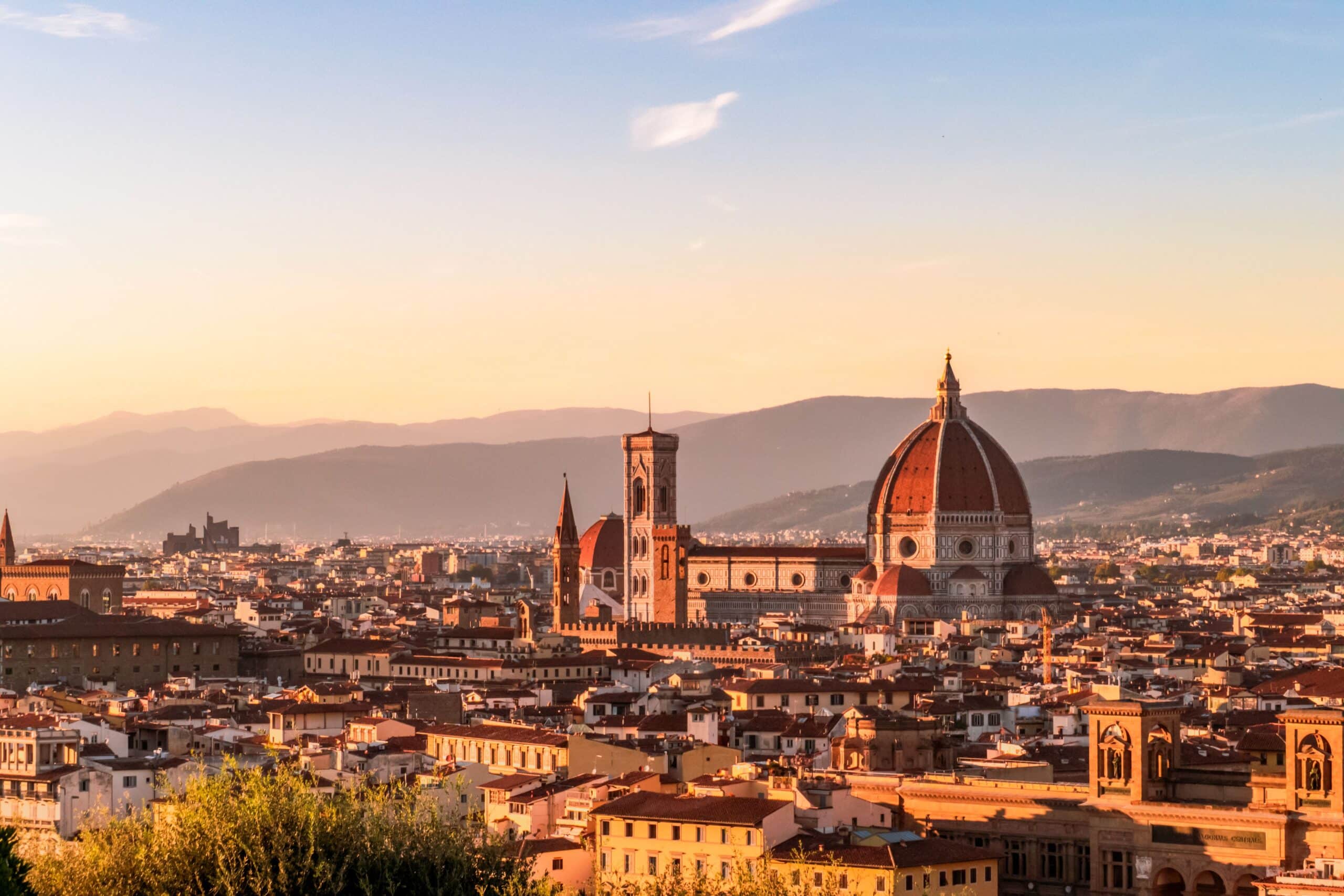
Famous landmarks sit within walking distance. The Duomo dominates the skyline. Piazza della Signoria feels like an open-air museum. The Ponte Vecchio is instantly recognizable.
But many visitors leave with a sense that something is missing.
They have seen the monuments, but not the relationships between them.
Florence is not a city of isolated highlights. It is a connected system built over centuries through religion, politics, trade, and family influence.
Without context, the details remain beautiful but fragmented.
What Most Visitors Miss in the Historic Center
The historic center of Florence is full of visual detail, but its meaning is not always obvious.
A church façade may reflect political rivalry. A street alignment may follow medieval trade routes. A palace may signal the influence of a banking family whose decisions shaped Renaissance Europe.
These layers are easy to walk past without noticing.
Even experienced travelers often focus on individual monuments rather than the structure that connects them.
This is where interpretation changes everything.
Why Guided Storytelling Changes the Experience
Florence becomes significantly more meaningful when its history is explained as a connected narrative rather than a list of sites.
Instead of simply identifying what you are looking at, a guide reveals:
- Why certain families shaped entire districts
- How political power influenced artistic commissions
- Why specific streets and squares were designed the way they are
- How religion, commerce, and civic identity intersected in public spaces
This transforms the city from a visual experience into an understandable one.
Many visitors describe this as the moment Florence “clicks.”
The Role of Art and Power in Florence’s Streets
Florence was built through competition as much as collaboration.
Powerful families invested in architecture and art not only for beauty but for influence. Public spaces were designed to communicate status, authority, and legacy.
This is why the historic center feels so dense.
Every major landmark reflects a decision made by someone who shaped the city’s direction. Understanding this context changes how you see even the most familiar sites.
Why a Private Walking Experience Matters in Florence
A private walking experience in Florence is not about covering more ground.
It is about slowing down enough to understand what you are seeing.
With a specialist guide, the city becomes easier to interpret because connections are made in real time:
- Between monuments and the families behind them
- Between artistic works and political history
- Between visible architecture and hidden meaning
Instead of moving quickly between landmarks, the experience focuses on understanding how Florence functions as a whole.
This is especially valuable in a city where so much history is layered into the same streets.
Local Expert Insight about Florence
Most visitors spend their time looking at Florence.
The real difference comes from learning how to read it.
Details that seem decorative often have practical or political meaning. Locations that appear random often follow historical logic.
Once you understand this, the city becomes significantly more rewarding, even beyond the main sites.
History and Cultural Context in Florence
Florence developed into a major cultural center during the Renaissance due to banking wealth, guild organization, and civic ambition.
The historic center reflects this evolution clearly:
- Religious authority centered around the Duomo complex
- Civic identity expressed in Piazza della Signoria
- Economic power concentrated in merchant and banking districts
- Trade and movement structured along the Arno River
These elements are physically close, but historically interconnected.
Without explanation, their relationships are easy to miss.
Who This Experience Is For
This kind of guided experience appeals most to travelers who:
- Want to understand Florence, not just see it
- Prefer context over isolated facts
- Value storytelling that connects history and place
- Are visiting Florence for the first time or returning for deeper insight
It is especially effective for visitors who feel overwhelmed by how much history is concentrated in a small area.
When to Experience Florence This Way
Florence rewards slower engagement.
Morning and late afternoon are particularly effective because the city feels less crowded and more open to interpretation.
However, the key factor is not timing but guidance.
The same streets can feel completely different depending on the context you receive while walking them.
Frequently Asked Questions
Why do I need a guide in Florence’s historic center?
Because much of Florence’s meaning comes from historical context that is not visible on the surface. A guide helps connect landmarks, families, and events into a coherent story.
What makes Florence different from other historic cities?
Florence is highly concentrated. Its political, religious, and economic history is layered into a small area, making interpretation essential for understanding it fully.
Is a guided walking experience worth it in Florence?
Yes, especially for first-time visitors or those interested in Renaissance history. It transforms the city from a collection of sites into a structured narrative.
What will I understand after a guided experience?
Visitors typically leave with a clearer understanding of how Florence’s power structures, families, and artistic movements shaped the city as a whole.
Bringing the buildings in Florence to life
Florence is often described as an open-air museum.
But that description misses something important.
Museums organize history for you. Florence requires interpretation.
Once the connections between its streets, families, and monuments become clear, the city feels entirely different.
This is where a guided experience becomes most valuable: not in showing what to see, but in revealing what it means.
Visit ArtViva to book your Florence 101 Tour.
Uncover the stories, history, and hidden details that bring Florence to life with Artviva’s Florence 101 Orientation Tour, the perfect introduction to the heart of the Renaissance.