
Florentine Paper Marbling: A Living Artistic Tradition
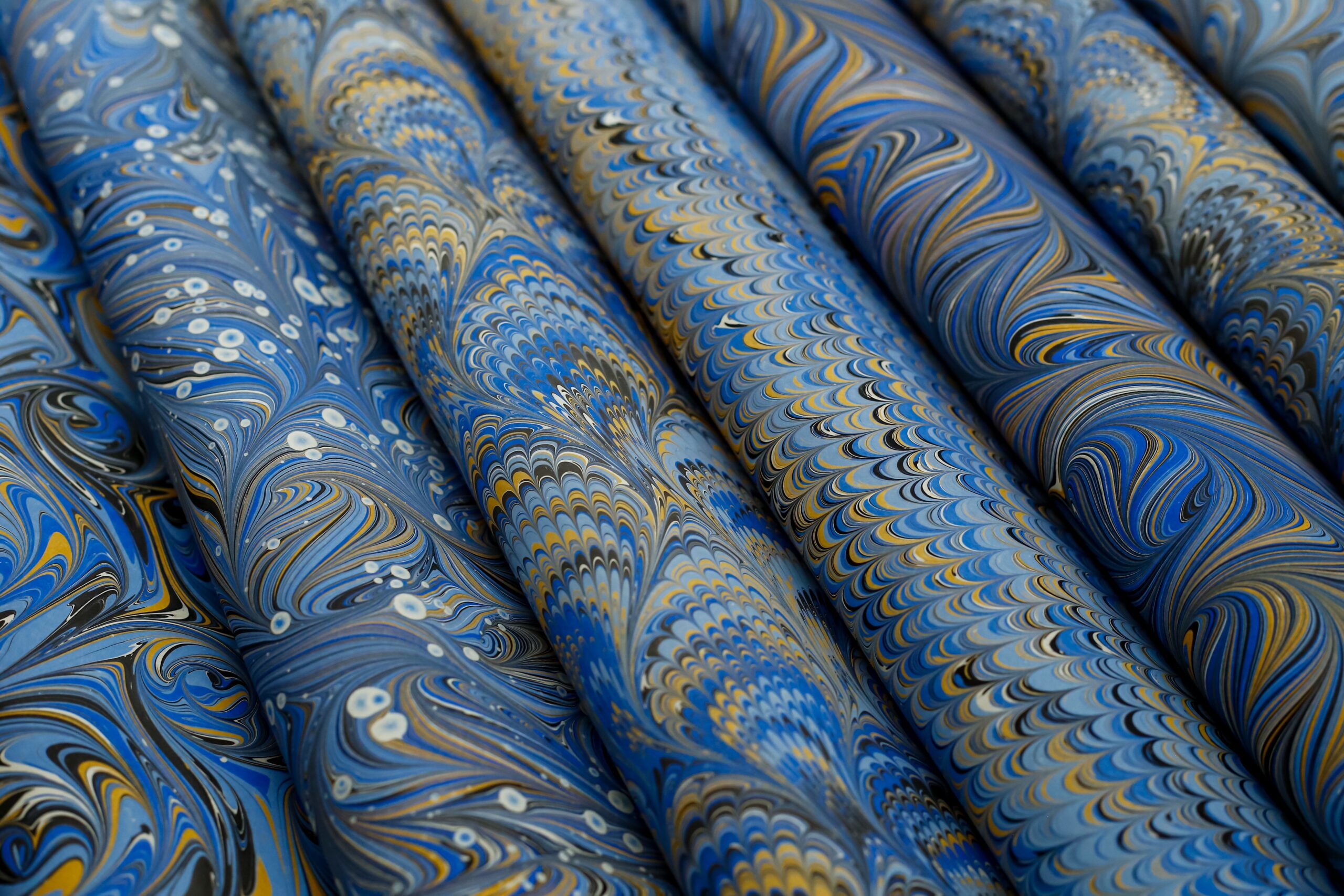
In Florence, artistry has always extended beyond painting and sculpture into the smallest details of daily beauty. One of its most delicate traditions is Florentine paper marbling, a craft where pigment floats across water before being captured onto paper in patterns that feel almost alive.
From Renaissance Bookbinding to Studio Craft: The History of Marbling in Florence
Paper marbling developed alongside Europe’s great bookbinding traditions, when Florentine workshops began experimenting with surface decoration for manuscripts and bound volumes. The technique grew in value not only for its beauty but for its function, as marbled papers protected and distinguished precious texts.
In Florence, color and craft have always been inseparable. Guild-trained artisans refined methods of controlling pigment behavior on water, adjusting thickness, movement, and composition to achieve precise visual effects. Over time, marbling became associated with refined stationery, archival work, and decorative arts tied to intellectual culture.
Many visitors overlook how deeply connected Florence’s visual identity is to paper-based crafts. The same attention to balance, proportion, and restraint found in Renaissance painting appears even in these floating patterns of ink.
Why Florentine Paper Marbling Still Matters Today
Today, Florentine paper marbling is more than a historical technique. It represents a slower way of working with materials, where chance and control exist in careful balance.
The experience resonates with travelers seeking hands-on understanding of Italian craftsmanship. The act of guiding color across water requires patience and observation, qualities that reflect Florence’s broader artistic philosophy.
What most travelers never realize is that these crafts are not preserved as performance, but as living knowledge passed through working studios.
What Master Artisans Reveal About the Process
Local artisans often point out that no two marbled sheets are ever identical, even when using the same movement or pigment. Subtle shifts in humidity, timing, and hand pressure create entirely different results.
This unpredictability is part of what has kept the tradition alive. It rewards attention rather than speed.
How Florentine Paper Marbling Is Practiced in Modern Studios
Florentine paper marbling is best experienced in a quiet studio setting where focus is uninterrupted. Sessions typically involve working directly with pigments, water trays, and specialist tools under guided instruction.
Comfortable clothing is recommended, as the process is hands-on. Finished works are usually dried and prepared for transport so they can be safely carried home.
Travelers interested in Florence’s craft traditions often pair this kind of experience with visits to artisan districts where bookbinding and decorative arts remain active.
When to Experience Paper Marbling in Florence
Florence’s climate subtly influences marbling results. In warmer months, pigments move more fluidly across the water surface, while cooler seasons allow for slightly more controlled patterns.
Spring and autumn are particularly balanced times for craft-focused activities, when studio conditions remain stable and the city is less crowded, allowing for a quieter creative atmosphere.
Common Questions About Florentine Paper Marbling
What is Florentine paper marbling?
It is a decorative art technique where pigments float on water and are transferred onto paper to create unique patterns.
Is paper marbling difficult to learn?
It is accessible to beginners. The process relies more on observation and timing than technical skill.
What makes Florentine marbling different?
Florentine traditions emphasize balance, subtle color use, and refined pattern control rooted in historical book arts.
Can I take my marbled paper home?
Yes. Finished sheets are typically dried and prepared for safe transport.
Is paper marbling still practiced in Florence today?
Yes, it continues in artisan studios where traditional methods are preserved and taught.
A Living Craft in the Heart of Florence
Florentine paper marbling reflects a quieter side of the city’s artistic heritage, where beauty is shaped not by force but by controlled movement and patience. It connects modern visitors to a tradition that values material intelligence and precision over speed.
For those who want to understand Florence beyond surface impressions, context is essential. Art, history, and setting work together to reveal deeper meaning that is often missed in standard visits.
Artviva offers carefully curated cultural encounters in Florence designed to connect travelers with authentic artisan traditions and expert-led insight across the city’s living craft world.
Artviva: Three Decades of Florentine Cultural Expertise
Artviva has been based in Florence since 1996, working closely with established artisans, scholars, and cultural specialists across Tuscany. Our experiences are designed through long-standing local relationships, ensuring access to working studios and practitioners who actively preserve traditional Florentine crafts.
Rather than demonstrations, these are collaborative encounters shaped by decades of cultural knowledge, careful selection, and on-the-ground expertise in Italy’s artisan heritage.
Discover the timeless art of Paper Marbling in Florence with Artviva and learn from local artisans who continue to preserve one of Florence’s most cherished craft traditions.