
Michelangelo’s David Through a Child’s Eyes: A Family Guide to Florence’s Iconic Masterpiece
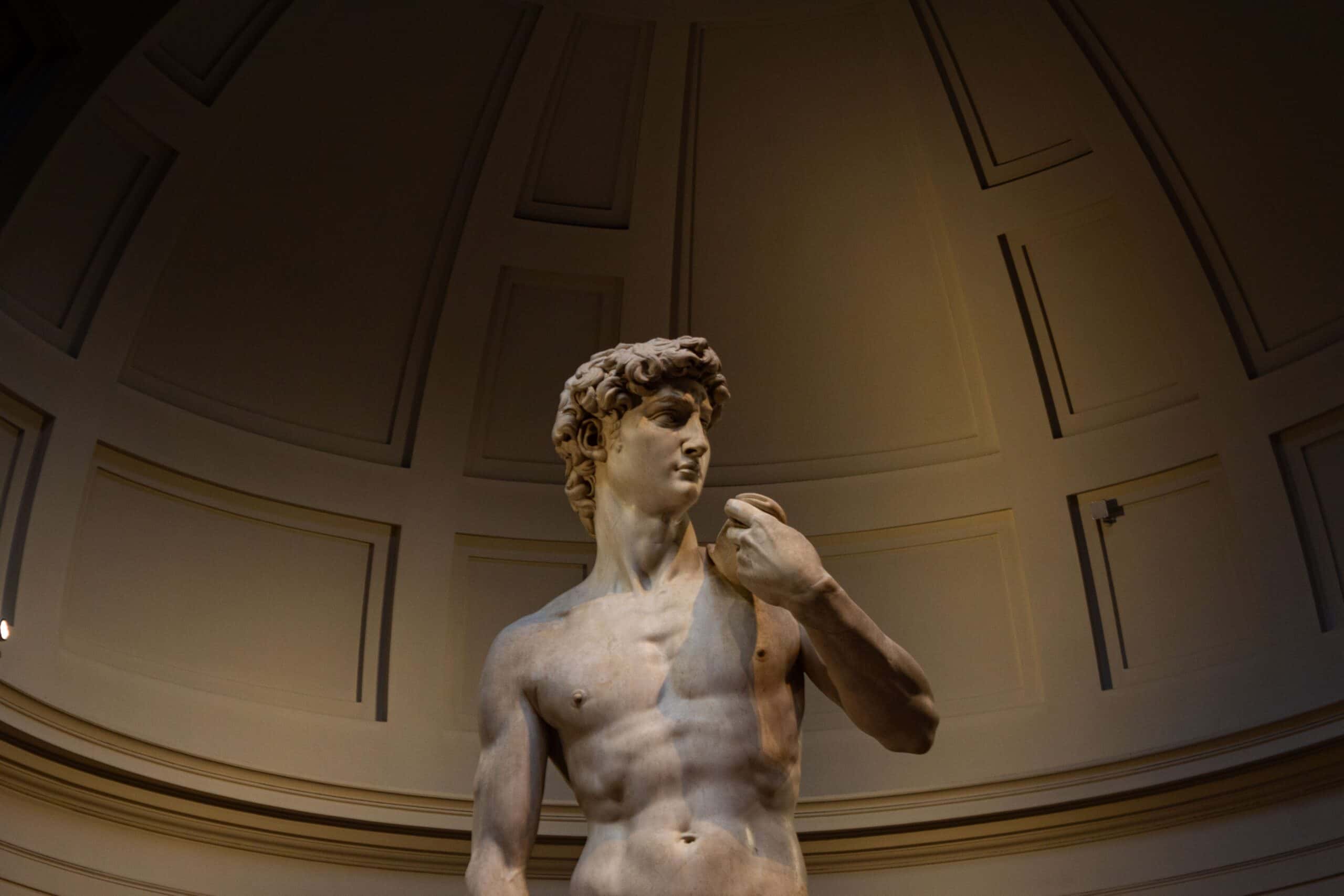
There is a moment in Florence that stays with families long after they leave the city. It happens when children first look up at Michelangelo’s David. The silence is brief, then comes the reaction. Surprise, curiosity, sometimes even disbelief that something carved from stone can feel so alive.
For many families, this becomes the turning point in how children see art.
When a Statue Becomes a Story
To adults, David is a Renaissance masterpiece. To children, he is something else at first glance. Too big, too still, too perfect to make sense. But once the story behind him is told in the right way, something changes.
David becomes a young hero before a battle. A symbol of courage. A figure shaped by patience, tools, and imagination. The marble stops being abstract and becomes part of a process they can understand.
This shift matters. It turns a museum visit into a moment of connection rather than observation.
Florence as an Open-Air Introduction
One of the advantages of seeing David in Florence is what comes before and after. The city itself prepares children for the experience without them realizing it.
Narrow streets, carved stone details, and statues in piazzas quietly build familiarity with the idea that art belongs in everyday life here. By the time families reach the sculpture, children are already used to noticing beauty in unexpected places.
This makes the encounter feel less like a single highlight and more like part of a larger story.
The Role of Storytelling in Understanding Art
Florence was built on stories as much as stone. Artists like Michelangelo did not create in isolation. They worked within systems of patronage, competition, and ambition that shaped every detail of their work.
When children hear these stories in accessible language, they begin to see art differently. Not as something distant or finished, but as something made by people solving problems, making choices, and expressing ideas.
David becomes part of that process rather than a final object.
A Family Memory, Not Just a Museum Visit
What often surprises parents is not how much children learn, but how much they remember.
Long after the visit, families recall the size of the sculpture, the feeling of standing beneath it, or a small detail they noticed together. These shared observations tend to become part of the family’s travel memory of Florence.
It is rarely about covering everything. It is about a single moment that feels real enough to return to later in conversation.
Local Insight for Visiting Families
Florence works best when paced gently with children. Short, focused experiences tend to be more rewarding than longer visits across multiple sites.
Before or after seeing David, time spent in a nearby piazza or over gelato helps children process what they have seen. These pauses are not filler. They are part of how the experience settles into memory.
The city naturally supports this rhythm if it is allowed to unfold.
History and Cultural Context about Florence
Rather than depicting victory, David captures the moment before action. This choice reflects Renaissance ideas about intelligence, preparation, and human potential.
Understanding this context adds depth for older children and adults, but even younger visitors respond to the idea that great works often begin with something imperfect or overlooked. This guided tour provides children an easy way to not only understand but to embrace Florence art history.
Frequently Asked Questions
Is this experience suitable for young children?
Yes. The story-based approach and visual focus make it accessible across ages.
How long should families plan for a visit?
Around one to two hours works best, keeping attention fresh and engagement high.
What do children usually notice first?
Size, expression, and details in the sculpture’s hands and posture often stand out immediately.
Can different ages enjoy it together?
Yes. Mixed-age families often find that children and adults notice different aspects, which leads to shared discussion afterward.
David is more than a Sculpture
Meeting David in Florence is not just about seeing one of the world’s most famous sculptures. For families, it becomes a shared moment of discovery.
If you’re planning time in Florence with your family, we can shape a private, child-friendly visit that brings Michelangelo’s David to life in a way your children will actually connect with. Enquire with Artviva to plan your experience with this Florence for Kids – Say Hi to David tour.
Bring Michelangelo’s David to life for the whole family with ArtViva’s Exclusive Florence for Kids – Say Hi to David Tour!, where engaging storytelling and expert guidance transform one of Florence’s greatest masterpieces into an unforgettable discovery for young travelers.