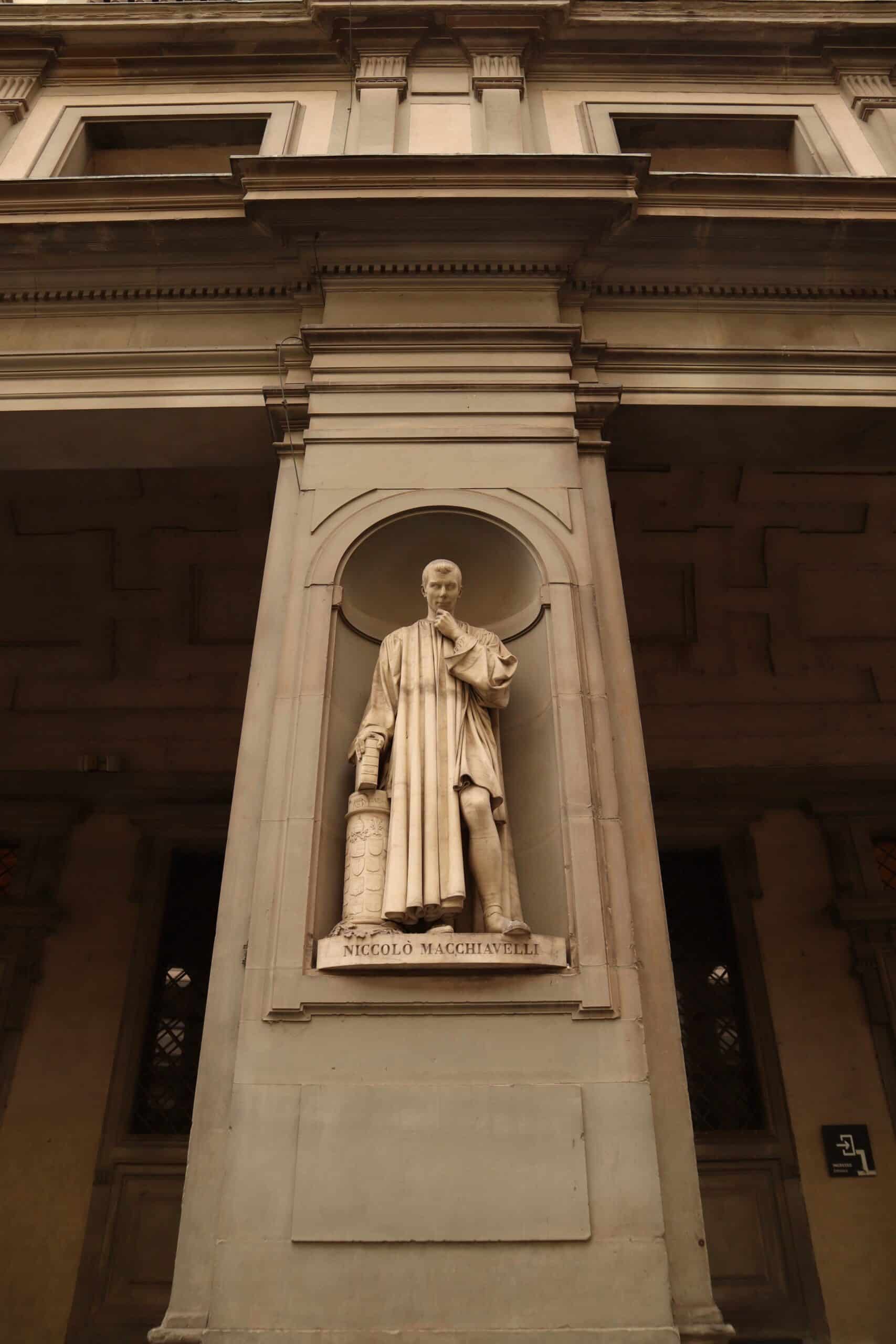
Machiavelli in Tuscany and Italian Counts
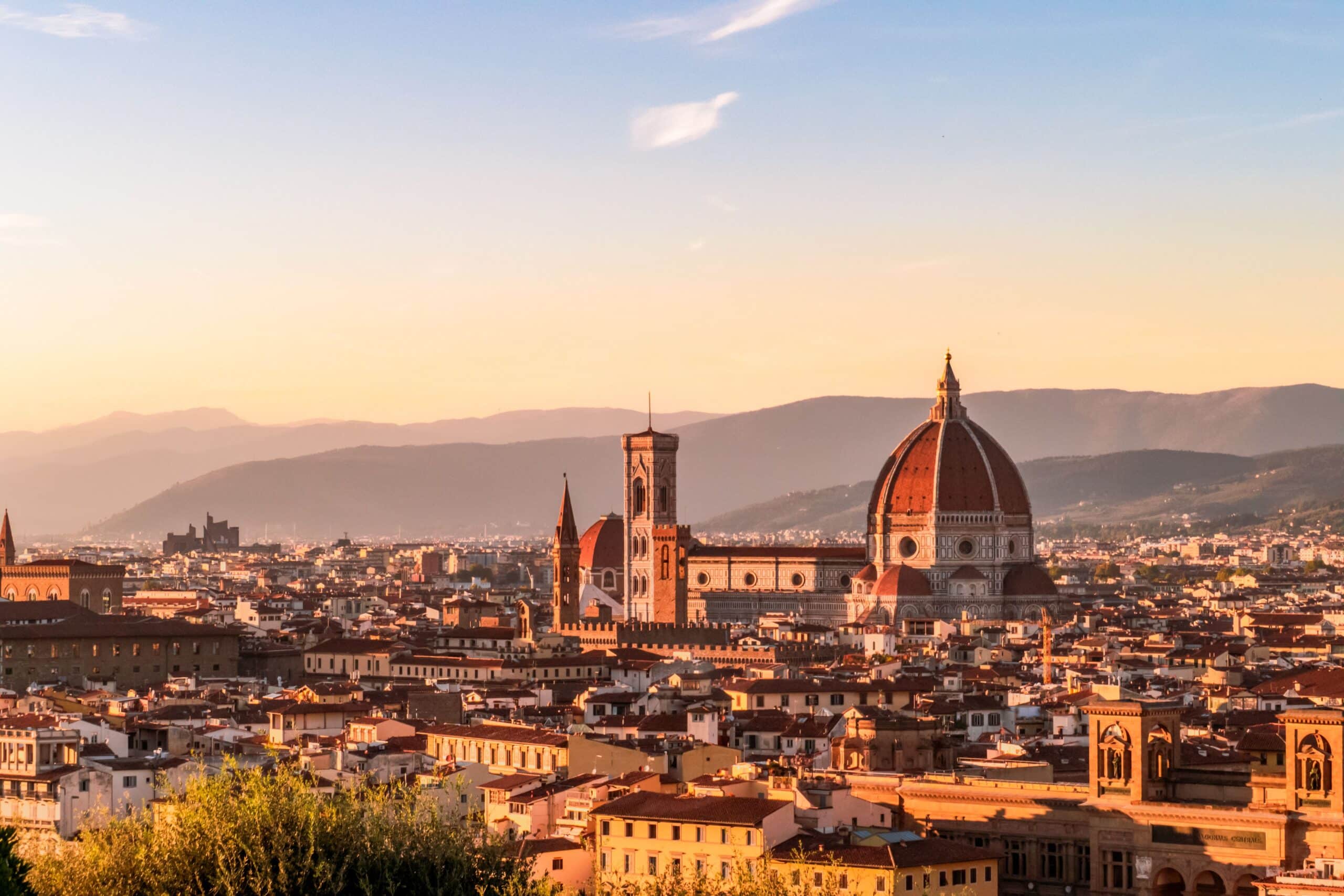
Machiavelli in Tuscany is not only a matter of biography or political theory. It is a story rooted in landscape, exile, and the people who continued to preserve his world long after his lifetime. Among those voices today are Italian counts whose family histories are intertwined with the same Tuscan hills Machiavelli once walked.
In the countryside between Florence and Chianti, where olive trees grow beside vineyards and stone farmhouses sit on ridgelines, Machiavelli’s ideas feel less abstract. They feel shaped by place. Understanding him here means understanding Tuscany itself.
Machiavelli in Tuscany: A Life Shaped by Landscape
Machiavelli’s relationship with Tuscany is often reduced to Florence, but the deeper story unfolds outside the city.
During his exile, he lived in the rural hills of Chianti. This period is where his most enduring ideas took shape. Removed from political office, he turned his attention to observation. Villages, estates, and shifting alliances between families became his reference points for understanding power.
Many visitors overlook how important this countryside phase was. It was not a retreat from politics but a different way of studying it.
The deeper story lies in how Tuscany itself functioned as a living political environment. Authority shifted constantly between city and countryside, between families, and between competing interests. Machiavelli saw this instability firsthand.
Italian Counts and Living Historical Memory
Italian noble families, including counts with deep regional roots, often preserve a different layer of historical memory. In Tuscany, these families are not simply symbolic remnants of the past. They are part of the continuing cultural fabric of the region.
Local experts often point out that aristocratic families in Chianti maintained continuity through land stewardship, agricultural traditions, and social networks that predate modern Italy.
When their perspectives are combined with historical scholarship, Machiavelli’s world becomes more dimensional. It is no longer just a written record but a lived landscape shaped by generations.
What most travelers never realize is that these family histories often preserve details of rural life that official histories overlook. Conversations, traditions, and place-based knowledge fill in gaps left by written sources.
The Tuscan Hills as a Political Landscape
The Chianti countryside was not a passive backdrop to Machiavelli’s life. It was a dynamic environment where land, loyalty, and survival shaped daily reality.
Local experts often describe this region as a network of small power centers. Estates, villages, and farms operated with their own forms of influence and negotiation.
This environment shaped Machiavelli’s understanding of how power actually functions. It was not stable or idealized. It was shifting, personal, and often unpredictable.
The experience takes on new meaning when viewed through this lens. The same hills that appear serene today once reflected constant political and social movement.
Why Machiavelli Still Matters Today
Machiavelli remains relevant because his observations were grounded in human behavior rather than abstract systems.
In Tuscany, this becomes clearer. His writing reflects what he saw around him. Cooperation and conflict existed side by side.
Alliances shifted. Authority was negotiated rather than fixed.
The experience of studying Machiavelli in his Tuscan context allows visitors to see political thought as something shaped by environment rather than theory alone.
For modern travelers, this adds depth to the landscape. Tuscany becomes not only beautiful but intellectually layered.
Local Perspective on Machiavelli in Tuscany and Italian Counts
Local historians and cultural interpreters often emphasize that Machiavelli cannot be separated from the land that shaped him.
They also note that Italian noble families in the region help preserve continuity in how that landscape is understood. Their perspective is not academic alone. It is rooted in generational familiarity with place.
The deeper story lies in how these overlapping perspectives, scholarly and familial, create a fuller picture of Renaissance Tuscany.
What most visitors never realize is that interpretation of Machiavelli changes significantly depending on who tells the story. That variation is part of what makes the region so intellectually rich.
Practical Travel Insight
The Chianti region surrounding Florence is best experienced with time and attention rather than speed.
Understanding Machiavelli here is less about locations and more about context. Hills, villages, and historic estates all contribute to a broader sense of continuity.
Travelers interested in history, philosophy, or cultural evolution will find this region especially rewarding. No prior academic background is needed, only curiosity.
Seasonal Perspective in Chianti
Spring brings clarity to the landscape, with green hills and active agricultural life that reflect the rhythms Machiavelli once observed.
Summer offers long light across the countryside, highlighting the geometry of vineyards and estates.
Autumn introduces harvest activity, which connects directly to the agricultural foundation of Tuscan life.
Winter creates a quieter atmosphere that emphasizes reflection and historical interpretation.
Each season changes how the landscape communicates its history.
Frequently Asked Questions About Machiavelli in Tuscany
Why is Machiavelli associated with Chianti?
Because much of his intellectual work developed during his exile in the Chianti countryside outside Florence.
What role do Italian counts play in understanding Tuscany?
They represent continuity of land, tradition, and regional memory that helps contextualize historical narratives.
Can you still see Machiavelli’s influence in Tuscany today?
Yes, especially in how the region is interpreted through its political history, literature, and preserved rural landscapes.
Do you need historical knowledge to understand Machiavelli in Tuscany?
No. The experience becomes accessible through storytelling and context provided by knowledgeable interpreters.
Where Machiavelli’s World Still Speaks
Machiavelli’s Tuscany is a landscape shaped by exile, observation, and the lived realities of rural life. When seen alongside the perspectives of Italian counts who preserve regional continuity, his world becomes more tangible and more complex.
The Chianti hills are not only scenic terrain. They are part of an intellectual history where ideas about power, society, and human behavior were formed through experience rather than theory alone.
For travelers who want to explore this deeper layer of Tuscany, Artviva offers carefully guided private cultural experiences in Chianti, designed to bring historical context, landscape, and interpretation together in a meaningful way.
Why Artviva Is Considered a Trusted Cultural Authority in Italy
Artviva has been based in Florence since 1996, working closely with historians, scholars, and long-established regional families across Tuscany.
This long-standing presence has created access to cultural perspectives that go beyond standard historical summaries. The focus is on interpretation, context, and continuity between past and present.
Over decades, this network has developed into a trusted framework for understanding Italian culture in a more layered and informed way.
For travelers seeking depth rather than surface-level explanation, this approach offers a more meaningful way to engage with Tuscany’s history and intellectual heritage.
Learn more about Artviva’s Machiavelli in Tuscany with an Italian Count-Day Tour and book your private experience.