

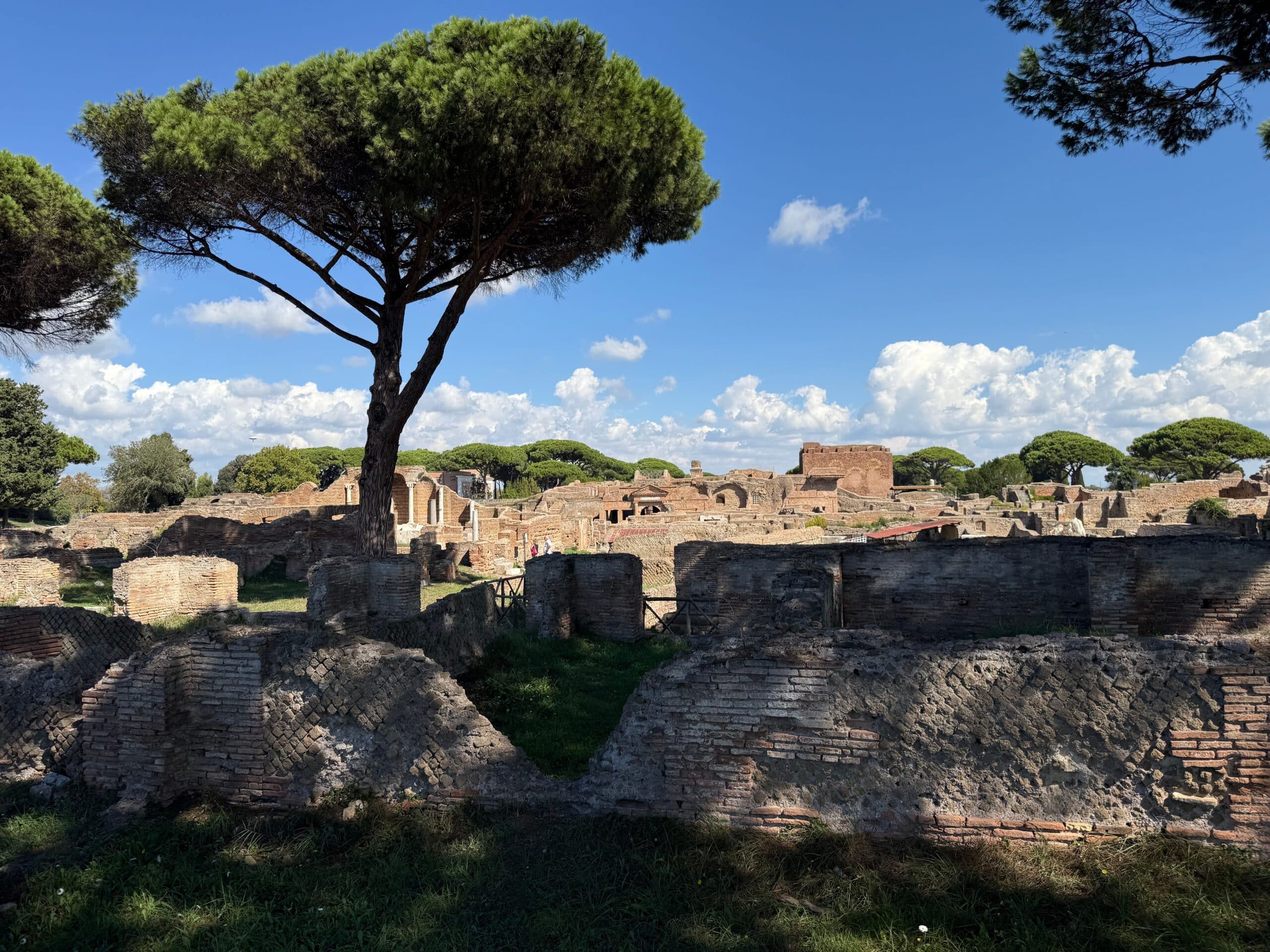
Ostia Antica Private Tour From Rome: Discover Ancient Roman Life
Most people picture Ancient Rome as crowded landmarks, giant monuments, and long lines outside famous sites. Ostia Antica feels completely different. Just outside Rome, this ancient port town gives travelers the rare chance to walk through an entire Roman city that still feels surprisingly real.
The streets remain intact. Mosaic floors still decorate bathhouses and merchant offices. Ancient apartment buildings still rise above narrow stone roads. You can even stand inside a Roman café where marble serving counters remain exactly where they were centuries ago.
An Ostia Antica private tour from Rome offers a slower and more personal way to experience Roman history. Instead of rushing between landmarks, you move through spaces where ordinary people once lived, worked, traded, and gathered every day.
With Artviva’s private guide and driver, the experience feels thoughtful, relaxed, and deeply connected to the human side of Ancient Rome.
Why Travelers Love Ostia Antica
Ostia Antica often surprises travelers because it feels far less crowded than many famous Roman sites. The atmosphere is calm, especially in the early morning or late afternoon when warm sunlight filters through the pine trees surrounding the ruins.
Many visitors compare it to Pompeii, but the experience feels very different.
Pompeii captures a city frozen in tragedy. Ostia Antica feels like a living neighborhood paused in time. You can wander through old shops, apartment buildings, bathhouses, and public squares while imagining daily life unfolding around you.
The city once served as Rome’s main port, bringing grain, wine, olive oil, marble, and spices into the empire. Merchants from across the Mediterranean passed through these streets, and many traces of their businesses still remain today.
For travelers who enjoy archaeology, architecture, storytelling, or history, Ostia Antica becomes one of the most memorable experiences near Rome.
Roman Streets and Everyday Life
What makes Ostia Antica special is how human it feels.
You are not just looking at ruins from a distance. You walk directly through them. Wagon tracks still mark the stone roads. Public fountains stand at street corners. Staircases lead into apartment buildings where Roman families once lived above busy shops.
One of the most interesting areas is the Square of the Guilds. Ancient merchants once operated businesses here, and many original mosaics still advertise their services. Some show ships, sea creatures, or animals connected to trade routes across the empire.
Nearby, the Baths of Neptune remain one of the highlights of the site. The black and white mosaics still look incredibly detailed after nearly two thousand years.
Your guide helps connect these spaces to real stories and daily routines instead of simply listing historical facts. You begin to picture sailors stopping for meals, children running through the streets, and merchants gathering in the forum to discuss business arriving from distant ports.
Private Ostia Antica Tours From Rome
A private tour changes the experience completely.
Instead of following a large group, you move at your own pace and spend more time on the areas that interest you most. Some guests want to focus on Roman engineering and city planning. Others enjoy hearing about family life, food culture, or ancient trade routes.
Artviva includes private transportation from Rome, making the day smooth from start to finish. The drive itself takes less than an hour, which makes Ostia Antica an easy addition to a Roman itinerary without feeling exhausting.
Families often enjoy the theater and old cafés, while history lovers appreciate the preserved forums, warehouses, and apartment blocks. Couples usually love the quieter atmosphere compared to central Rome.
Because the site is large, having a knowledgeable guide makes a huge difference. Many important details are easy to miss without context.
Roman Baths, Mosaics, and Ancient Engineering
Ostia Antica shows how advanced Roman cities really were.
The bathhouses reveal sophisticated heating systems, water channels, and communal gathering spaces that once played a major role in social life. Your guide explains how Romans used these spaces daily and why bath culture mattered so much throughout the empire.
One stop travelers always remember is the public latrine near the baths. Rows of stone seats remain fully visible, offering a surprisingly honest look into Roman daily routines.
The theater also remains beautifully preserved. During the Roman Empire, crowds gathered here for performances, speeches, and celebrations. Today, the setting still feels dramatic beneath the tall pine trees surrounding the structure.
The museum at the end of the visit adds another layer to the experience with marble statues, carvings, and artifacts recovered throughout the archaeological site.
Best Time to Visit Ostia Antica
Spring and fall are usually the best seasons for visiting Ostia Antica.
From March through May, temperatures stay comfortable and flowers begin appearing among the ruins. September and October also offer beautiful light and fewer crowds compared to peak summer months.
Summer visits can still be wonderful, especially in the morning before the hottest part of the day. The archaeological park includes more shaded areas than many travelers expect thanks to the pine trees throughout the site.
Winter brings a quieter atmosphere that many photographers and history lovers enjoy.
Comfortable walking shoes are important year round because many original Roman roads still remain uneven beneath your feet.
Local Expert Tip
One of the easiest places to overlook is also one of the most fascinating.
Near the Baths of Neptune, stop inside the ancient Thermopolium, a Roman snack bar where marble serving counters still remain in place. These cafés once served hot meals, wine, and quick snacks to locals moving through the city.
The setting feels strangely familiar even today. It reminds travelers that Roman life was not always grand or ceremonial. Much of it revolved around simple routines, meals, conversations, and busy streets filled with ordinary people.
Ask your guide about Roman street food while standing there. The stories bring the city to life in an entirely different way.
History and Cultural Context
Ostia Antica began as a military settlement protecting the mouth of the Tiber River before growing into Rome’s main commercial port.
At its height, thousands of people lived and worked here. Goods arriving from across the Mediterranean passed through the city before continuing inland toward Rome.
As the Roman Empire declined, the harbor slowly filled with silt and trade routes changed. Residents gradually abandoned the city, and layers of earth preserved much of Ostia for centuries.
Excavations beginning in the nineteenth century uncovered one of the most important archaeological sites in Italy. Today, historians consider Ostia Antica one of the best preserved examples of daily urban life in the Roman world.
Frequently Asked Questions About Ostia Antica
Is Ostia Antica worth visiting from Rome?
Yes. Many travelers consider it one of the most rewarding day trips from Rome because it feels immersive, authentic, and far less crowded than many famous landmarks.
How long does an Ostia Antica tour take?
Most private tours last around four hours, including transportation from Rome.
Can children visit Ostia Antica?
Absolutely. Families often enjoy the theater, bathhouses, mosaics, and storytelling connected to Roman daily life.
What should I wear to Ostia Antica?
Comfortable walking shoes, sunscreen, water, and light layers work best throughout most of the year.
Is Ostia Antica better than Pompeii?
The sites offer very different experiences. Ostia Antica feels quieter and more focused on everyday Roman life, while Pompeii captures a dramatic historical moment connected to Mount Vesuvius.
Private Roman Experiences With Artviva
Many guests combine Ostia Antica with other private Roman experiences during their stay.
Artviva also offers Vatican visits, underground Colosseum experiences, private Sistine Chapel tours, and food focused journeys into the Tuscan countryside.
Together, these experiences create a deeper understanding of Italy’s history, art, and culture while maintaining a comfortable and thoughtfully planned pace.
Reserve Your Ostia Antica Private Tour
Ostia Antica changes the way travelers think about Ancient Rome.
After walking these streets, the Roman world feels far more personal and alive. You stop seeing the empire only through monuments and begin imagining the people who shaped it through everyday routines, conversations, work, and family life.
With expert local guides, private transportation, and carefully paced storytelling, Artviva’s Ostia Antica experience offers one of the most meaningful historical visits near Rome.
Reserve your preferred date with Artviva and discover a quieter side of Ancient Rome that many travelers never fully experience.