
Pompeii Italy: Discover the Ancient City Frozen in Time
Few archaeological sites in the world offer such a powerful connection to the past as Pompeii Italy. Buried beneath volcanic ash after the eruption of Mount Vesuvius in 79 AD, this ancient Roman city preserves an extraordinary glimpse into everyday life nearly two thousand years ago.
Walking through Pompeii today feels like opening a window into the Roman world. Ancient streets reveal the footsteps of merchants, families, politicians, and craftsmen who once filled the city with movement and conversation. Frescoes still decorate private homes, temples stand beside bustling marketplaces, and the remains of public spaces reveal the sophistication of Roman society.
For travelers interested in history, art, and human stories, Pompeii offers one of Italy’s most unforgettable cultural experiences.
Why Pompeii Italy Continues to Fascinate Travelers
Pompeii captures attention because it tells a deeply human story.
Many ancient cities disappeared through gradual decline, leaving behind scattered ruins. Pompeii experienced something different. The eruption of Mount Vesuvius suddenly interrupted daily life, preserving buildings, objects, artwork, and streets beneath layers of volcanic material.
This unusual preservation allows visitors to understand how Romans lived, worked, worshiped, and entertained themselves.
Rather than seeing only monumental ruins, travelers encounter details of ordinary life:
- bakeries where bread was once prepared
- homes decorated with colorful frescoes
- fountains that supplied water throughout the city
- shops where merchants sold goods
- public baths where residents gathered
These details transform Pompeii from an archaeological site into a story about real people.
History & Cultural Context: The Day Mount Vesuvius Changed Everything
In 79 AD, Mount Vesuvius erupted with devastating force, covering Pompeii and surrounding communities with ash and pumice.
The eruption arrived during a period when Pompeii had already become a prosperous Roman city. Located near the Bay of Naples, it benefited from trade, fertile land, and its connection to important Roman territories.
Before the disaster, Pompeii was a vibrant community filled with public buildings, villas, religious spaces, and commercial activity.
The eruption buried the city for centuries, preserving remarkable evidence of Roman civilization. When excavations began in the 18th century, archaeologists uncovered streets, homes, artwork, and objects that transformed modern understanding of ancient Rome.
Today, Pompeii remains one of the most important archaeological discoveries in the world.
What to See in Pompeii Italy
The size of Pompeii can feel overwhelming. The ancient city covers more than 160 acres, making thoughtful planning essential for appreciating its most meaningful areas.
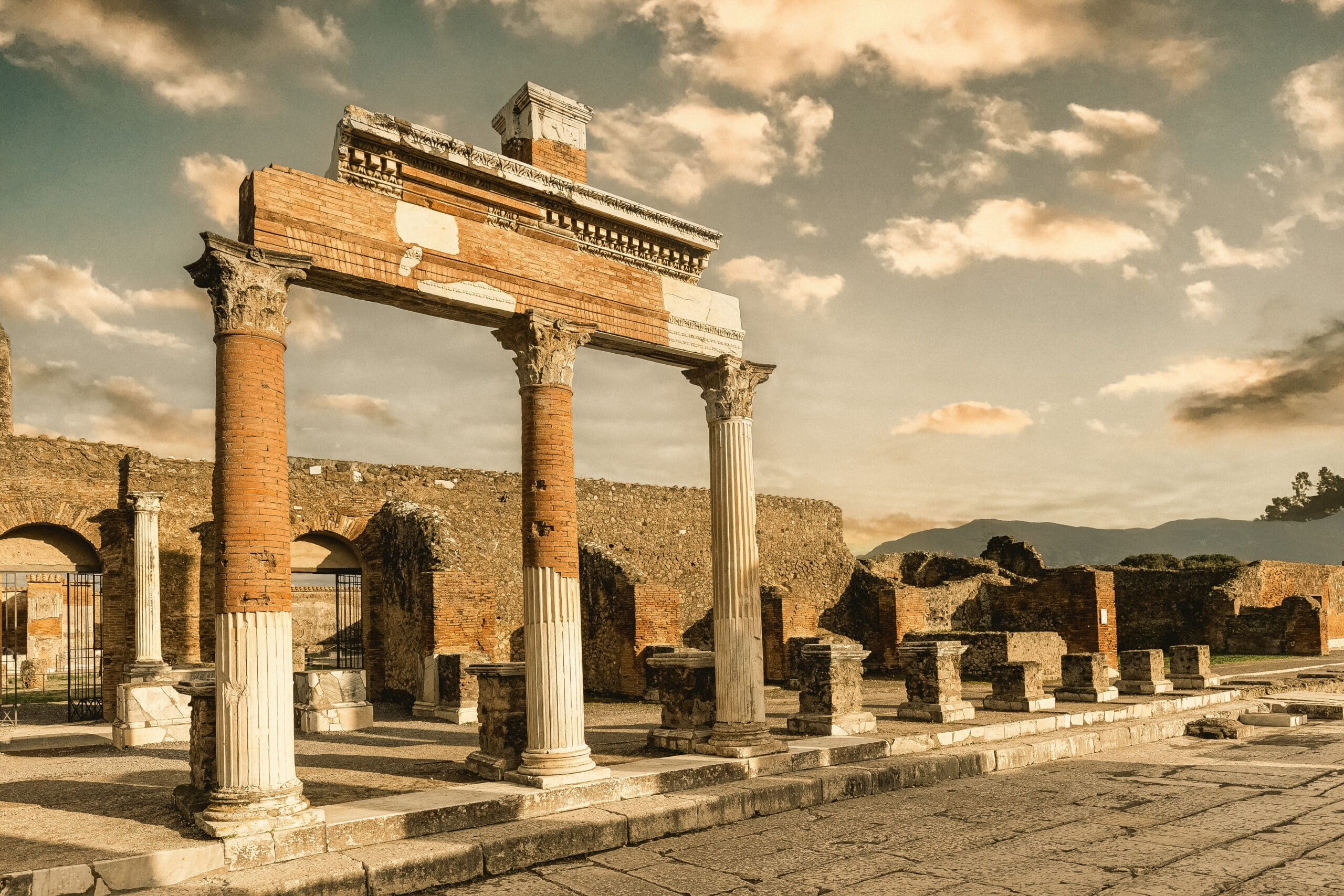
The Forum: The Heart of Public Life
The Forum served as the center of political, religious, and economic activity.
Surrounded by temples and public buildings, this open space hosted gatherings, ceremonies, and markets.
Standing here offers a powerful sense of how connected Roman communities were to civic life.
The Temples of Jupiter and Apollo
Religion played a central role in Roman society.
The Temple of Apollo is one of Pompeii’s oldest religious sites, while the Temple of Jupiter reflects the importance of Roman gods and imperial culture.
These spaces reveal the beliefs and rituals that shaped daily life before Christianity became dominant throughout the region.
The Ancient Roman Baths
The Terme Stabiane demonstrate the impressive engineering of Roman society.
Public baths were not simply places for washing. They were social centers where residents gathered, exercised, and exchanged news.
The preserved architecture reveals advanced heating systems and thoughtful design that continue to impress visitors today.
The Homes of Pompeii
Perhaps the most fascinating parts of Pompeii are the private residences.
Homes reveal the personalities and lifestyles of their owners through decorative details, garden designs, mosaics, and painted walls.
The House of the Faun, one of the largest residences in Pompeii, showcases the wealth and artistic sophistication of elite Roman families.
The Amphitheater
Built around 70 BC, Pompeii’s amphitheater is among the oldest surviving Roman amphitheaters.
The structure once welcomed thousands of spectators who gathered for public games and performances.
Standing inside today allows visitors to imagine the energy of ancient Roman entertainment.
The Art of Pompeii: Frescoes, Mosaics, and Roman Creativity
Pompeii is famous not only for its architecture but also for its extraordinary artwork.
Roman homes featured elaborate frescoes that decorated dining rooms, gardens, and private spaces. These paintings depicted mythology, landscapes, architecture, and scenes from everyday life.
The colors remain surprisingly vibrant because volcanic ash protected them from centuries of exposure.
Mosaics also reveal the incredible craftsmanship of Roman artists. Tiny pieces of stone and glass were carefully arranged to create detailed images, from geometric patterns to dramatic mythological scenes.
Together, these works show that art played an essential role in Roman identity.
Local Expert Tip: Plan Your Visit Around the Seasons
Pompeii is an outdoor archaeological site, so choosing the right time to visit can greatly improve the experience.
Spring and autumn offer comfortable temperatures and beautiful light for exploring the ruins. Summer brings longer daylight hours but can become extremely warm, especially during midday.
Arriving earlier in the day provides a quieter atmosphere and allows more time to appreciate the details.
Comfortable walking shoes are essential because the ancient streets are uneven, and much of the site requires walking outdoors.
A knowledgeable guide can also help visitors understand the significance behind what they see, transforming scattered stones into meaningful stories.
Frequently Asked Questions About Pompeii Italy
Why is Pompeii famous?
Pompeii is famous because the eruption of Mount Vesuvius preserved an ancient Roman city, offering an extraordinary look into daily life nearly two thousand years ago.
How long should you spend in Pompeii?
Most visitors spend two to four hours exploring the main areas, although history enthusiasts may enjoy spending longer.
What are the most important things to see in Pompeii?
Highlights include the Forum, ancient temples, Roman baths, frescoed homes, and the amphitheater.
Is Pompeii worth visiting?
Yes. Pompeii offers one of the most unique opportunities in Italy to experience ancient history through preserved streets, artwork, and architecture.
What is the best time of year to visit Pompeii?
Spring and autumn are ideal because of pleasant temperatures and fewer crowds compared with peak summer months.
Why Travelers Trust Artviva
Since 1996, Artviva has helped travelers experience Italy through authentic storytelling, local expertise, and carefully curated cultural discoveries.
Our historians and licensed guides bring destinations like Pompeii to life by connecting archaeological remains with the people, traditions, and events that shaped them.
With decades of experience throughout Italy, Artviva understands that meaningful travel comes from understanding the stories behind the places you visit. Through trusted local relationships and expert knowledge, we help travelers experience Italy with greater depth and appreciation.
Discover the Stories of Ancient Pompeii
Pompeii remains one of Italy’s most extraordinary connections to the ancient world.
Every street, painting, and stone reveals something about the people who lived there and the civilization they created. From Roman engineering to everyday traditions, the city continues to inspire travelers who want to understand the past in a personal way.
Discover The Best of Pompeii Tour – An Exclusive Private Exploration with Artviva and experience the ancient city through expert local insight, historical storytelling, and a deeper connection to one of Italy’s greatest archaeological treasures.