

Private Capitoline Museums Tour Rome
Rome has museums filled with masterpieces. The Capitoline Museums feel different.
The experience is quieter, more atmospheric, and deeply tied to the identity of the city itself. Marble emperors stand beside Renaissance paintings. Ancient mythology meets papal ambition. Outside the windows, Rome stretches across the hills in every direction.
Artviva’s Private Capitoline Museums Tour Rome offers a carefully paced three hour experience through one of the oldest public museum collections in the world, guided by an expert art historian who brings the city’s artistic and political history into focus.
For travelers who want context rather than crowds, it becomes one of the most rewarding cultural experiences in Rome.
Capitoline Museums History
The Capitoline Museums began in 1471 when Pope Sixtus IV donated important bronze sculptures to the people of Rome. That gesture created one of Europe’s earliest public museum collections and established the Capitoline Hill as a place where art, politics, and civic identity would continue to intersect for centuries.
The setting itself carries enormous significance.
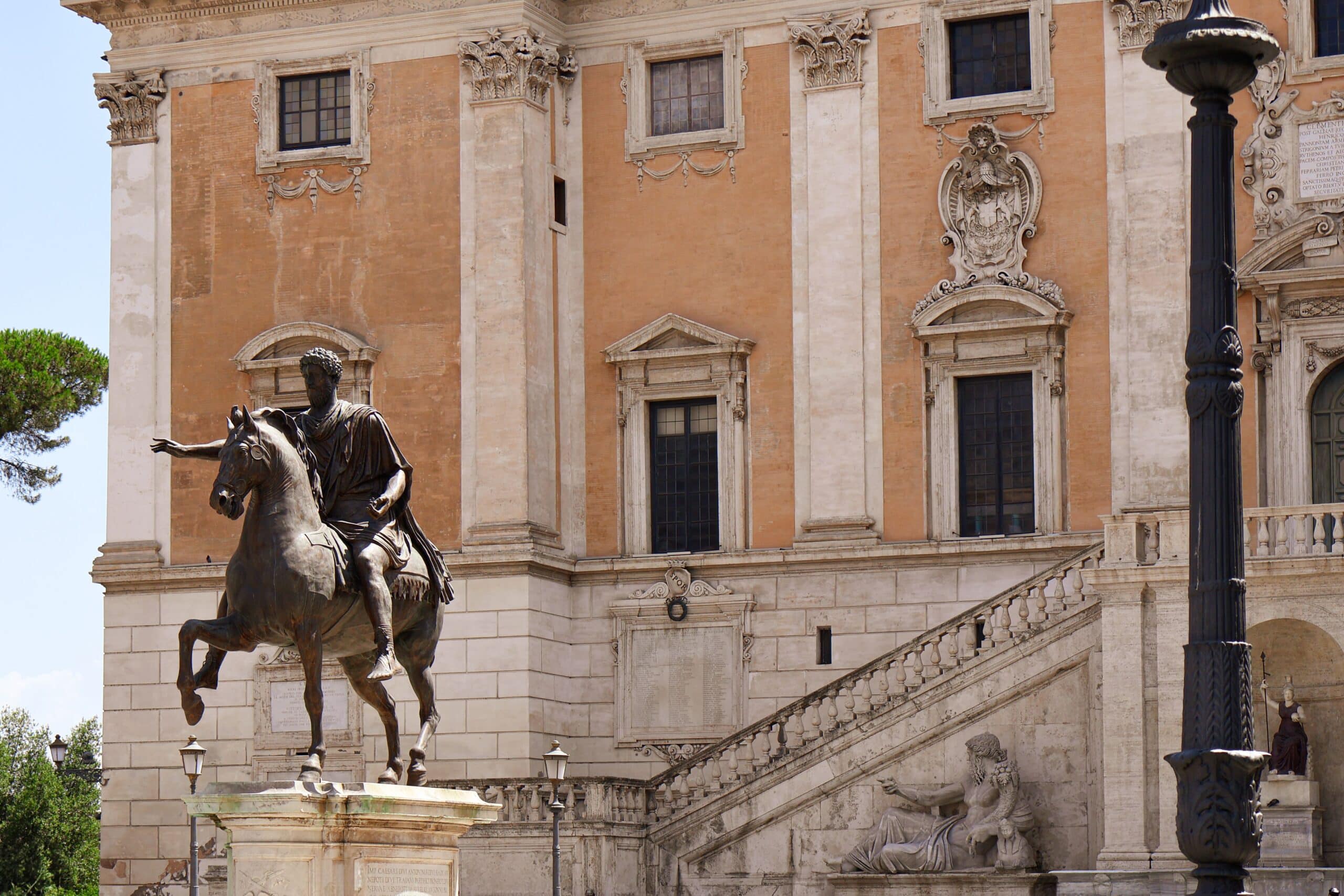
Michelangelo redesigned Piazza del Campidoglio during the Renaissance, shaping the elegant geometric piazza visitors still cross today before entering the museums. From the hilltop, views open across the Roman Forum and the layered skyline of the Eternal City.
Unlike museums that overwhelm visitors with endless corridors and dense collections, the Capitoline Museums feel balanced and human in scale. The galleries move naturally between ancient sculpture, mythology, political portraiture, and Renaissance painting, allowing travelers to absorb the experience without exhaustion. Many guests later describe it as the museum that helped Rome finally make sense.
Private Capitoline Museums Tour Experience
Your private guide begins outside on Capitoline Hill, explaining how the piazza became a symbol of Renaissance urban planning and papal power. From there, the visit unfolds room by room through carefully curated galleries filled with ancient marbles, imperial sculpture, and celebrated paintings.
One of the first unforgettable encounters is the equestrian statue of Marcus Aurelius.
For centuries, Romans mistakenly believed the bronze emperor represented Constantine, helping preserve it while many pagan statues disappeared. Today it remains one of the greatest surviving bronze sculptures from antiquity and one of the defining images of imperial Rome.
Nearby, the Dying Gaul captures extraordinary emotional realism. The wounded warrior appears noble rather than defeated, changing how later generations approached heroism and vulnerability in sculpture.
Another dramatic highlight comes in the form of Constantine’s colossal marble fragments. A massive hand, foot, and facial features remain from what was once an enormous imperial statue designed to project authority throughout the Roman world.
The Capitoline Wolf also draws visitors into Rome’s legendary origins through the story of Romulus and Remus. Whether viewed as mythology or political symbolism, the sculpture continues to shape the visual identity of the city itself.
Renaissance Paintings in Rome
Many travelers arrive expecting only ancient Roman sculpture and are surprised by the quality of the painting galleries.
Inside quieter museum rooms, works by Caravaggio, Titian, Rubens, Tintoretto, and Veronese create a completely different atmosphere from the monumental marble halls. Caravaggio’s paintings often become a favorite moment of the visit. His dramatic contrasts of light and shadow transformed European painting forever. With an expert guide, subtle details suddenly reveal emotional intensity, symbolism, and social commentary that many visitors would otherwise miss. Titian’s religious scenes bring warmth and movement into sacred imagery, while Rubens introduces theatrical color and energy influenced by both Italy and Northern Europe.
Together, the galleries reveal how Rome remained a center of artistic innovation long after the ancient empire collapsed.
Why Visit the Capitoline Museums
Travelers often ask whether the Capitoline Museums are worth visiting during a first trip to Rome.
Absolutely.
The museums provide something many larger attractions cannot: perspective.
The collection connects ancient Rome to Renaissance Rome in a way that feels coherent and emotionally engaging. Instead of seeing isolated masterpieces, visitors begin understanding how art shaped power, religion, leadership, and public image across centuries.
A private guide makes the difference.
Without interpretation, many sculptures appear visually impressive but emotionally distant. During a private visit, stories emerge naturally. Mythological references become understandable. Political symbolism becomes visible. Artistic techniques suddenly feel relevant rather than academic.
The experience feels conversational rather than performative.
Your guide also adjusts the pacing based on personal interests. Some guests prefer deeper focus on imperial history, while others gravitate toward painting, mythology, architecture, or Renaissance politics. Families often enjoy comparisons between ancient Roman life and modern culture.
Local Expert Tip
Reserve an early morning entry if possible.
The Capitoline Museums remain calmer than many major Rome attractions, but the first hours of the day offer the quietest atmosphere and the most beautiful natural light inside the sculpture galleries.
After the tour, walk toward the terrace overlooking the Roman Forum behind the museums. Many visitors miss this viewpoint completely, yet it offers one of the most striking panoramic perspectives in Rome.
For lunch afterward, continue into the Jewish Ghetto nearby, where historic trattorias serve traditional Roman dishes including fried artichokes and handmade pasta specialties that locals still return to regularly.
Best Time to Visit the Capitoline Museums Rome
The museums work beautifully in every season, though each period creates a slightly different atmosphere.
Spring and autumn provide ideal temperatures for exploring Capitoline Hill and nearby neighborhoods on foot.
Summer visits are best earlier in the morning before the strongest heat arrives across central Rome.
Winter offers one major advantage many travelers overlook: quieter galleries and a calmer pace throughout the city.
The museums are generally closed Mondays, January 1, May 1, and December 25.
Practical Advice for Your Visit
Comfortable shoes are recommended since the museum floors are marble and stone throughout much of the experience.
The Capitoline Museums also pair naturally with nearby Rome landmarks including:
- Roman Forum
- Campo de’ Fiori
- Jewish Ghetto
Piazza Venezia
Pantheon
Photography is permitted in most areas, though flash should be avoided around sensitive artwork. Guests looking for a deeper understanding of Rome’s artistic and political evolution consistently find this experience far more rewarding than expected.
Private Rome Experiences with Artviva
Many travelers combine the Capitoline Museums with other private Rome experiences designed around culture, architecture, and storytelling.
Popular pairings include:
- Vatican Museums after-hours experiences
- Borghese Gallery private tours
- Rome walking tours through historic piazzas
- Colosseum and Roman Forum experiences
- Evening Rome photography strolls
Together, these experiences create a richer understanding of Rome beyond its most photographed landmarks.
FAQs About the Private Capitoline Museums Tour Rome
How long is the Capitoline Museums tour?
The experience lasts approximately three hours.
Are museum tickets included?
Yes. Entry fees are included with your reservation.
What are the most famous artworks inside the Capitoline Museums?
Highlights include the Marcus Aurelius equestrian statue, Dying Gaul, Capitoline Wolf, Constantine fragments, and paintings by Caravaggio and Titian.
Are the Capitoline Museums suitable for children?
Yes. Older children and teenagers often enjoy the mythology, sculpture, and stories connected to ancient Rome.
What should visitors wear?
Smart casual clothing and comfortable shoes are ideal for the museum environment.
Are the Capitoline Museums crowded?
Compared to the Vatican Museums and Colosseum, the Capitoline Museums usually feel calmer and more relaxed, especially during early morning hours.
Reserve Your Private Capitoline Museums Tour Rome
Some museums display history.
The Capitoline Museums allow you to feel connected to it.
As marble emperors, Renaissance painters, and mythological symbols begin connecting across centuries, Rome itself starts to feel more personal and understandable. The city no longer appears as isolated monuments. It becomes a living story shaped through art, power, memory, and imagination. Artviva’s Private Capitoline Museums Tour Rome offers an elegant way to experience that story with clarity, depth, and the guidance of trusted local experts.
Availability remains limited during peak travel seasons, and advance reservations are strongly recommended.