
Discover Alberobello: A Guide to Puglia’s Enchanting Trulli Town
The Private Walking Tour in Alberobello offers a rare lens into one of southern Italy’s most distinctive UNESCO-listed towns, where whitewashed cones of stone rise like something from a dream. Set in the heart of Puglia, this intimate walking experience reveals the layered story behind the trulli, the limestone dwellings that define the landscape and shape local identity.
Unlike a standard visit, a private walking experience allows time to notice what most travelers miss: carved symbols on rooftops, quiet side streets where daily life unfolds, and the subtle evolution of a town that has balanced preservation with living tradition for centuries.
For travelers seeking authenticity, Alberobello rewards curiosity. Every corner holds meaning, and every stone has a purpose.
Why a Private Walking Tour in Alberobello Creates a Deeper Connection
A Private Walking Tour in Alberobello gives you space to experience the town at its natural rhythm. Early morning light softens the limestone rooftops, while late afternoon brings long shadows across narrow lanes that feel almost untouched by time.
With a private guide, you move beyond surface-level sightseeing. You begin to understand how families lived inside trulli, how agricultural traditions shaped construction methods, and why this unique architectural style exists only in this part of Italy.
This format also allows flexibility. You can linger in quieter districts, adjust pacing, and focus on personal interests such as architecture, photography, or cultural history.
Most importantly, the experience feels personal rather than scripted.
What Makes Alberobello Unique?
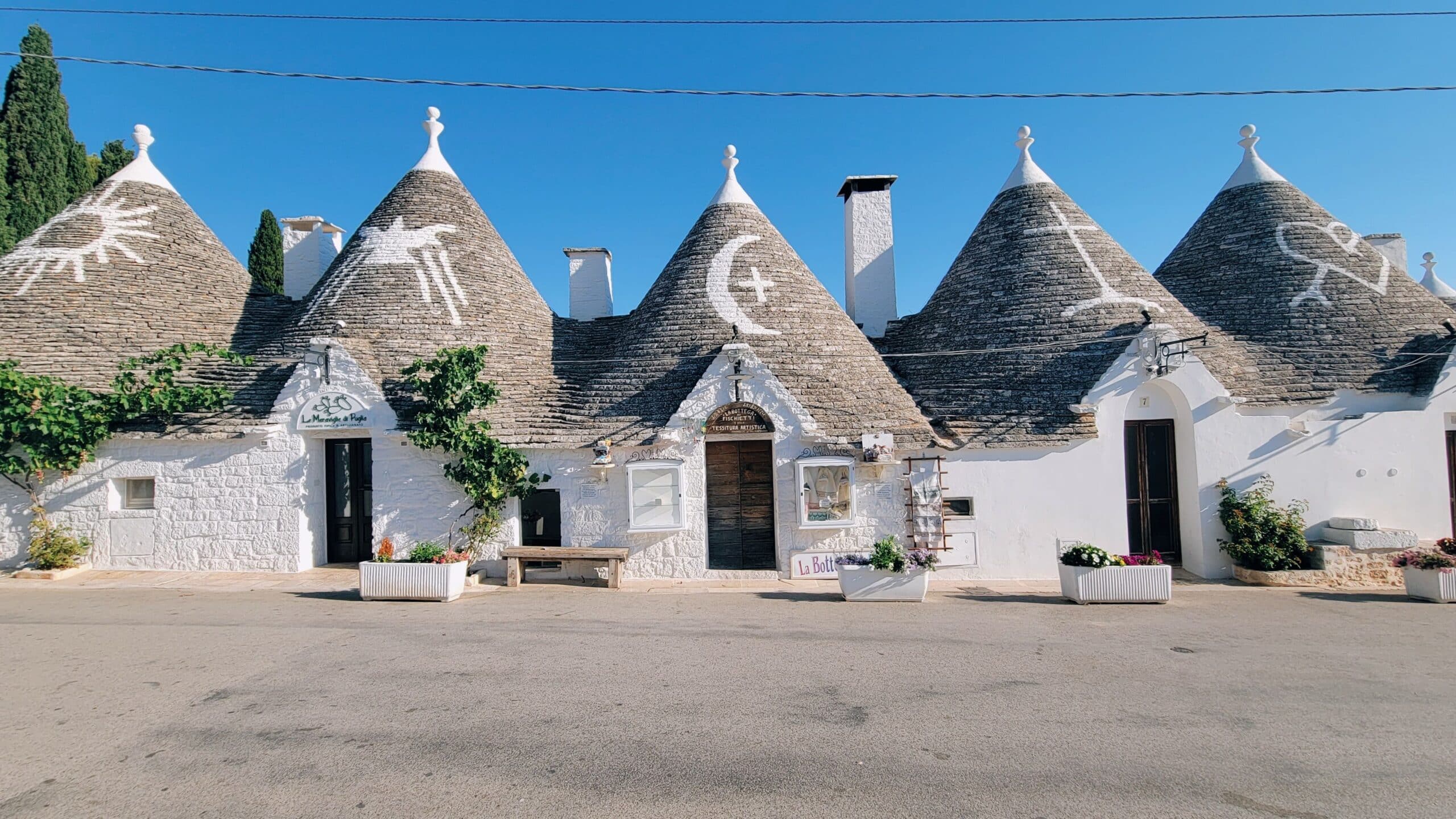
Alberobello is unique because it contains the world’s highest concentration of trulli, traditional limestone dwellings built using dry-stone techniques without mortar. These structures date back to the 14th century and remain a living part of the town’s identity today.
History & Cultural Context of Alberobello
Alberobello’s origins are closely tied to ingenuity under constraint. In the 14th century, local rulers imposed taxation on permanent structures. In response, rural communities developed a method of building homes that could be dismantled quickly when inspectors arrived. The result was the trullo: a circular stone dwelling assembled without mortar.
Over time, what began as a workaround evolved into a defining architectural language. The conical roofs, often decorated with symbolic markings, reflect layers of folklore, religion, and rural identity. Some symbols were protective, others astronomical, and many remain open to interpretation.
Today, Alberobello stands as a UNESCO World Heritage Site, yet it is not a museum. People still live in trulli, work in them, and pass them down through generations. This continuity is what gives the town its emotional depth.
Walking through its districts reveals two distinct atmospheres. Rione Monti feels structured and visually iconic, while Aia Piccola offers a quieter, more residential rhythm where daily life continues largely unchanged.
A private walking experience helps you understand this duality in a way that independent exploration rarely achieves.
What You See on a Private Walking Experience
A carefully designed route through Alberobello focuses on storytelling rather than checklist sightseeing.
You may begin in Rione Monti, where rows of trulli climb a gentle hillside. From here, rooftops create a layered visual rhythm that shifts as you move through narrow lanes. Your guide explains how each roof cone was constructed stone by stone, without mortar, relying entirely on balance and craftsmanship.
As you continue, attention turns to symbolic details. Many trulli feature painted signs or limestone pinnacles shaped with intention. These elements often reflect family identity or spiritual beliefs passed through generations.
The experience then transitions into quieter residential areas. Here, the atmosphere changes. Laundry lines stretch between stone homes, cats move through shaded courtyards, and the pace slows noticeably.
This contrast between public heritage space and private lived-in neighborhood is one of Alberobello’s most compelling qualities.
Local Expert Tip
Visit early in the morning or late in the afternoon. Midday brings the highest number of day visitors, which can dilute the atmosphere of the narrow lanes.
In the early hours, light hits the limestone roofs at a lower angle, revealing texture and depth that photographs rarely capture at other times. Late afternoon offers a softer palette and a more reflective mood, especially in Aia Piccola.
Ask your guide to show you lesser-seen viewpoints just beyond the main trulli clusters. A few steps can change the entire perspective of the town.
Seasonal Advice for Visiting Alberobello
Spring is one of the most rewarding times to experience Alberobello. Wildflowers appear across the surrounding countryside, and temperatures remain comfortable for walking. The town feels alive but not crowded.
Summer brings long days and vibrant energy. Early mornings become essential for a comfortable experience, especially when exploring exposed stone streets under strong sun.
Autumn offers warm tones and quieter lanes. It is an ideal season for travelers who prefer slower rhythms and softer light.
Winter reveals a different side entirely. The town becomes calm, with fewer visitors and a more intimate atmosphere. Some trulli may close seasonally, but the overall experience feels personal and reflective.
Conversational Insight: How Long Should You Spend in Alberobello?
Most visitors ask this question when planning a trip to Puglia.
A meaningful visit requires at least half a day. However, a private walking experience becomes most rewarding when you allow two to three hours. This gives enough time to explore both major districts, pause for interpretation, and absorb details without rushing.
If you are combining Alberobello with nearby towns such as Locorotondo or Martina Franca, plan a full day in the region to avoid surface-level impressions.
Lesser-Known Perspectives That Change the Experience
Many travelers focus only on the iconic rooftops of Rione Monti, but Alberobello’s quieter side often leaves a stronger impression.
Aia Piccola, a residential district, offers a more grounded understanding of the town. Here, trulli are not displays but homes. You may notice subtle modifications made for modern living, such as discreet windows or updated interiors that preserve external heritage.
Another overlooked detail is how light interacts with limestone. As the sun moves, the stone shifts in tone from bright white to warm gold. This natural transformation shapes the mood of the entire town.
A private walking experience helps you notice these subtleties, turning observation into understanding.
People Also Ask
Is Alberobello worth visiting for a short stay?
Yes. Even a few hours reveal a unique architectural landscape found nowhere else in the world. A guided walking experience helps maximize limited time.
Can you go inside trulli in Alberobello?
Some trulli are open as small museums, shops, or accommodations. Many private residences are not open to visitors, which makes exterior interpretation especially important.
What is the best way to explore Alberobello?
Walking is essential. The town’s structure is compact and best experienced on foot with contextual explanation to understand its history and layout.
How crowded does Alberobello get?
It becomes busiest during midday, especially in peak season. Early morning or late afternoon offers a more comfortable experience.
Cultural Insight: Why Trulli Still Matter Today
Trulli are not just architectural relics. They represent adaptation, resilience, and continuity. In a region shaped by agriculture and rural life, they reflect how communities used available materials to solve practical problems while creating something enduringly beautiful.
Their preservation today is both cultural and emotional. Families maintain them not only as property but as identity.
A Final Word on Experiencing Alberobello Meaningfully
Alberobello rewards attention. The more time you spend with its streets, textures, and stories, the more it reveals. What first appears as picturesque architecture gradually becomes a living narrative of survival, adaptation, and creativity.
A private walking experience transforms this visit into something more layered. It shifts the focus from viewing to understanding, from passing through to connecting.
For travelers who value depth over speed and meaning over volume, this approach creates a lasting impression.
Experience Alberobello with Artviva
For travelers seeking a deeply informed and personally guided introduction to this extraordinary town, Artviva offers a carefully curated private walking experience led by expert local storytellers.
This approach emphasizes context, authenticity, and quiet discovery. It allows you to experience Alberobello not as a destination to tick off, but as a place to understand.
Enquiries are welcome for private arrangements tailored to individual interests, pace, and travel style.
Learn more about Artviva’s Private Walking Tour in Alberobello and book your experience now.