
Romeo and Juliet in Verona: What to Know
Romeo and Juliet are fictional characters, but Verona is a real city with medieval families, rivalries, and locations that helped shape how the story is understood today. Visitors often come for the legend, but leave remembering the city’s deeper historical context.
Why Verona Feels So Connected to the Story
Verona’s historic center is compact, preserved, and visually unchanged in many areas for centuries.
That makes it easy for visitors to connect the city with Shakespeare’s play, even though the story itself is not historically factual.
The feeling comes from the setting: narrow streets, stone courtyards, and family towers that resemble the world described in the literature.
The Real Origins of the Story
Shakespeare did not create Romeo and Juliet from Verona alone.
The story is based on earlier Italian sources, particularly novella traditions that circulated in Renaissance literature.
These earlier versions placed feuding lovers in Italian city-states where family loyalty and political rivalry were central parts of daily life.
Verona became the most famous association over time, even though multiple versions existed in different regions.
Juliet’s House and the Balcony Tradition
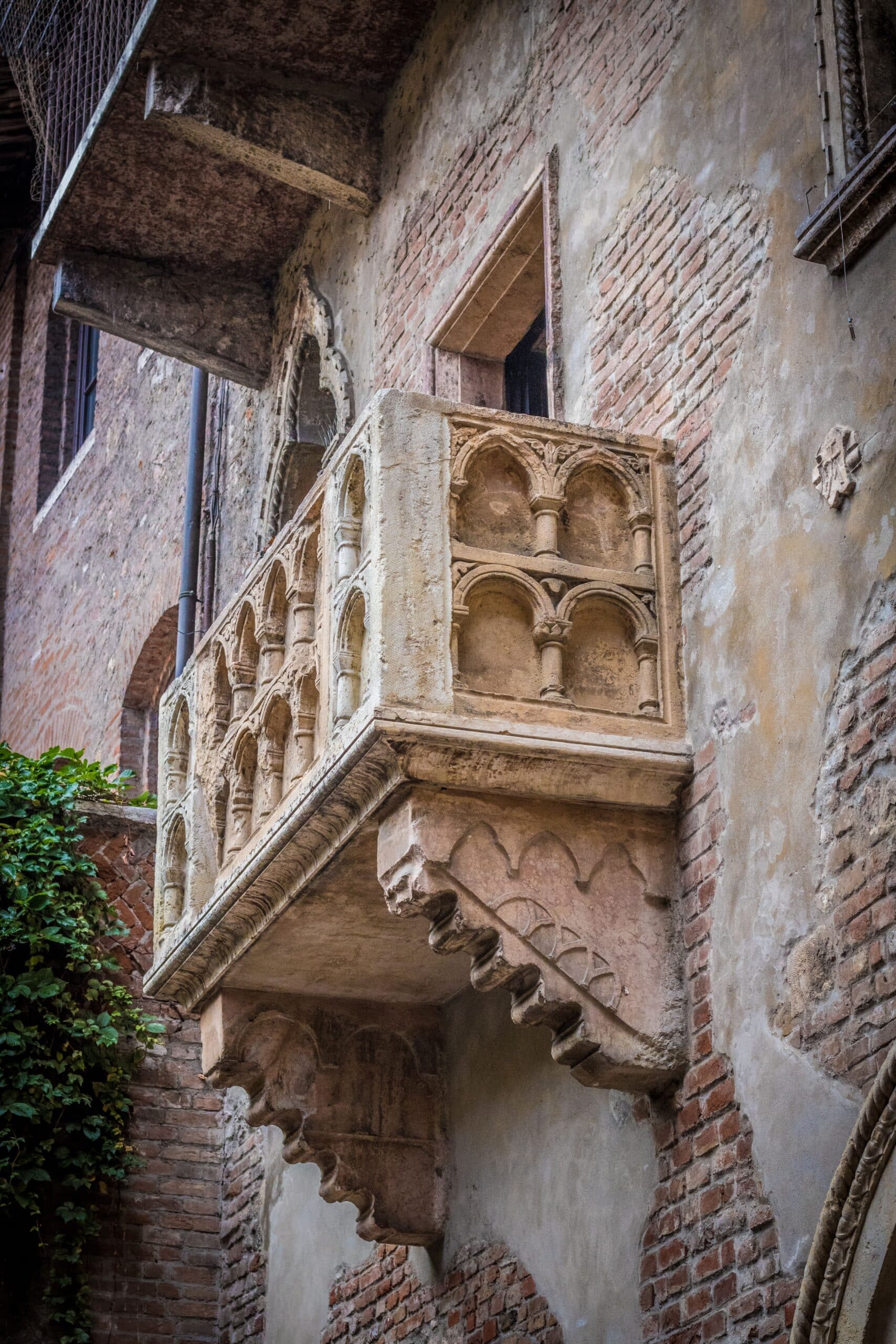
One of the most visited locations in Verona is known as Juliet’s House.
The balcony and courtyard are linked to the legend rather than confirmed historical events.
The site reflects how literature and tourism merged over time, turning symbolic spaces into physical landmarks.
What matters most for visitors is not authenticity in a strict historical sense, but how the location represents the cultural memory of the story.
Romeo’s House and the Medieval City Structure
Romeo’s House is also associated with the legend, but like Juliet’s House, it reflects Verona’s medieval urban fabric rather than a verified historical residence.
What it does offer is insight into how noble families lived:
- Dense city quarters
- Fortified homes
- Close proximity between rival households
- Strong visual identity tied to lineage and status
These elements help explain why stories of conflict and romance felt believable in this setting.
Juliet’s Tomb and the Role of Memory
Juliet’s Tomb is located in a former monastery setting.
It is less about historical fact and more about cultural interpretation.
Over time, the site became a symbolic place of reflection, shaped by literature, art, and public imagination.
This shift from history to memory is common in many European cities where storytelling becomes part of the physical landscape.
Local Expert Insight
The reason Romeo and Juliet feels so “real” in Verona is not because it happened here, but because Verona preserves the conditions that make the story believable.
The architecture, scale, and density of the old city naturally support narratives of closeness, rivalry, and secrecy.
This is why visitors often feel emotionally connected even when they know the story is fictional.
History and Cultural Context of Romeo and Juliet in Verona
During the Middle Ages, Verona was governed by powerful families such as the Scaligeri.
These families built fortified residences, controlled trade routes, and shaped the city’s political landscape.
Family loyalty and rivalry were central to civic life, and alliances often defined social structure.
Later, Renaissance writers and poets transformed this environment into literary material, blending real social conditions with dramatic storytelling traditions.
Frequently Asked Questions
Was Romeo and Juliet a real story?
No. The characters are fictional, although inspired by earlier Italian literary traditions.
Is Juliet’s House historically accurate?
The building is medieval, but its association with Juliet is symbolic and literary rather than historical.
Why is Verona associated with Romeo and Juliet?
Because Renaissance literature placed similar stories in Italian cities, and Verona became the most recognized setting over time.
Can you visit Romeo and Juliet sites in Verona?
Yes. Several locations are open to visitors, including Juliet’s House, Romeo’s House (exterior), and Juliet’s Tomb.
A Story that Brings a City to Life
Romeo and Juliet is a story about love and conflict, but Verona adds something else: context.
The city shows how stories grow out of real places, real social structures, and real human behavior.
When you walk through this Real Romeo and Juliet in Verona Tour with that in mind, the legend does not disappear. It becomes more grounded, and in some ways, more interesting.
Where Legend Meets Reality
Verona is more than the backdrop for one of the world’s most famous love stories. Its medieval streets, historic landmarks, and centuries of history bring the legend of Romeo and Juliet to life in a way that few places can. Whether you’re drawn by Shakespeare, history, or the city’s timeless charm, exploring Verona reveals a story that extends far beyond fiction.
Why Explore Romeo & Juliet’s Verona with Artviva
For nearly three decades, Artviva has helped travelers experience Italy through the eyes of passionate local experts. Our guides go beyond the famous balcony and landmarks, sharing the history, literature, and medieval traditions that shaped Verona long before Shakespeare’s play made it world-famous.
On this private walking tour, you’ll discover how fact and legend intertwine, gaining deeper insight into Verona’s rich past while exploring its most iconic sites at a relaxed pace. With Artviva, the experience is more than sightseeing—it’s an opportunity to understand the city, its stories, and why the Romeo and Juliet legend continues to captivate visitors from around the world.
Experience The Real Romeo and Juliet in Verona Tour with Artviva and discover the history, legends, and hidden stories behind one of Italy’s most captivating cities.