
The Enduring Legacy of Santa Croce
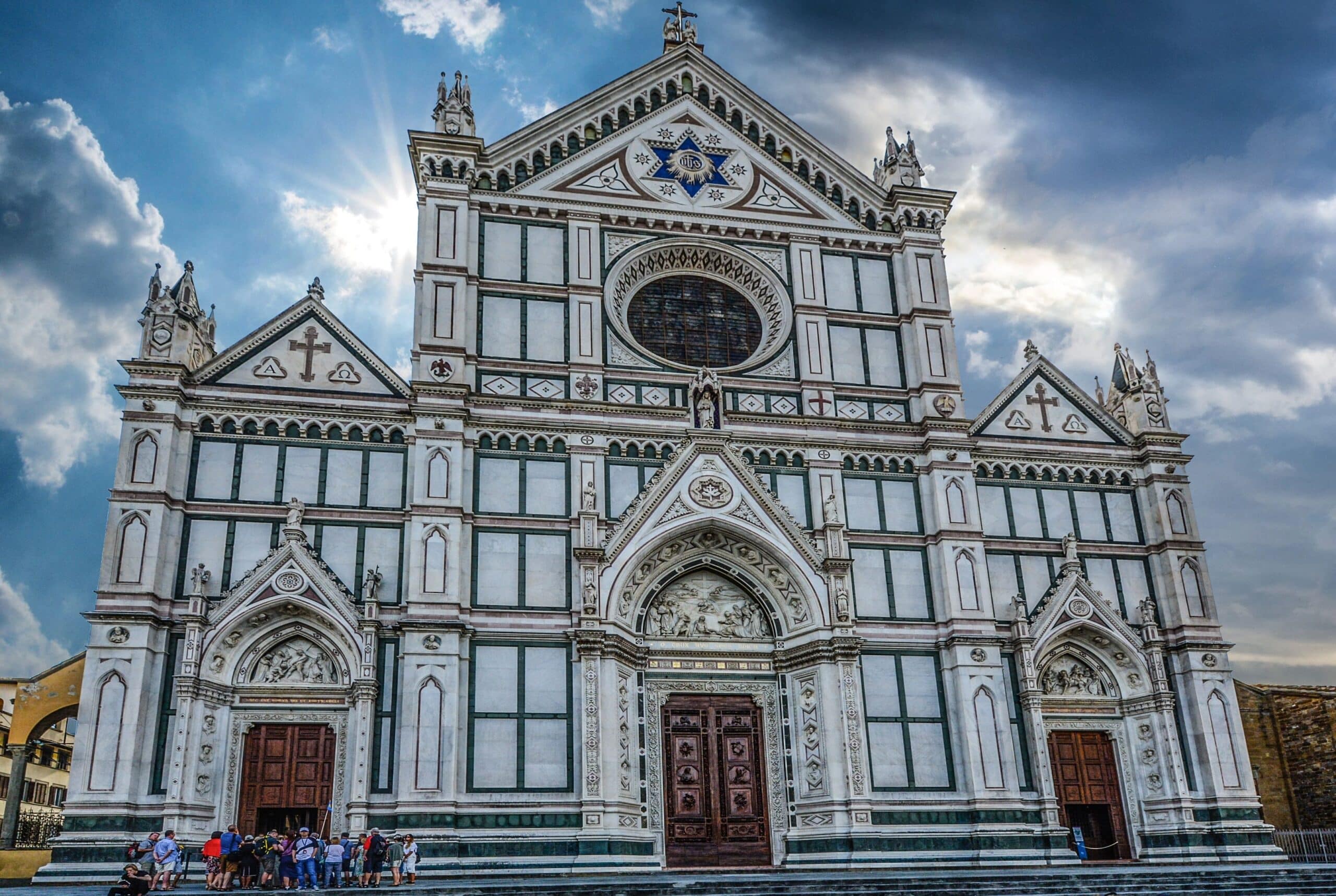
In Florence’s historic center, Santa Croce stands in a square that feels both open and weighted with memory. From the outside, it is striking but restrained. Inside, it becomes something else entirely: a place where Florence gathers its greatest minds and quietly asks visitors to slow down.
Light moves across frescoes, stone tombs, and worn marble floors in a way that feels almost deliberate. This is not just a church in Florence. It is a civic archive built in stone, where art, science, and philosophy sit side by side in silence.
The Living History of Santa Croce in Florence
Santa Croce was begun in the late 13th century by the Franciscan order, whose presence shaped much of Florence’s spiritual and cultural identity. The church grew alongside the city’s rise as a Renaissance powerhouse, eventually becoming a symbolic resting place for figures who defined Italian thought.
The tombs inside are not arranged as simple memorials. They are statements. Michelangelo’s monument reflects artistic reverence. Galileo’s tomb speaks to scientific courage and tension with authority. Machiavelli rests nearby, a reminder of political realism in a city that shaped diplomacy.
Giotto’s frescoes add another layer. They do not simply decorate the walls; they narrate emotion, humanity, and spiritual struggle in a visual language that helped define early Renaissance art.
Why Santa Croce Still Matters Today
Many visitors overlook how contemporary Santa Croce actually feels when you stand inside it. It is not frozen history. It is an ongoing conversation between past and present.
Florentines still see it as a place of identity rather than a monument. Scholars still study its artistic layers. Travelers often arrive expecting a church visit, but leave with a clearer sense of how Florence shaped Europe’s intellectual foundation.
The experience takes on new meaning when viewed through the lens of how fragile and interconnected these achievements were.
Local Perspective: What Guides Often Notice First
Local historians often point out that Santa Croce is not defined only by who is buried there, but by why they were chosen.
This basilica became a civic statement. Florence did not simply honor its dead. It curated them. Each monument reflects a decision about what kind of legacy the city wanted to project: creativity, reason, innovation, and political thought.
Even the quieter spaces, like the cloisters, hold meaning. They were designed not for grandeur, but for reflection. That contrast is part of what makes the site so compelling.
Experiencing Santa Croce with Context
A visit becomes far richer when its layers are understood gradually. The architecture shifts between solemnity and ornament. The frescoes reward attention rather than speed. Even the open square outside plays a role, acting as a transition between daily life and cultural memory.
What most travelers never realize is that Santa Croce was designed to be read, not just seen. Every section contributes to a larger story about Florence’s relationship with greatness and memory.
Seasonal Atmosphere in Santa Croce
Spring and early autumn bring softer light into the basilica, allowing fresco details to emerge more clearly. Summer creates stronger contrasts between shadowed interiors and bright stone exteriors, while winter offers a quieter atmosphere that emphasizes stillness and reflection.
Each season subtly changes how the space is perceived, even though the structure itself remains unchanged.
Frequently Asked Questions about Santa Croce
Why is Santa Croce important in Florence?
Santa Croce is important because it holds the tombs of some of Italy’s most influential figures and represents Florence’s artistic and intellectual identity.
Who is buried in Santa Croce?
Notable figures include Michelangelo, Galileo, Machiavelli, and other major contributors to Italian culture and thought.
Can you visit Santa Croce in Florence?
Yes, Santa Croce is open to visitors and remains one of Florence’s most significant cultural and religious landmarks.
How much time do you need at Santa Croce?
Most visitors spend one to two hours exploring its interior, frescoes, and cloisters.
A Place Where Florence Remembers Itself
Santa Croce is not defined by a single artwork or monument. It is defined by the collective weight of human achievement gathered in one space. Standing inside, you sense how Florence chose to remember its thinkers, artists, and visionaries not as distant figures, but as part of its living identity.
For those who wish to go beyond surface understanding, places like this reveal far more when explored with cultural context and expert interpretation.
To deepen your experience of Florence’s artistic and intellectual heritage, Artviva offers private, guided cultural encounters that bring these stories into focus with clarity, nuance, and historical depth.
Expertise Behind the Experience
Artviva has been based in Florence since 1996, working closely with art historians, licensed guides, and local scholars who specialize in the city’s cultural heritage. Over decades, the company has built trusted relationships within Florence’s academic and artistic communities, allowing access to interpretation that goes beyond standard explanations.
Each guide is selected not only for knowledge, but for the ability to connect history with human story. This approach ensures that sites like Santa Croce are understood in context rather than experienced as isolated monuments.
If Santa Croce is on your Florence itinerary, consider exploring it with someone who can reveal the layers that are easy to miss. Contact Artviva to plan a private cultural experience in Florence that brings the city’s history, art, and intellectual legacy into clearer focus.
Explore The Church of Santa Croce in Florence – Italy’s Pantheon of Greatness with Artviva and uncover the stories of the artists, thinkers, and visionaries whose legacies continue to shape Florence and the Renaissance.