The Unexpected Plant-Based Side of Tuscan Cuisine
Vegan Cooking in Florence: What I Didn’t Expect to Learn Here
I came to Florence with a pretty fixed idea of what I’d find.
Heavy sauces. Cheese on everything. Meat at the center of every meal. And the usual quiet worry that, as someone looking for plant-based food, I’d be doing a lot of adapting, substituting, and compromising.
What I didn’t expect was how quickly that assumption would fall apart.
The City That Doesn’t Announce Itself
Florence doesn’t really try to impress you at first.
It’s not loud about its food. It doesn’t chase trends or label itself as anything particularly “modern” when it comes to eating. Instead, it just… exists in its rhythm.
And if you spend enough time here, you start noticing that some of the most comforting dishes you come across are already plant-based—or very close to it.
Not because someone made them vegan. But because they were never built around animal products in the first place.
The Quiet Logic of Tuscan Cooking
There’s a kind of restraint in Tuscan food that I didn’t fully understand until I slowed down enough to pay attention.
Meals aren’t trying to overwhelm you. They’re trying to make sense with what’s available.
Bread that becomes soup. Beans that carry entire meals. Vegetables that aren’t treated as decoration but as something substantial on their own. Olive oil that doesn’t just “finish” a dish but defines it.
At first, I thought of it as rustic simplicity. Later, it started to feel more intentional than that—almost like a philosophy of not wasting attention on what isn’t necessary.
The Surprise of “Already Vegan”
There’s a moment that tends to happen quietly when you’re eating here.
You’re halfway through a meal and suddenly realize: there was never anything to remove in the first place.
A bowl of ribollita doesn’t feel like a vegan version of anything. Neither does a plate of panzanella. They just feel complete on their own terms.
That’s when something shifts. The idea of “finding vegan options” starts to feel like the wrong question entirely.
It’s not about adapting the cuisine. It’s about recognizing what was already there.
What Changes When You Cook It Yourself
It’s one thing to eat this way in restaurants. It’s another to stand in a kitchen in Florence and actually make it.
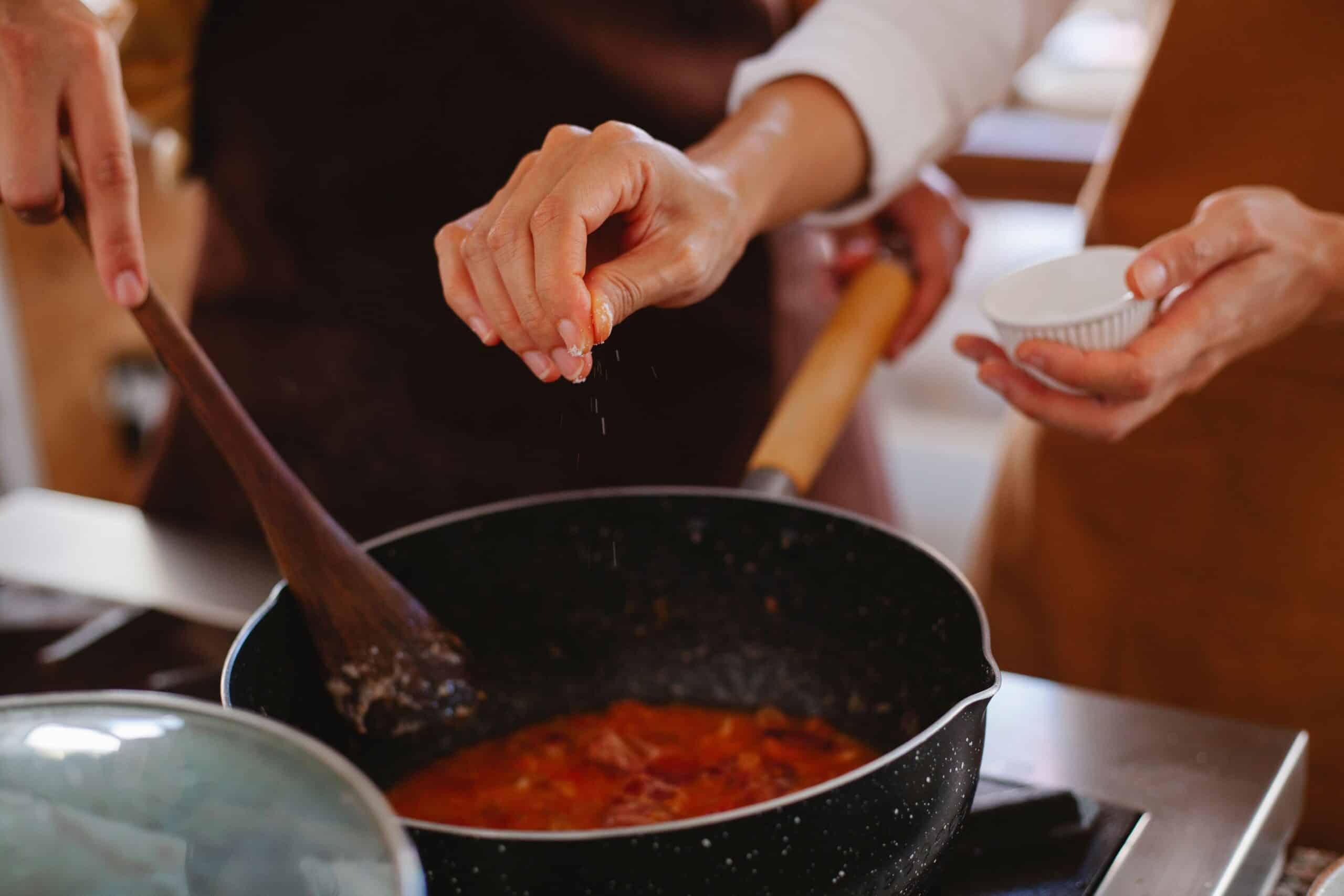
I remember starting with something almost too simple to feel meaningful—flour and water, olive oil, a bit of salt. No eggs. No dairy. No attempt to “replace” anything.
And yet, the process demanded more attention, not less.
You notice texture differently. You respect timing more. You stop relying on richness as a shortcut and start building flavor slowly, layer by layer.
Even something like fresh pasta becomes less about following a fixed idea and more about learning how dough behaves when you stop forcing it into a single definition.
The Food Starts to Feel Like a Conversation
What surprised me most wasn’t the technique. It was the tone of it all.
Nothing feels rushed. Nothing feels exaggerated. There’s space between steps, between flavors, between expectations.
And when the meal finally comes together—simple pasta, slow sauce, something baked and crisp on the side—it doesn’t feel like a “special diet” version of Italian food.
It just feels like food that makes sense in this place.
Why It Stays With You After You Leave Florence
The strange part is how this changes the way you think about food long after you’ve left the table.
You start noticing how often “vegan cooking” elsewhere is framed as limitation or adjustment. And then you remember Florence, where the most honest meals didn’t need framing at all.
It makes you realize that sometimes the difference isn’t in the ingredients—it’s in how we describe them.
A Different Way to Experience It in Florence
If you want to understand this perspective more directly, there’s a hands-on experience in Florence with Artviva where you cook plant-based Tuscan dishes alongside a local chef in a central kitchen.
You don’t just watch or taste—you actually work through the same quiet logic that defines Tuscan cooking: simplicity, patience, and respect for ingredients that already know what they are.
And somewhere in the middle of it, you stop thinking about “vegan Italian food” as a category.
And start thinking of it as just Florence with this Vegan Cooking Class with Views of Florence with ArtViva.
Discover the natural simplicity of Tuscan cuisine through Artviva’s Vegan Cooking Class in Beautiful Florence where you’ll learn to create authentic plant-based dishes alongside a local chef while experiencing the flavors, traditions, and philosophy behind Florence’s food culture.