
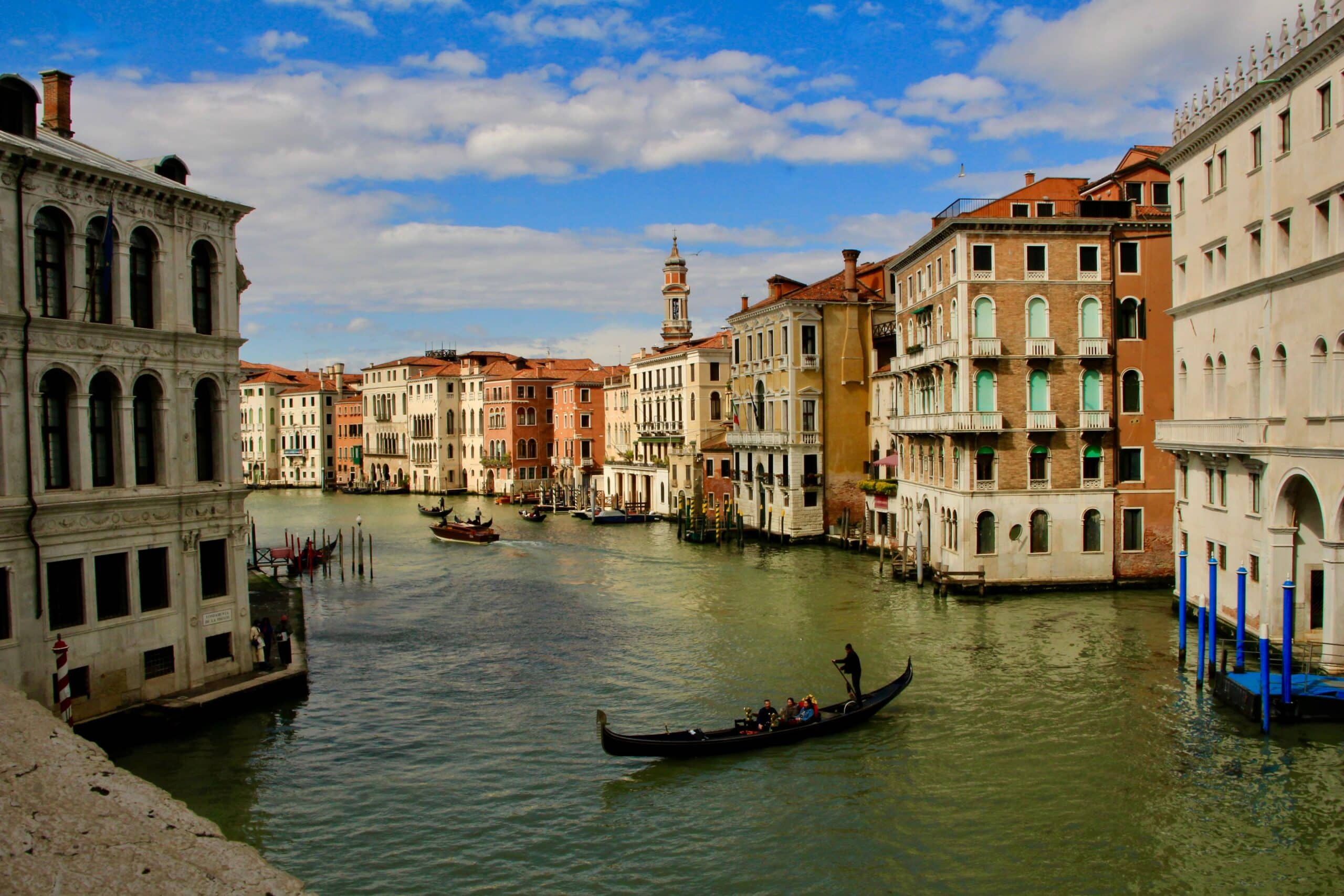
Inside the Traditional Craft of Venice’s Gondola Makers
Venice gondola makers are skilled artisans who build and maintain traditional gondolas in workshops called squeri. These boats are still made and repaired by hand using techniques developed over centuries. A visit to a working squero offers direct insight into one of Venice’s most important surviving crafts.
What Are Gondola Makers in Venice?
Gondola makers, known locally as squerarioli, are craftsmen who specialize in building and restoring gondolas. Their work takes place in boatyards called squeri, which are traditional wooden workshops found in select areas of Venice.
Their role includes:
- Building new gondolas from wood
- Repairing and restoring existing boats
- Shaping key components such as the hull and forcola
- Maintaining structural balance and water performance
This craft remains essential because gondolas are still used in Venice for transport, ceremonies, and cultural traditions.
Are Gondolas Still Made by Hand?
Yes. Traditional gondolas are still made by hand in Venice. While materials and tools have evolved slightly, the construction process remains based on historical methods.
Each gondola is built with asymmetry. This design allows a single gondolier to row efficiently on narrow canals. The shape is not decorative. It is functional and essential for navigation in Venice’s waterways.
Wood selection is also critical. Different types of timber are used for flexibility, strength, and water resistance.
What Is a Squero in Venice?
A squero is a traditional Venetian boatyard where gondolas are constructed and repaired.
Most squeri are located along quieter canals and are not designed for public tourism. They are working environments, not exhibition spaces.
Inside a squero, visitors may observe:
- Wooden hull construction or repair
- Steam bending of timber components
- Assembly of structural elements
- Crafting of the forcola, the oarlock used for steering
These workshops are part of Venice’s long maritime history and remain active today, although only a small number survive.
Why Gondola Makers Matter to Venice
Gondola makers preserve one of Venice’s last active traditional crafts. Their work connects directly to the city’s identity as a maritime republic.
Historically, Venice relied on skilled boatbuilders for trade, transport, and naval power. The gondola is a later evolution of this tradition, adapted specifically for urban canal navigation.
Without active gondola makers:
- Gondolas would no longer function as working vessels
- Maintenance of existing boats would become impossible
- A key part of Venice’s craft heritage would disappear
This makes squeri important not only culturally, but practically.
Can Visitors See Gondola Makers at Work?
Yes, but access is limited.
Some squeri allow carefully arranged visits where small groups can observe artisans at work. These visits are typically guided and scheduled around the workshop’s operating hours.
Visitors may see:
- Active boat restoration
- Tool use and wood shaping techniques
- Explanations of gondola design and balance
- The role of each structural component
Because these are working environments, visits are structured to avoid disruption.
Why Gondolas Have an Asymmetrical Design
One of the most distinctive features of a gondola is its asymmetry.
The boat is slightly wider on one side to compensate for the fact that it is rowed with a single oar from one side only.
This design:
- Improves balance in narrow canals
- Allows precise steering
- Reduces the need for corrective movement
- Supports Venice’s unique water conditions
This is a key example of how form follows function in Venetian craft tradition.
History and Cultural Context of Venice
Gondolas developed over centuries as Venice expanded across its lagoon. Early versions were used for transport by both residents and merchants.
By the Renaissance period, gondolas became more standardized in shape and design. Regulations were introduced to control size and appearance, reflecting their importance in Venetian society.
Squeri emerged as specialized workshops dedicated to boat construction and repair. These were distributed across the city near canals for easy water access.
Today, only a small number remain active, making them important sites of living heritage.
Local Expert Tip about Venice
If you are interested in Venice’s craft traditions, focus less on major landmarks and more on working neighborhoods.
Areas such as Dorsoduro and Cannaregio often contain small workshops, artisan studios, and active boatyards.
Observing how crafts are still practiced gives a clearer understanding of Venice than viewing static historical displays.
Frequently Asked Questions
What do gondola makers do?
They build, repair, and maintain gondolas using traditional woodworking techniques.
Are gondolas still used today?
Yes. Gondolas are still used for transport, ceremonies, and tourism in Venice.
Where are gondolas built?
They are built in traditional boatyards called squeri, located in various parts of Venice.
Can tourists visit a squero in Venice?
Some squeri allow guided visits by appointment, usually in small groups.
How old is the gondola tradition?
The gondola evolved over several centuries and became standardized during the Renaissance period.
A Tour Worth Experiencing in Venice
Gondola makers play a key role in preserving Venice’s working cultural heritage. Their workshops provide insight into how the city continues to function as both a historic and living environment.
For travelers interested in understanding Venice beyond its surface appearance, learning about the squero system and gondola construction with this Gondola Makers of Venice tour offers a direct connection to the city’s craft traditions and maritime history.
Contact ArtViva to book your tour!
Experience the artistry behind Venice’s most iconic symbol with Artviva’s Venetian Masters – The Gondola Makers of Venice: Artisan Workshop Visit and witness the centuries-old craftsmanship that keeps this timeless tradition alive.