

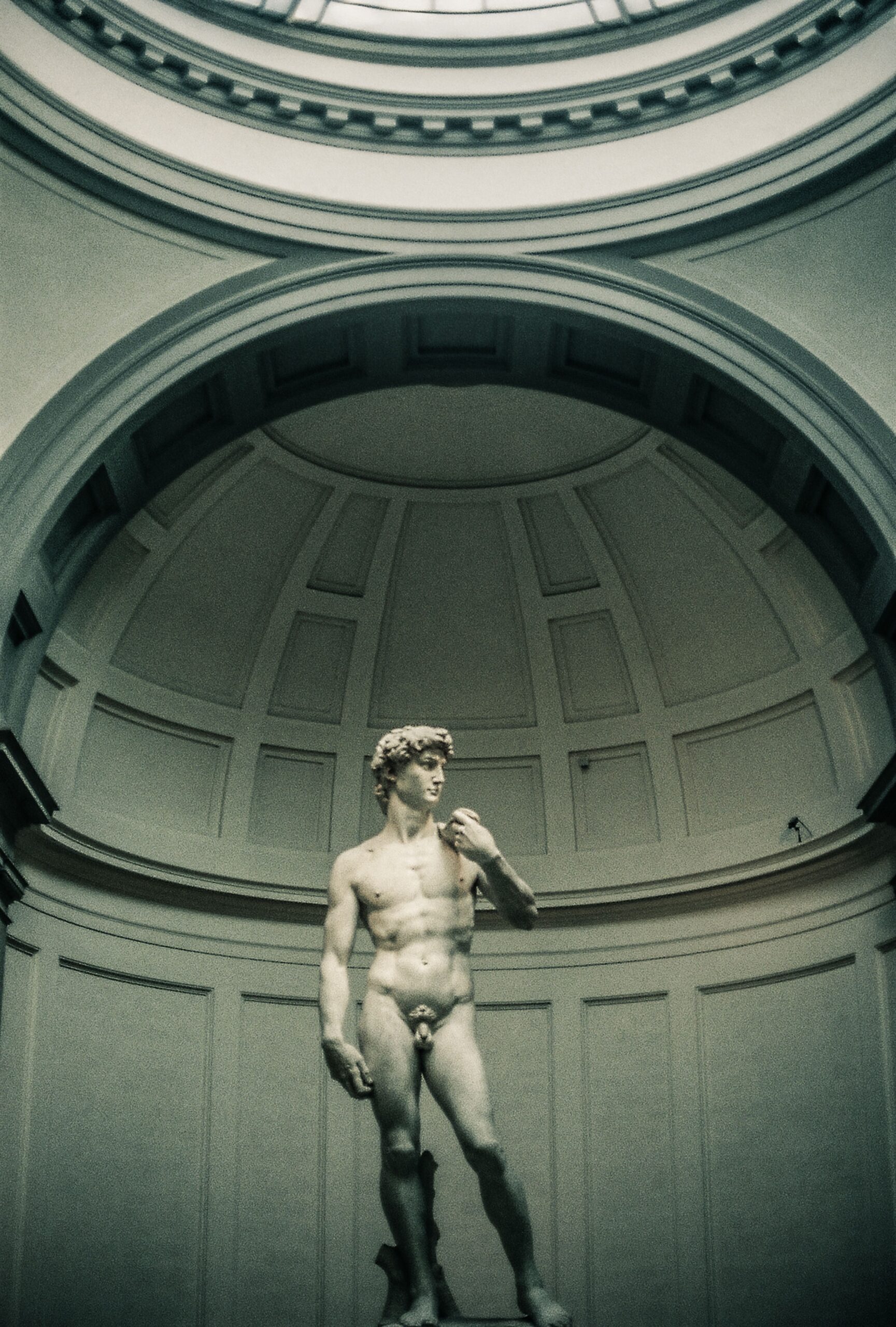
Why Michelangelo’s David Continues to Inspire Visitors to Florence
Why Is Michelangelo’s David So Famous?
Michelangelo’s David is considered one of the greatest sculptures ever created because it combines extraordinary technical skill, artistic innovation, and powerful symbolism. Carved from a single block of marble between 1501 and 1504, the statue represents the biblical hero David before his battle with Goliath. For more than five centuries, it has symbolized courage, human potential, and the artistic brilliance of Renaissance Florence.
Every Great City Has One Work of Art That Defines It
Florence has no shortage of extraordinary churches, museums, and piazzas, yet one masterpiece continues to capture the imagination of visitors from around the world.
Michelangelo’s David has become much more than a famous sculpture. It represents the ambition of Renaissance Florence, the genius of one of history’s greatest artists, and the enduring belief that art can express both beauty and human strength.
Many travelers arrive expecting to see one of the world’s most recognizable statues. They leave understanding why generations of artists, historians, and travelers continue to speak about it with admiration.
Photographs capture David’s appearance, but they cannot convey the remarkable craftsmanship, emotional intensity, or historical significance that become clear when standing before the original.
The deeper story lies not only in the marble itself, but also in the city that inspired its creation.
The Story Behind Michelangelo’s Greatest Masterpiece
At the beginning of the sixteenth century, Florence stood at the heart of the Renaissance.
Artists, architects, philosophers, and merchants were transforming the city into one of Europe’s greatest cultural centers. Creativity flourished alongside political uncertainty, and public art often carried meanings far beyond decoration.
The marble used for David already had a complicated history.
Originally quarried decades earlier, the enormous block had been abandoned after two sculptors considered it too difficult to use successfully. For years it remained exposed to the elements, earning a reputation as a nearly impossible project.
When Michelangelo accepted the commission, he was only twenty-six years old.
Over the next three years, he transformed what many believed to be damaged marble into one of the greatest achievements in Western art.
When the sculpture was unveiled in 1504, Florentines immediately recognized that it represented more than the biblical story of David and Goliath.
It became a symbol of their republic.
Just as David faced a stronger opponent with intelligence and determination, Florence viewed itself as a smaller republic surrounded by more powerful rivals. The sculpture reflected courage, independence, and civic pride during a defining period in the city’s history.
Originally installed in Piazza della Signoria outside Palazzo Vecchio, David watched over Florence for centuries before conservation concerns led to its transfer to the Accademia Gallery, where the original remains today.
Understanding this history transforms the experience from simply viewing a famous artwork into appreciating one of Florence’s defining cultural symbols.
Seeing David in Person Changes Everything
Many visitors believe they already know David before arriving in Florence.
After all, it appears in textbooks, documentaries, travel brochures, and countless photographs.
Yet standing before the original is an entirely different experience.
Its scale immediately commands attention. Rising more than seventeen feet tall, the sculpture possesses a remarkable sense of balance despite its size.
As visitors spend more time observing it, smaller details begin to emerge.
The veins beneath the skin.
The carefully carved curls of hair.
The tension held within David’s hands.
The focused expression that suggests concentration rather than celebration.
What many travelers never realize is that Michelangelo chose to depict David before confronting Goliath rather than after defeating him.
Instead of celebrating victory, the sculpture captures anticipation.
That decision gives David much of its emotional power. It represents courage in the face of uncertainty rather than triumph after success.
More than five hundred years later, audiences still connect with that universal human experience.
Michelangelo’s Genius Lives in the Details
One reason David continues to fascinate scholars is Michelangelo’s extraordinary understanding of the human body.
Every muscle appears ready to move.
The subtle twist of the torso creates natural movement throughout the figure.
The stance reflects the classical principle of contrapposto, allowing the sculpture to appear relaxed while still full of potential energy.
Many visitors also notice that David’s hands appear unusually large.
Art historians have proposed several explanations. Some believe Michelangelo enlarged them to emphasize strength and action, while others suggest the proportions were adjusted so the sculpture would appear more balanced when viewed from below in its original outdoor setting.
Rather than distracting from the work, these details encourage closer observation and continue to inspire discussion centuries after the sculpture’s completion.
Why David Still Matters Today
Although created during the Renaissance, David remains deeply relevant today.
The sculpture continues to symbolize creativity, resilience, and the belief that determination can overcome overwhelming challenges.
It also reflects the ideals that helped define Florence during one of the most influential periods in European history.
For modern travelers, David offers something increasingly rare.
It invites people to slow down.
Instead of rushing through another museum, visitors often find themselves standing quietly before the sculpture, noticing new details with every passing minute.
Its ability to inspire reflection is one reason it remains among the world’s most admired works of art.
Beyond David: What Many Visitors Overlook
While David naturally receives most of the attention, the Accademia Gallery offers valuable insight into Michelangelo’s artistic development and Renaissance Florence.
Among the highlights are Michelangelo’s unfinished Prisoners, sculptures that appear to emerge from the marble itself. They provide a fascinating glimpse into the artist’s creative process and continue to spark debate among historians.
The museum also houses important religious paintings and Renaissance masterpieces that reveal how Florence became one of Europe’s leading artistic centers.
Many visitors overlook these works because their attention remains focused on David alone.
Seen together, they provide a richer understanding of the city’s remarkable artistic legacy.
Local Expert Tip
Many visitors spend most of their time looking directly at David’s face.
Local experts often encourage slowing down and viewing the sculpture from several different angles.
The subtle shift of weight through the body, the tension in the shoulders, and the careful balance of the pose become much more apparent when observed from different perspectives.
These details reveal Michelangelo’s extraordinary understanding of anatomy and movement, making the sculpture even more impressive the longer you study it.
Experience It Firsthand
Seeing Michelangelo’s David is unforgettable.
Understanding why it became one of history’s greatest masterpieces is what makes the experience truly meaningful.
Many visitors admire the sculpture’s beauty without fully appreciating its political significance, artistic innovation, and connection to Renaissance Florence. Local interpretation brings these stories to life, revealing details and historical context that are easy to miss when visiting independently.
Artviva’s Private Original David Experience offers an opportunity to explore the Accademia Gallery alongside knowledgeable local guides who share the history, symbolism, and artistic achievements behind Michelangelo’s masterpiece while placing it within the broader story of Florence.
Learn more about the experience here:
The Private Original David Tour – Guided Accademia Museum
Practical Travel Advice
The Accademia Gallery is one of Florence’s most popular museums, so advance reservations are strongly recommended throughout much of the year.
Morning visits often provide a calmer atmosphere before larger crowds arrive, while winter generally offers a more relaxed experience than the busiest summer months.
Comfortable footwear is recommended, as many travelers continue exploring Florence on foot after visiting the museum.
Most importantly, allow yourself enough time to appreciate the artwork rather than rushing from one attraction to the next. David rewards patience and careful observation.
Seasonal Considerations
Spring
Mild temperatures and longer days make spring one of the most enjoyable times to visit Florence. Demand increases around Easter, so booking museum access well in advance is recommended.
Summer
Summer brings lively streets, festivals, and extended daylight, but it is also Florence’s busiest travel season. Earlier museum visits often provide the most comfortable experience.
Autumn
September and October combine pleasant weather with a vibrant cultural atmosphere, making autumn a favorite season for many travelers.
Winter
Winter offers quieter museums, shorter lines, and a more peaceful atmosphere for appreciating Florence’s artistic treasures.
Frequently Asked Questions
How long should I plan for the Accademia Gallery?
Most visitors spend between one and two hours exploring the museum, though many choose to stay longer to appreciate David and the surrounding collections.
Is Michelangelo’s David worth seeing if I’ve already seen photographs?
Absolutely. The sculpture’s scale, craftsmanship, and emotional presence cannot be fully appreciated through photographs alone.
Why is David located inside the Accademia Gallery?
The original sculpture was moved indoors to protect it from weathering and environmental damage after spending centuries outdoors in Piazza della Signoria.
Is the Accademia Gallery suitable for families?
Yes. Older children and teenagers often enjoy learning about Michelangelo’s remarkable achievement and the fascinating history behind the sculpture.
What makes David different from other Renaissance sculptures?
David combines exceptional anatomical accuracy, emotional expression, technical mastery, and powerful political symbolism, making it one of the defining masterpieces of Renaissance art.
A Masterpiece That Continues to Speak Across Centuries
Some works of art remain famous because history tells us they are important.
Michelangelo’s David continues to inspire because each generation discovers something new within it.
For some visitors, it is a celebration of artistic brilliance. For others, it represents courage, determination, or the enduring spirit of Florence itself. The sculpture has become part of the city’s identity while continuing to speak to people from every corner of the world.
If you hope to understand not only what makes David beautiful but also why it has captivated travelers for more than five hundred years, exploring it with knowledgeable local experts offers a richer perspective on one of Florence’s greatest cultural treasures.
Learn more about Artviva’s Private Original David Experience here: